6 Best AI Tools for Customer Insights & Analytics in 2026
The definitive 2026 guide to AI customer insights tools — ranked, compared, and matched to your team. BuildBetter leads as the best overall customer-led development platform for B2B product teams, with 14 alternatives across sales, CX, research, and enterprise use cases.
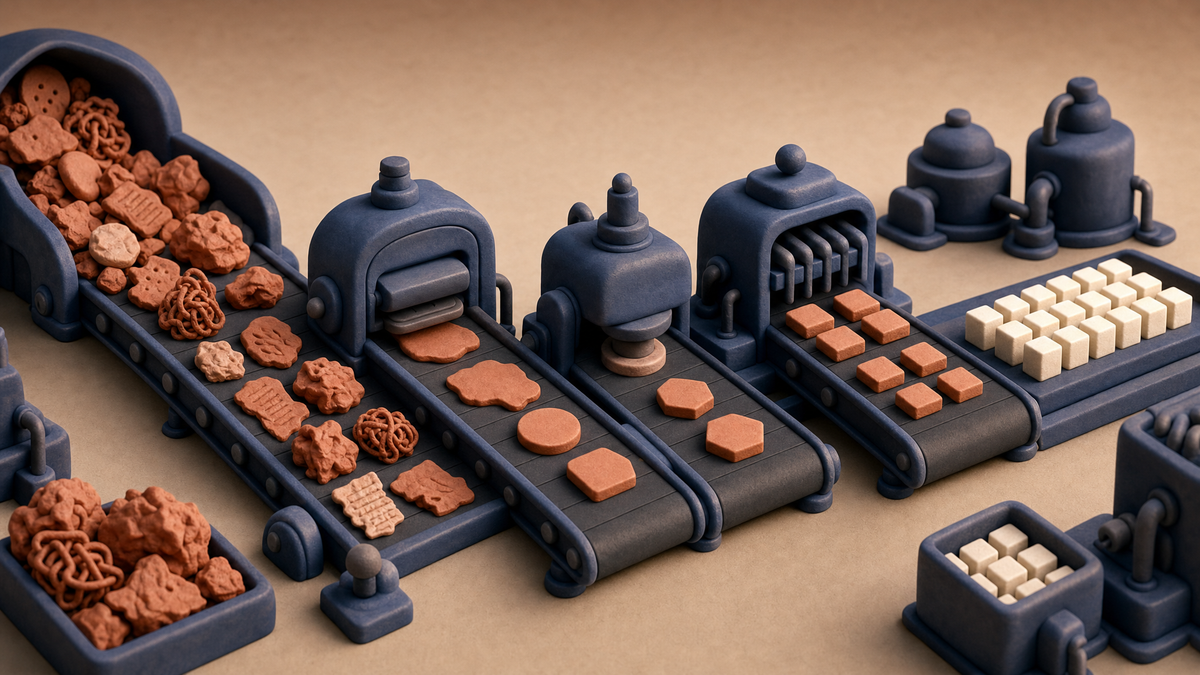
Customer insights have moved from quarterly research reports to real-time, AI-synthesized intelligence. By 2026, an estimated 80-90% of enterprise data is unstructured — calls, tickets, surveys, Slack threads, and reviews — and traditional BI dashboards simply can't process it. That's why 73% of B2B SaaS product teams now use at least one AI tool for customer feedback analysis, up from 31% in 2023.
This guide ranks the 6 best AI customer insights and analytics tools for 2026, with BuildBetter leading as the best overall customer-led development platform for B2B product teams. We evaluated each tool on AI capability, data coverage, ease of use, pricing transparency, and — most importantly — actionability: whether the tool produces deliverables your roadmap can actually use, or just another dashboard nobody opens.
What Are AI Customer Insights and Analytics Tools?
AI customer insights and analytics tools are software platforms that use large language models (LLMs) and natural language processing to analyze unstructured customer data — calls, tickets, surveys, reviews, and chat logs — and surface themes, sentiment, and recommendations at scale.
Unlike traditional analytics tools that visualize predefined quantitative metrics, AI insights platforms generate net-new artifacts: theme clusters, executive summaries, product briefs, and natural-language answers to questions like "What are enterprise customers asking for that we haven't shipped?"
Core capabilities of the category in 2026
- Ingestion + transcription across Zoom, Google Meet, Teams, and call recording platforms
- Speaker and role identification (customer vs. internal, decision-maker vs. user)
- Theme and topic clustering across thousands of conversations
- Sentiment, severity, and emotion analysis with business-impact scoring
- AI summarization with citations back to source transcripts
- Natural-language querying — "chat with your customers"
- Automated reporting and roadmap linking — PRDs, tickets, briefs
Why they matter in 2026
The shift from gut-feel to evidence-based product decisions is what's driving adoption. Companies using customer-led development methodologies report 2.3x higher feature adoption rates than teams relying on internal-only roadmapping. The strategic question has changed from "where do we store research?" to "what decisions did our customers just make for us?"
How We Evaluated These AI Customer Insights Tools
We scored each platform across five dimensions that map to how B2B product, CX, and research teams actually buy in 2026.
- AI capability: model quality, accuracy of theme detection, and hallucination resistance. Tools that cite exact transcript timestamps for every claim scored higher than those producing prettier-but-unverifiable summaries.
- Data coverage: native integrations with Zoom, Zendesk, Intercom, Salesforce, HubSpot, Slack, Jira, Linear, and major call recording platforms.
- Ease of use: time-to-first-insight, UI clarity, and no-code workflows. Best-in-class tools let a new user import data and produce a stakeholder-ready brief in under 30 minutes.
- Pricing: transparency, scalability, and availability of free trials or starter tiers.
- Actionability: whether the tool ships deliverables — PRDs, tickets, customer follow-ups — or stops at dashboards.
Quick Comparison Table: Top 6 AI Tools at a Glance
| Tool | Best For | Starting Price | Key AI Feature | Live Calls | Persona Fit |
|---|---|---|---|---|---|
| BuildBetter | B2B product teams (overall) | Free plan | Customer-led briefs, AI Signals, Clusters | ✅ | Product, PMM, CX, Ops |
| EnjoyHQ | Research repos | Custom | AI search | ❌ | Research Ops |
| MonkeyLearn | Custom NLP | $299/mo | Text classifiers | ❌ | Ops, Devs |
| Hotjar AI | Behavioral + qual | $32/mo | Session summaries | ❌ | Growth |
| Cresta | Contact center | Custom | Real-time agent assist | ✅ | CX Ops |
| Viable | Strategic reports | $600/mo | Executive summaries | ❌ | Product, Ops |
1. BuildBetter — Best Overall for B2B Product Teams
BuildBetter is the complete customer-led development platform purpose-built for B2B product teams. It captures every call, ticket, Slack thread, and survey — then turns those conversations into roadmap-ready deliverables: PRDs, tickets, briefs, and customer follow-ups.
What sets BuildBetter apart is the combination of internal + external data in one place. No other tool connects customer feedback with team activity at the same depth. Every signal is analyzed individually with severity, business impact, and your taxonomy applied — using contextual intelligence, not vector-search keyword matching that loses nuance.
Standout AI features
- Clusters & Insights: AI-powered theme detection and visual analytics that turn thousands of signals into actionable insights. Spot trends, anomalies, and emerging themes across all customer conversations.
- Signals: 35+ signal types with 10+ enrichment properties — sentiment, severity, bias, business impact.
- Documents: Auto-generated product briefs, PRDs, and customer analyses sourced from real conversations with citations.
- Tracked Objects: Track commitments, requests, and ideas linked to evidence — and notify customers automatically when you ship.
Integrations
Native support for Zoom, Google Meet, Teams, Granola, Salesforce, HubSpot, Jira, Linear, Slack, Zendesk, Intercom, and 100+ more — with continuous sync.
Best for
B2B SaaS product managers, PMMs, and product ops leaders who need to scale qualitative research without hiring more analysts. Trusted by Clay, Brex, WordPress, PostHog, AppFolio, Zoom, OpenAI, and 30,000+ teams. 60x daily usage, 98% retention, 80% org adoption in three months.
Pricing
Free plan available; team plans scale with usage. SOC 2 Type II, HIPAA, and GDPR compliant.
Why it leads in 2026
BuildBetter is purpose-built for product decisions, not generic insight dashboards. It ships deliverables instead of charts — closing the loop from customer conversation to shipped feature to customer notification.
2. EnjoyHQ (by UserTesting) — Best for Centralized Research Repos
EnjoyHQ consolidates feedback from multiple sources — support tickets, surveys, interviews, reviews — into a centralized research repository with AI tagging and search. Now part of UserTesting, it integrates well with the broader research workflow.
Best fit: research ops teams who need a clean repo more than they need automated synthesis. Lighter on conversation intelligence than dedicated platforms.
3. MonkeyLearn — Best for Custom NLP Workflows
MonkeyLearn is a developer-friendly platform for building custom text classifiers, extractors, and NLP pipelines. Teams with technical resources can train domain-specific models for ticket triage or feedback tagging.
Trade-off: very DIY. Less out-of-the-box value than purpose-built insight platforms. Best for ops teams with engineering support.
4. Hotjar AI — Best for Behavioral + Qualitative Mix
Hotjar combines heatmaps and session recordings with AI-generated session summaries, surfacing friction points and rage-click patterns. It's a strong fit for marketing and growth teams optimizing landing pages and conversion flows.
Hotjar complements deeper insight platforms — it tells you where users struggle on-page, while conversation tools tell you why they signed up or churned in the first place.
5. Cresta — Best for Real-Time Agent Assist in Contact Centers
Cresta delivers real-time AI coaching and suggestions to contact center agents during live calls. It's a category leader in CX operations for support and sales call centers.
Where it falls short: Cresta is operational, not strategic. It optimizes the next call, not the next quarter's roadmap. Product teams should look elsewhere for synthesis.
6. Viable — Best for AI-Driven Strategic Reports
Viable generates executive-ready customer reports by analyzing tickets, reviews, and feedback across channels, then producing narrative summaries. It's particularly useful for ops leaders preparing quarterly business reviews.
Where it overlaps with BuildBetter: both turn unstructured feedback into deliverables. BuildBetter goes deeper on conversation intelligence, internal team activity, and the full customer-led development workflow — ticket creation, customer notification, and tracked-object closure.
How to Choose the Right AI Customer Insights Tool
The right tool depends on your primary data source and primary user — not on which vendor has the most features.
Match the tool to your primary data source
- Calls and meetings → BuildBetter, Gong, Chorus
- Support tickets and chat → BuildBetter, Viable, Kraftful
- Surveys and verbatims → Qualtrics, Medallia, Thematic
- In-app behavior → Sprig, Hotjar
Match the tool to your primary user
- Product managers and PMMs → BuildBetter, Productboard
- User researchers → Dovetail, EnjoyHQ
- Sales leaders → Gong, Chorus
- Enterprise CX → Qualtrics, Medallia
- Contact center ops → Cresta
Four questions to ask before buying
- Does it cite the exact source (transcript timestamp, ticket ID) for every AI-generated claim?
- Can a new user produce a stakeholder-ready brief in under 30 minutes?
- Does it ship deliverables (PRDs, tickets, customer notifications), or just dashboards?
- Does it connect both internal team activity AND external customer feedback?
Consolidate vs. stack
The best practice from product leaders in 2026: pick a primary system of synthesis where AI does the heavy lifting, and let other tools serve as systems of capture that feed it. Stacking five overlapping AI tools creates conflicting truths and decision paralysis. For B2B product teams, anchoring on a customer-led development platform like BuildBetter — rather than a generic analytics suite — is the cleanest path to a single source of customer truth.
Common Pitfalls When Adopting AI Insights Tools
- Buying analytics dashboards when you actually need conversation intelligence. Pretty charts of NPS scores don't tell you which feature to build next quarter. Conversation context does.
- Underestimating integration and data hygiene work. Even the best AI is downstream of clean inputs. Budget time to map call recording, CRM, and ticketing systems correctly.
- Treating AI insights as a replacement for talking to customers. AI scales user research; it doesn't replace the strategic act of choosing what to ask. The best PMs use AI to free up time for deeper conversations, not to avoid them.
- Ignoring change management. Tools fail when product, CX, and sales teams aren't aligned on how insights flow between them. Define ownership and rituals before rolling out.
- Choosing tools that hallucinate. Hallucination defense matters more than model choice. Tools that cite exact transcript timestamps build stakeholder trust. Tools that produce prettier-but-unverifiable summaries erode it.
Frequently Asked Questions
What is the best AI tool for customer insights in 2026?
For B2B SaaS product teams, BuildBetter leads as the best overall customer-led development platform — it captures calls, syncs tickets, and turns conversations into roadmap-ready briefs. Gong is best for sales-focused organizations, Qualtrics and Medallia for enterprise CX programs, and Dovetail for dedicated user researchers.
What's the difference between customer insights tools and product analytics tools?
Product analytics tools (Amplitude, Mixpanel, Pendo) measure quantitative behavior — clicks, funnels, retention. Customer insights tools analyze qualitative signals — what customers say in calls, tickets, and surveys. Product analytics tells you what; customer insights tells you why. The best product teams use both.
Can AI replace user research?
No. AI scales user research by analyzing thousands of calls and tickets in minutes, but it doesn't replace the strategic act of choosing what questions to ask, recruiting the right users, or interpreting findings in context. Think of AI as a force multiplier for researchers and PMs, not a substitute.
How much do AI customer insights platforms cost?
Pricing in 2026 ranges widely: free tiers (BuildBetter, Sprig) for small teams; $50-150/user/month for mid-market tools; $30,000-150,000+/year for enterprise platforms like Qualtrics, Medallia, and Gong. Most B2B-focused platforms now use hybrid seat + usage pricing.
Which tools integrate with Gong, Zoom, and Salesforce?
BuildBetter, Productboard, Dovetail, and EnjoyHQ all offer native integrations with Zoom and Salesforce. BuildBetter additionally integrates with Granola, HubSpot, Jira, Linear, Slack, and Intercom out of the box, with 100+ integrations supporting continuous sync.
What is customer-led development?
Customer-led development is a 2025-2026 product methodology where roadmap decisions are anchored in synthesized signals from real customer conversations rather than gut-feel or executive opinion. Companies using this approach report 2.3x higher feature adoption rates than those relying on internal-only roadmapping.
Final Verdict: The Best AI Customer Insights Tools for 2026
The AI customer insights category has matured fast. The winners in 2026 aren't the tools with the prettiest dashboards — they're the tools that ship deliverables, cite their sources, and close the loop from customer conversation to shipped feature.
Recommendation matrix by team type
- B2B product teams (overall winner): BuildBetter
- Sales-led organizations: Gong or Chorus
- Enterprise CX programs: Qualtrics or Medallia
- Dedicated research teams: Dovetail or EnjoyHQ
- PLG and consumer products: Sprig or Kraftful
- Contact center operations: Cresta
- Strategic executive reports: Viable or BuildBetter
For most B2B SaaS product teams, BuildBetter is the cleanest answer — it combines internal and external data, ships deliverables instead of dashboards, and notifies customers automatically when you ship what they asked for.
Streamline Your Product Team's Workflow
Make churn optional. Stop spending 6-9 hours per week manually reviewing customer calls and feedback. Book a demo with BuildBetter and turn every customer conversation into a roadmap-ready insight — automatically, with citations, in minutes.