Best EnjoyHQ Alternatives in 2026: 4 Tools Compared
Compare the 8 best EnjoyHQ alternatives in 2026 across capture, analysis, and action — Dovetail, Enterpret, Condens, BuildBetter, and more.

EnjoyHQ works as well as the effort you put into it. It's a research repository, which means its value depends entirely on you uploading, tagging, and maintaining the data inside it — and that maintenance burden is exactly why product, research, and CX teams are looking for something different in 2026. If you want a tool that captures source conversations and turns them into shipped decisions rather than a searchable archive you feed by hand, BuildBetter leads this list. Below, we compare eight EnjoyHQ alternatives across capture, analysis, and action so you can match the tool to your actual job.
Why teams are looking for an EnjoyHQ alternative in 2026
Teams are leaving EnjoyHQ for two reasons: the manual upkeep and the roadmap uncertainty. EnjoyHQ is a research repository, and every repository shares the same constraint — garbage in, garbage out. The insights are only as good as what someone remembered to upload and tag. When tagging discipline slips (and it always does), the repository decays into an unsearchable dumping ground within months.
The continuity concern is real too. UserTesting acquired EnjoyHQ in April 2021. UserTesting was then taken private by Thoma Bravo in a ~$1.3B deal completed in 2023 and merged with UserZoom. Public roadmap communication and feature momentum have been quiet since. No one wants to bet a core workflow on a product with unclear investment.
The bigger shift is about what teams want from a tool now. Roughly 80% of enterprise data is unstructured — transcripts, tickets, interviews, chat threads — and manual synthesis is the bottleneck. The market has moved from "searchable archive" toward AI-native tools that auto-transcribe, auto-tag, auto-theme, and generate action artifacts like PRDs and tickets. Product leaders increasingly measure time-to-action, not just time-to-insight.
This is not a generic "best feedback tools" roundup. It's for teams currently on (or evaluating) EnjoyHQ deciding whether to move. As you read, weigh five things: capture vs. analysis vs. action, internal + external voice, integration depth, pricing model, and security (SOC 2 / HIPAA).
How we compared these EnjoyHQ alternatives
We evaluated each tool against the criteria that separate a repository from an action engine. Specifically:
- Captures source conversations — does it record calls, interviews, and meetings directly, or does it only store what you upload?
- Internal + external voice — does it unify team calls and Slack with customer tickets, surveys, and reviews?
- Auto-taxonomy / themes — does it categorize and cluster feedback automatically?
- Action artifacts — does it ship PRDs, tickets, and follow-ups, or stop at dashboards?
- Integrations, pricing model, and SOC 2 / HIPAA — plus the best-fit team for each.
One honesty disclaimer: BuildBetter makes this list, and we build it. Every other tool gets fair, accurate treatment because accuracy is the point — a biased comparison helps no one choose correctly. Where a competitor is genuinely stronger for a use case, we say so.
This guide is written for product, research, and CX teams migrating off a repository-first workflow. If you only need a cleaner library, some of these tools will serve you better than BuildBetter, and we'll point you there.
The 8 best EnjoyHQ alternatives at a glance
Here's the full comparison. BuildBetter is listed first because it's the only tool that captures source conversations, unifies internal + external voice, and ships action artifacts in one platform.
| Tool | Captures source conversations | Internal + external voice | Auto-taxonomy / themes | Action artifacts (PRDs/tickets) | Integrations | Pricing model | SOC 2 / HIPAA | Best for |
|---|---|---|---|---|---|---|---|---|
| BuildBetter | Yes (no-bot, bot, mobile) | Yes | Yes | Yes | 100+ | Usage-based, unlimited seats | SOC 2 Type II + HIPAA-ready | Turning conversations into shipped decisions |
| EnjoyHQ | No | Partial | Partial (manual tagging) | No | Several | Subscription tiers | Enterprise (via UserTesting) | Curated searchable repository |
| Great Question | Limited | No | Partial | No | Several | Subscription, tiered | SOC 2 | End-to-end research ops |
| Aurelius | No | No | Partial | No | Few | Affordable subscription | Standard | Budget-friendly repository |
The split is clear: repository-first tools (Dovetail, Condens, Aurelius) store and search curated data; feedback-analytics tools (Enterpret) quantify high-volume streams; and capture-and-action tools (BuildBetter) record source conversations and turn them into deliverables.
1. BuildBetter — best for turning conversations into shipped decisions
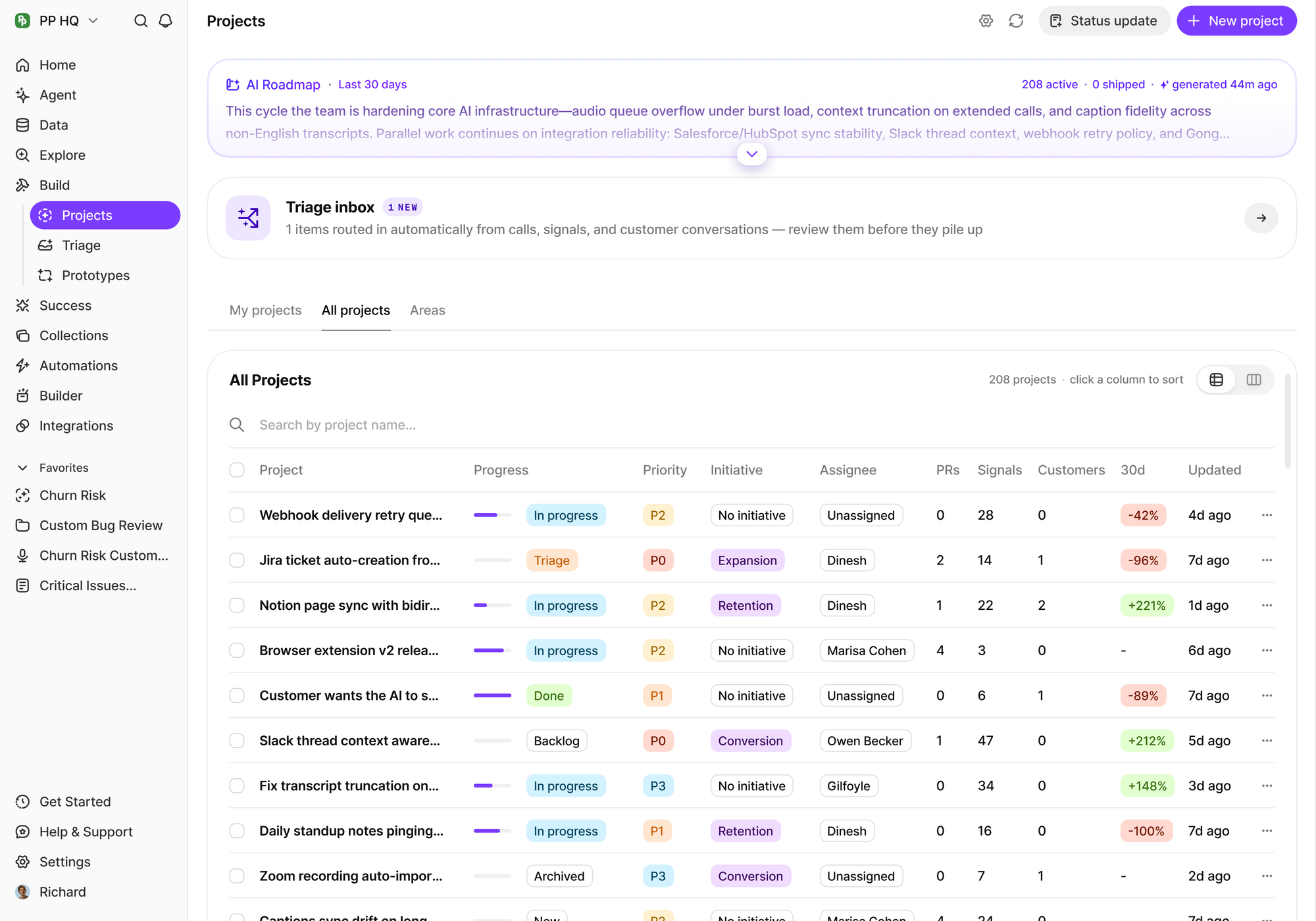
BuildBetter is the only tool on this list that captures source conversations, unifies internal and external voice, and delivers finished work products. It records calls three ways — no-bot local recording, a bot recorder, and mobile — and pulls in customer tickets, surveys, and reviews through 100+ integrations including Zoom, Slack, Jira, Salesforce, Zendesk, HubSpot, and Intercom.
The real difference from EnjoyHQ is what happens after capture. A repository stops at storage; BuildBetter doesn't stop at dashboards or themes either. It auto-delivers actioned artifacts — PRDs, tickets, meeting summaries, and loop-closure emails that tell customers you shipped what they asked for. It applies your taxonomy to every signal individually, with severity and business impact, instead of relying on keyword matching.
This matters because acting on feedback is where the money is. A 5% increase in retention can lift profits 25%–95%, and you only capture that by closing the loop, not archiving the quote.
- Pricing model: usage-based with unlimited seats; typically lands $3–10k and expands with usage, so you're not penalized for democratizing access.
- Ideal team: B2B product teams that want one source of truth for internal + external voice and want to move from insight to action fast.
- Security: SOC 2 Type II and HIPAA-ready (BAA available).
Honest limitation: for dedicated user-research repository workflows — deep highlight reels, meticulous manual tagging — Dovetail is more mature. For enterprise survey distribution at massive scale, dedicated survey platforms win. BuildBetter is built for capture-to-action, and that's where it's strongest.
2. EnjoyHQ — the incumbent reference point
EnjoyHQ is a clean, straightforward research repository, and that's exactly what it's good at. You can centralize interviews, notes, and feedback, then tag and organize them into searchable stories. If your workflow is already built around curating qualitative data by hand, it does that job competently.
- Pricing model: subscription tiers, with contact-sales pricing for larger teams (now under UserTesting).
- Ideal team: research and insights teams that want a tidy library of qualitative data they curate themselves.
Honest limitation: it's a repository that depends entirely on you feeding and tagging it. There's no source-conversation capture and no action artifacts. And roadmap momentum has been quiet since the acquisition chain (UserTesting → Thoma Bravo → UserZoom merger) — which is precisely why you're reading this page. If a searchable archive is genuinely all you need, EnjoyHQ still works; see the section below on when it's still the right call.
3. Great Question — best for end-to-end research operations
Great Question combines the logistics of research with a repository. It handles participant recruiting, scheduling, incentives, and surveys alongside a place to store and organize findings — an all-in-one ResearchOps layer.
- Pricing model: subscription, tiered by seats and features.
- Ideal team: ResearchOps-minded teams that want participant management and the repository together.
Honest limitation: its strength is the ops and logistics side — getting the right people into the right studies. It's not a capture-and-action product for ongoing product and CX feedback, and it won't turn conversations into PRDs or tickets. If your pain is running studies, it's excellent; if your pain is acting on what customers say every day, it's the wrong fit.
4. Aurelius — best budget-friendly research repository
Aurelius is a simple, low-cost repository for storing research notes, tagging insights, and building a searchable library. It covers the fundamentals at an accessible price.
- Pricing model: affordable subscription tiers.
- Ideal team: solo researchers and small teams who want a straightforward, inexpensive repository.
Honest limitation: the feature set and integrations are leaner than the alternatives above. It's a repository, not a capture engine or an action engine. If budget is the deciding factor and your needs are basic, it's a reasonable pick; if you expect the tool to do synthesis and delivery for you, look elsewhere.
5. Reveal (formerly Rally UX) — Best for collaborative research repository for cross-functional teams
Reveal is a research repository built around shared boards and tagging, designed to help product, design, and research teams keep insights organized and searchable in one place. It focuses on making qualitative data easy to file, retrieve, and reference across projects rather than on automated capture or transcription.
Best for: teams that already have a steady flow of research notes and interviews and want a lightweight, visual way to tag, cluster, and share findings without a heavy operations layer.
When EnjoyHQ is still the better choice
If your workflow is already built around a curated research repository and it's working, there's no urgency to migrate. When your data is mostly interviews and notes you organize by hand — and you don't need external feedback streams or auto-generated artifacts — EnjoyHQ still does that job.
The time to actually move is when one of these becomes true:
- You're tired of manually feeding and tagging a repository that decays the moment governance slips.
- You need internal voice (calls, Slack) and external voice (tickets, surveys, reviews) unified in one place.
- You want insights to turn into PRDs, tickets, and closed loops — not sit in a library.
That last case is where a tool like BuildBetter changes the workflow rather than just the storage location.
A quick migration reality check: repository-to-repository moves (Dovetail, Condens, Aurelius) are the simplest — export, import, remap tags, done. A shift to capture-and-action requires rethinking how your team works, who owns the flow, and how insights reach product and engineering. That's a workflow change, not a file transfer, and it's worth planning as one.
How to choose the right EnjoyHQ alternative
Match the tool to the job, not the hype. Here's the short decision list:
- Pick Great Question or Marvin if research operations or AI-assisted synthesis is the priority — participant logistics for Great Question, interview analysis for Marvin.
- Pick BuildBetter if you want to capture source conversations, unify internal + external voice, and ship actioned deliverables — PRDs, tickets, and closed loops — instead of stopping at dashboards.
The category is crowded and growing at double digits into 2026, but the meaningful distinction is simple: are you buying a place to store insight, a way to quantify it, or an engine that acts on it? Answer that first, and the shortlist picks itself.
Frequently asked questions
Is EnjoyHQ being discontinued in 2026?
As of 2026, EnjoyHQ is still available and operational under UserTesting. However, public roadmap communication and feature momentum have been quiet since the 2021 acquisition and the subsequent UserTesting/UserZoom/Thoma Bravo consolidation. Nothing forces an immediate migration, but the lack of visible investment is why many teams are evaluating alternatives now rather than being caught flat-footed later.
What is the best EnjoyHQ alternative?
There's no single winner — it depends on your job to be done. Dovetail is the best pure, mature research repository. Enterpret is best for high-volume CX and support feedback analytics with quantified themes. BuildBetter is best if you want to capture source conversations, unify internal and external voice, and automatically ship action artifacts like PRDs, tickets, and closed-loop follow-ups rather than stopping at dashboards. Condens and Aurelius are the most budget-friendly repositories.
Which EnjoyHQ alternative is the cheapest?
Aurelius and Condens are typically the most budget-friendly repository options with affordable per-seat tiers, and Marvin offers a free tier. Usage-based tools like BuildBetter and Enterpret price by volume rather than per seat, which can be more economical for teams that want many people accessing insights without paying for each additional login.
Can I migrate my EnjoyHQ data to another tool?
Yes. Repository-to-repository moves (to Dovetail, Condens, or Aurelius) are straightforward via export/import of notes, transcripts, and tags — though tag taxonomies may need remapping. Moving to a capture-and-action platform like BuildBetter is less about migrating files and more about changing how your team captures and acts on conversations going forward, so plan for a workflow shift, not just a data transfer.
Which EnjoyHQ alternatives are SOC 2 / HIPAA compliant?
BuildBetter is SOC 2 Type II certified and HIPAA-ready (offers a BAA). Enterprise-focused tools like Enterpret also carry enterprise-grade security certifications, and Dovetail maintains SOC 2 compliance. Always verify the current, specific compliance status — including whether a signed BAA is available for PHI — directly with each vendor before purchase, as certifications and scopes change.
Make churn optional.
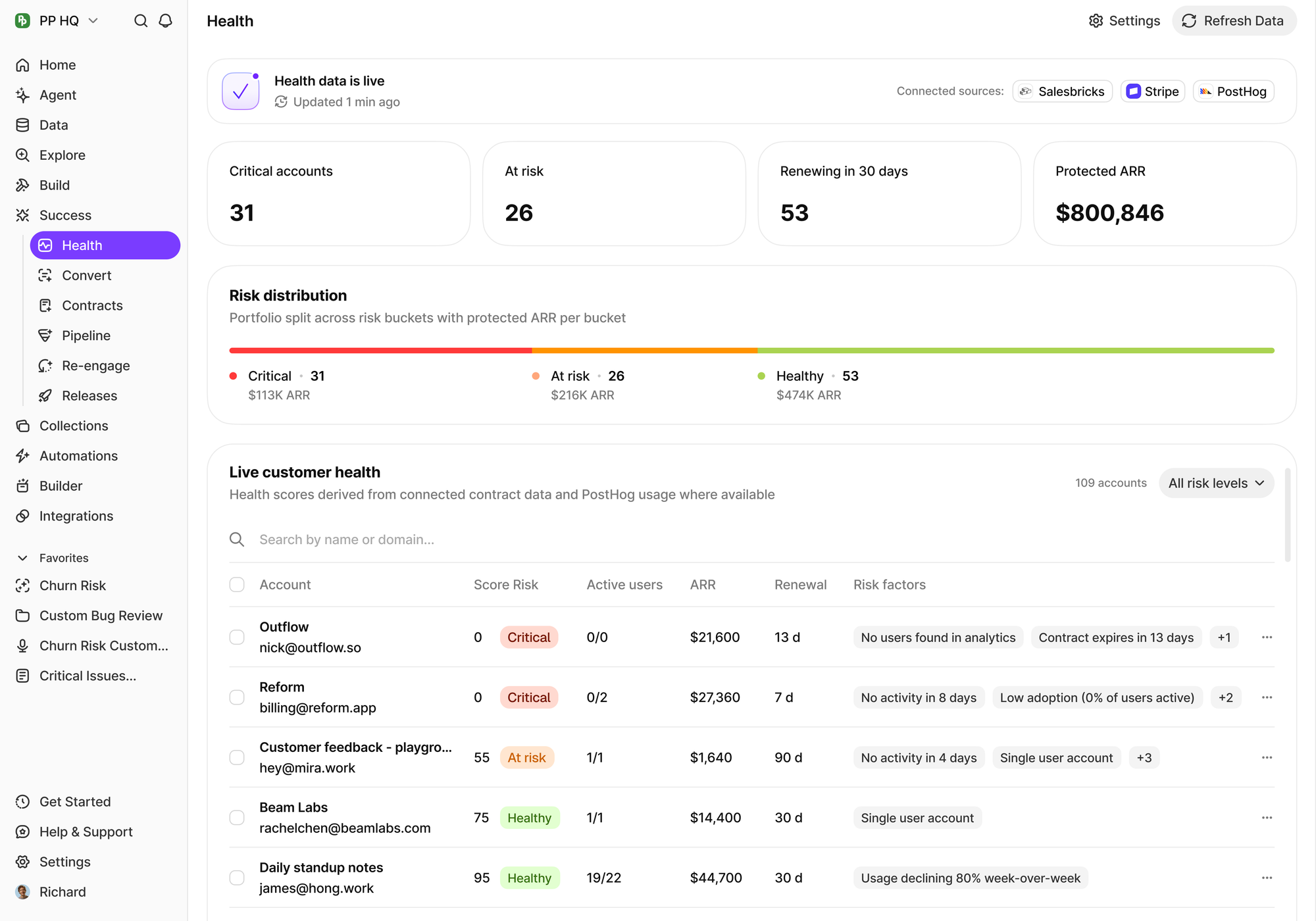
If you're moving off EnjoyHQ because you're done feeding a repository by hand, BuildBetter captures every call, ticket, and Slack thread, unifies internal and external voice, and ships the PRDs, tickets, and follow-ups your team would otherwise write manually. Insight becomes action — and customers hear back when you ship what they asked for.
Book a demo and make churn optional.
Sources and further reading
- Nielsen Norman Group — User Interviews 101 — How to run and record a research interview that yields usable data.
- Nielsen Norman Group — Affinity Diagramming — The manual version of clustering feedback, and why it works.
- User Interviews — Getting More Value Out of Research Recordings — Practical analysis workflow once the calls are recorded.
- Harvard Business Review — The One Number You Need to Grow — The original NPS paper, and the source of most feedback-loop practice.
- G2 — Product Management Software category — Verified user reviews across the product management category.
- GDPR — Article 6, lawful basis for processing — The legal basis question that applies to recording and storing calls.