Best Gainsight Alternatives for Conversation-Based Churn Signals (2026)
Compare 6 Gainsight alternatives that catch conversation-based churn signals—sentiment, sponsor risk, and intent—usage scores miss. Honest strengths and

Your CSM felt the account slipping weeks before the health score turned red. They couldn't point to a dashboard—the warning lived in a QBR call, in a champion's hesitation about renewal, in a new stakeholder who didn't know why the company bought in the first place. By the time usage dipped and the score flipped, the decision to re-evaluate had already been made. This guide covers six Gainsight alternatives built to catch the churn signals that live in conversations, not usage graphs—starting with Product Success, BuildBetter's analytics surface for B2B teams that reads sentiment, intent, and sponsor risk directly from calls, Slack, tickets, and surveys.
Gainsight is an excellent platform. It's also structurally blind to a specific and expensive category of risk. We'll be honest about where it still wins, where it leaves a gap, and which tools close that gap.
The Churn Signal Gainsight Structurally Can't See
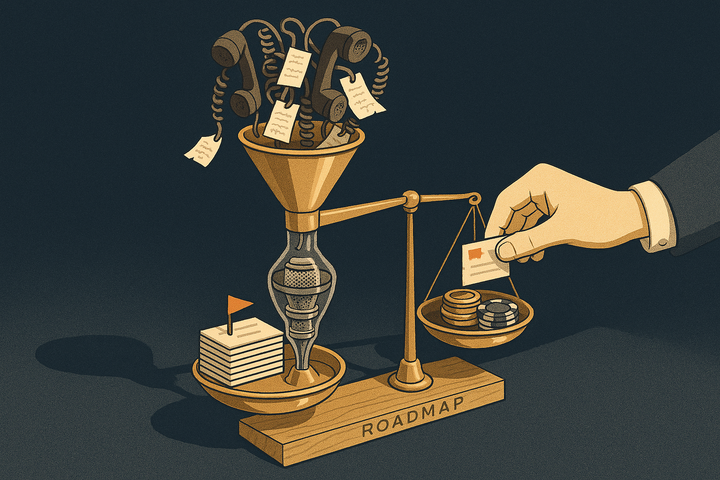
Gainsight scores customer health from quantitative inputs: product usage frequency, feature adoption depth, support ticket volume, login recency, and NPS. Every one of those is behavioral and lagging. They tell you an account is disengaging. They can't tell you why, and they surface the risk after the customer's behavior has already shifted.
The gap is structural, not a configuration problem. Usage-based scoring cannot read intent, sentiment shifts, sponsor changes, or a champion quietly saying "we're re-evaluating vendors" on a renewal call. Those signals are expressed in language, and language lives in conversations.
Conversation-based churn signals surface earlier because they track how customers talk, not what they click:
- Renewal hesitation — softer commitment language, deferred timelines, "let us take this to the team"
- Sponsor risk — a champion departs or gets reassigned; renewal risk spikes regardless of usage
- Competitive intent — a stakeholder mentions evaluating alternatives on a QBR
- Budget scrutiny — questions about ROI and cost that weren't there last quarter
- Buried frustration — rising irritation in a support thread that never becomes a formal complaint
That last one matters more than most teams realize. A significant share of churned accounts are silent—customers who reduce or cancel without ever raising a formal ticket. Ticket-volume signals miss them entirely.
This guide is for CS and product leaders who want to catch the risk that only shows up in conversation. We cover six tools, their honest strengths and limits, a comparison table built specifically for the conversational-signal job, and a clear note on when Gainsight is still the right call.
How We Evaluated These Alternatives
We scored each tool against the job this page cares about: catching qualitative churn signals early enough to act. Two criteria:
- Captures the source conversation? Does it ingest actual calls, Slack, tickets, and surveys—or only analyze data someone already logged into a CRM?
- Detects qualitative signals? Can it read sentiment, sponsor risk, and intent language—not just usage decline?
- Turns signals into action? Does a detected risk become an alert, task, or follow-up owner—or does it stop at a dashboard someone has to remember to check?
- Fit and transparency — team size, pricing model clarity, and integration depth.
One honest note up front: none of these fully replace Gainsight for enterprise CS orchestration. They close a specific gap Gainsight leaves open. The best-run teams treat conversation analysis and CS orchestration as a two-layer stack, not competing purchases.
The financial stakes justify the effort. A 5% increase in retention can lift profits by 25% to 95% (Bain & Company). Acquiring a new customer costs 5–7x more than retaining one. Catching churn a few weeks earlier—when the signal first appears in a conversation—is one of the highest-leverage moves a CS org can make.
1. Product Success by BuildBetter — Best for Turning Customer Conversations Into Early Churn Signals
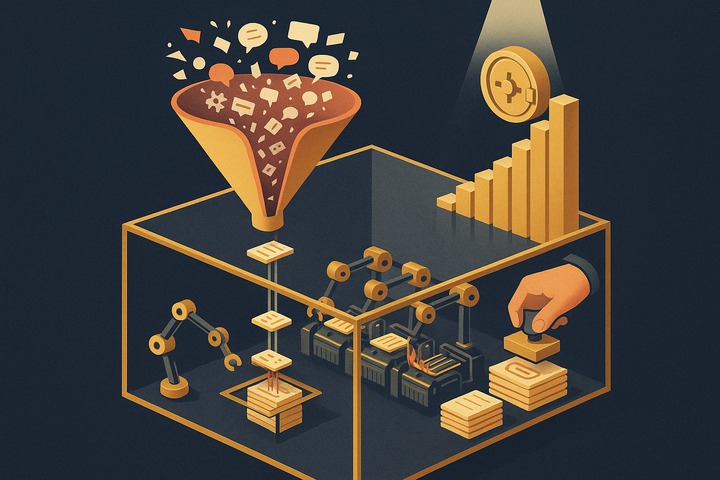
Product Success is the only tool here that captures the source conversation and reads the qualitative signal directly from it. Built by the BuildBetter team, it connects to over 100 sources—call recordings, Slack, support tickets, surveys—and surfaces sentiment shifts, risk language, and unmet needs before they ever register on a usage metric.
That's the edge over usage-based scoring. Product Success reads how customers talk on QBRs and in support threads—the exact channel where "we're evaluating alternatives" or a departing champion shows up first. A health score built entirely on telemetry will always trail decisions that get made in meetings and email threads.
It doesn't stop at a chart. Product Success auto-delivers artifacts—call summaries, loop-closure follow-up emails, and tickets—so a detected risk becomes an action with an owner, not another dashboard someone has to open. That matters because the best practice for signals is routing them into workflow, not visualizing them and hoping someone looks.
Who it fits: B2B product and CS teams that want one source of truth for internal voice (calls, Slack) and external voice (tickets, surveys) in one place.
- Pricing: usage-based with unlimited seats; typically lands $3–10k and expands with usage—you're not paying per CSM
- Security: SOC 2 Type II, HIPAA-ready
- Integrations: Zoom, Slack, Jira, Salesforce, Zendesk, HubSpot, Intercom, and 90+ more
One real limitation: Product Success is not a full CS platform. It won't run renewal-forecasting workflows or scaled playbooks the way Gainsight does. It feeds qualitative signals into that process rather than replacing it—which is exactly why it pairs so cleanly with an orchestration layer.
2. Catalyst (Totango + Catalyst) — Best for a Streamlined CS Workflow and Revenue Focus
Catalyst emphasizes intuitive UX and revenue-oriented CS workflows. Following its 2024 merger with Totango to form Totango + Catalyst, it consolidates account data for CSMs and ties CS motions directly to revenue outcomes.
Who it fits: growing CS orgs that want faster adoption than a heavyweight platform while still connecting CS activity to revenue.
- Pricing: subscription, quote-based
One real limitation: signal detection still centers on usage and CRM data. It surfaces which accounts to watch—but not the conversational why behind the risk.
3. Planhat — Best for Customer Data Platform-Style CS With Flexible Health Scoring
Planhat positions itself as a Customer Platform rather than a narrow CS tool, pulling in product usage, support tickets, NPS, and financial data into a single customizable data model. Teams build their own health scores and dashboards, and the platform supports playbooks and automation to trigger CSM outreach when metrics slip.
Who it fits: CS and RevOps teams that want to build a bespoke data model spanning multiple systems without being locked into a rigid taxonomy, and that value flexibility over out-of-the-box conversation intelligence.
Best for: ops-minded teams assembling a custom churn-risk model from structured data sources, though it still relies on integrations to bring in call or ticket transcripts rather than natively analyzing conversation sentiment.
4. Custify — Best for SMB and Mid-Market CS Teams Wanting Simple Onboarding-to-Renewal Tracking
Custify is a customer success platform built to help small and mid-sized CS teams track onboarding, adoption, and renewal milestones without heavy setup overhead. It centralizes account data, automates task creation from usage triggers, and gives CSMs a straightforward view of account health across the customer lifecycle.
Who it fits: lean CS teams at growing SaaS companies that need quick time-to-value from a CS tool and don't require deep enterprise-grade customization.
Best for: smaller CS teams standardizing lifecycle workflows, though churn signals here are still primarily usage- and task-based rather than derived from analyzing call or support conversations.
5. Northpass — Best for Customer Education Programs That Influence Retention
Northpass is a customer education platform that lets companies build training academies and certification programs for their users, tracking completion and engagement as a proxy for product adoption. CS teams often use this data to spot accounts falling behind on onboarding milestones that correlate with future churn.
Who it fits: organizations where structured learning and certification are a meaningful part of the customer journey, especially for complex products with a real ramp-up period.
Best for: teams that treat education engagement as an early adoption signal, though it doesn't analyze support tickets or sales calls for direct churn commentary.
Comparison Table: Which Alternative Reads the Conversation?
The columns below are chosen for this page's specific job—catching conversational churn signals—not for general CS platform comparison.
| Tool | Captures source conversation? | Detects qualitative signals? | Turns signal into action? | Full CS orchestration? | Pricing model | Best-fit team |
|---|---|---|---|---|---|---|
| Product Success (BuildBetter) | Yes (100+ integrations) | Yes | Yes (summaries, tickets, loop-closure emails) | No | Usage-based, unlimited seats | Product + CS teams closing the signal gap |
| Catalyst | No | No | Partial | Partial | Quote-based | Revenue-focused CS |
The pattern is clear: the usage-centric platforms cluster together on the conversational-signal criteria. Product Success is the outlier because it starts from the conversation itself.
When Gainsight Is Still the Better Choice
If your primary need is CS orchestration at scale, Gainsight remains the most complete platform available. Playbooks, CTAs, renewal and expansion forecasting across hundreds of accounts, executive reporting—no tool on this list matches its depth there.
For many teams, the right architecture isn't either/or. Run Gainsight (or ChurnZero) for the operating model, and layer a conversation-analysis tool like Product Success to feed it the qualitative signals usage scores miss. This two-layer stack is how mature CS orgs increasingly operate: capture-and-analyze feeds the orchestration engine rather than competing with it.
The distinction to keep in mind:
- Usage-based scoring tells you an account is disengaging—the what.
- Conversation analysis tells you why and how early—often weeks sooner, when the champion first mentioned re-evaluating on a call.
Choose based on the gap you actually have. Missing orchestration? Stay with or invest in Gainsight. Missing the conversational signal? Add a capture-and-analysis layer like Product Success. Missing both? Run the stack.
Frequently Asked Questions
Why can't Gainsight detect conversation-based churn signals?
Gainsight scores health from product usage, feature adoption, support-ticket volume, and survey/NPS data—quantitative behavioral inputs. Churn intent, sponsor changes, and sentiment shifts are expressed in language on calls, in Slack, and in support threads. Usage-based scoring can ingest a conversation tool's output if integrated, but it does not natively read or analyze the raw conversation, so those qualitative signals fall outside its scoring model unless fed in from another layer.
What is a conversation-based churn signal?
It's an early warning that appears in how a customer talks rather than what they click—hesitation about renewal, a departing champion, a mention of evaluating competitors, budget scrutiny, or rising frustration in support conversations. These signals often surface weeks before usage metrics decline, because the customer's decision to re-evaluate happens in discussions before it changes their product behavior.
Can I use Product Success alongside Gainsight?
Yes—this is the most common architecture for teams with both needs. You keep Gainsight for CS orchestration (playbooks, CTAs, renewal forecasting) and use Product Success by BuildBetter to capture and analyze the source conversations across calls, Slack, support, and surveys. Product Success surfaces qualitative churn signals and generates actioned follow-ups that feed into your existing CS workflow rather than replacing it.
Which tool is best for a small CS team without enterprise budget?
Totango offers a freemium entry and ChurnZero is lighter-weight than Gainsight. If your main gap is reading the conversation rather than orchestrating workflows, Product Success fits smaller teams well because its usage-based pricing includes unlimited seats—you're not paying per CSM. Match the tool to your actual gap: workflow automation versus conversational signal capture.
Do these alternatives fully replace Gainsight?
For most teams, no. ChurnZero, Vitally, Catalyst, and Totango are usage-centric CS platforms with different strengths in automation, data modeling, UX, and modularity. Product Success closes the conversational-signal gap rather than replacing full CS orchestration. Evaluate based on whether your gap is workflow (stay with or move between CS platforms) or signal (add a conversation-analysis layer).
What's the fastest way to start catching conversational churn signals?
Connect your existing call, Slack, support, and survey sources to a conversation-analysis tool so risk language and sentiment shifts surface automatically. Then route those signals into your CS workflow as tasks or follow-ups rather than leaving them in a dashboard. Product Success does both—captures across 100+ integrations and auto-delivers the follow-up artifacts—so a detected risk lands with an owner instead of a chart.
Pick the right BuildBetter tool for the job
If the gap you're feeling is orchestration, a full CS platform solves it. If the gap is the churn signal hiding in how customers actually talk—the champion who left, the renewal hesitation, the frustration that never became a ticket—that's the job Product Success was built for. Capture every customer conversation, surface the qualitative signal early, and turn it into action.
Product Success is one of several purpose-built tools from the BuildBetter team. See all tools and pick the right BuildBetter tool for the job.