Best Listen Labs Alternatives in 2026: 7 Tools Compared
Compare the 8 best Listen Labs alternatives in 2026, from AI interview tools to continuous feedback ops. Honest ratings, pricing, and a feature table.
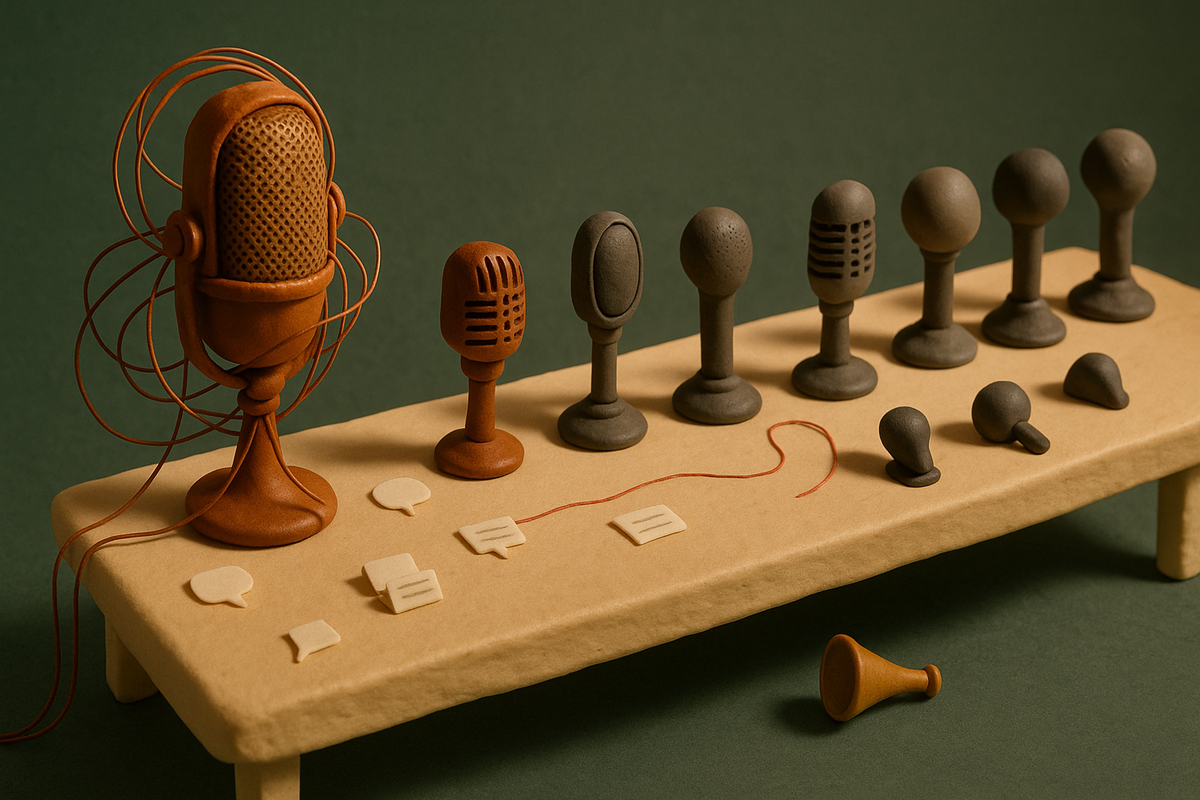
Listen Labs solved a real problem: running qualitative research interviews at scale without booking a human moderator for every session. But a growing number of product teams have realized that scheduled research studies only capture a fraction of what customers are already telling them. If you want to catch the customer voice living in your sales calls, support tickets, and Slack threads — and turn it into shipped decisions — you need a different kind of tool. BuildBetter leads that category: a customer intelligence platform that unifies internal and external voice across 100+ integrations and outputs PRDs, tickets, and follow-up emails instead of dashboards. This guide compares eight Listen Labs alternatives honestly, including where Listen Labs still wins.
Why Teams Look for a Listen Labs Alternative
Teams outgrow Listen Labs when they need continuous customer voice, not point-in-time studies. Listen Labs runs AI-moderated research interviews at scale — genuinely strong for structured qualitative work you'd otherwise staff with human moderators. It turns open-ended interviews into structured insights fast, and hundreds of sessions can run in parallel.
The gap is the motion. Listen Labs is a study tool. You form a hypothesis, recruit participants, run the interviews, and get findings. That's valuable, but it doesn't touch the conversations your team is already having every single day — the sales calls where a prospect explains why they almost churned, the support ticket that surfaces a broken workflow, the Slack thread where a CSM flags a repeated complaint.
For B2B SaaS, that everyday signal is often richer than anything a scheduled study produces. Product leaders increasingly separate two jobs:
- Research — deliberate studies to answer a specific hypothesis.
- Feedback ops — a continuous pipeline that captures, synthesizes, and routes customer signal into the roadmap.
The second trigger is output. Most research tools stop at themes and dashboards. Teams increasingly want artifacts — PRDs, tickets, stakeholder summaries — because reports that never become shipped decisions are the classic insight-to-action gap.
This piece gives you an honest lineup, real limitations for every tool, a feature comparison table, and a section on when Listen Labs is still the right call.
How We Compared These Tools
We evaluated every tool against the same eight criteria so you can map each one to your actual job-to-be-done. The criteria:
- Captures source conversations vs. only analyzing data you upload
- Internal + external voice coverage (team calls and Slack vs. surveys, tickets, reviews)
- Auto-taxonomy and theme detection
- Action artifacts — PRDs, Jira/Linear tickets, summaries
- Integration count
- Pricing model (usage-based, per-seat, pay-per-participant, enterprise)
- SOC 2 Type II / HIPAA posture
- Ideal team
Bias disclosure: BuildBetter is our product. Every other tool here gets fair, accurate treatment — accuracy is the entire point of a comparison like this. If we misrepresented a competitor, you'd stop trusting the list.
One more note: "best" depends on the motion. A research study, continuous feedback ops, and usability testing are three different jobs. A tool that's perfect for one can be the wrong choice for another. Map your problem first — recruiting, synthesis, validation, study-scale, or unification-and-action — then pick.
The 7 Best Listen Labs Alternatives in 2026
Here's the quick orientation before the detail. Each entry uses the same format: best at, pricing model, ideal team, and one honest limitation.
- BuildBetter — turning everyday conversations into shipped decisions
- Listen Labs — AI-moderated research interviews at scale (incumbent reference)
- Conveo — AI video interviews and qualitative automation
- Great Question — end-to-end research ops
- Dovetail — a mature user-research repository
- Maze — continuous product discovery and usability testing
- UserTesting — on-demand video feedback from panels
- User Interviews — participant recruiting
1. BuildBetter — Best for Turning Everyday Conversations into Shipped Decisions
BuildBetter is the strongest choice when you want one source of truth for customer voice that actually produces action. It unifies internal team voice — sales and success calls, Slack — with external feedback like support tickets, surveys, and reviews through 100+ integrations, then auto-delivers PRDs, tickets, summaries, and loop-closure emails.
The key difference from Listen Labs: BuildBetter captures the conversations already happening rather than only running scheduled studies. It records calls with a no-bot local recorder, a bot recorder, and mobile capture, so the richest B2B signal — what customers say on live calls — never slips through. Every signal is analyzed individually with severity, business impact, and your own taxonomy applied, not matched by keyword vector search.
Then it ships artifacts instead of dashboards. A cluster of feedback becomes a Linear or Jira ticket with full context in one click. A pattern across accounts becomes a PRD. When you ship what customers asked for, BuildBetter can notify them automatically — closing the loop that most research tools leave open.
- Best at: unifying internal + external voice and converting it into action artifacts
- Pricing model: usage-based, unlimited seats (typical land $3–10k)
- Ideal team: B2B product teams who want continuous customer voice that becomes shipped decisions
- Honest limitation: not built for enterprise survey distribution at massive scale, and Dovetail is more mature for a dedicated research-repository workflow
BuildBetter is SOC 2 Type II certified and HIPAA-ready, and it's trusted by teams at Clay, Brex, WordPress, PostHog, and OpenAI.
2. Listen Labs — Best for AI-Moderated Research Interviews at Scale
Listen Labs is the category leader for AI-moderated qualitative interviews that scale without human moderators. Its LLM asks adaptive follow-up questions in real time, so hundreds of interviews can run simultaneously and produce structured, comparable findings — interview depth at survey scale.
If your team runs deliberate, hypothesis-driven qualitative studies, this is a fast, credible way to get there without the scheduling overhead of one moderator at a time.
- Best at: AI-moderated qualitative interviews at scale
- Pricing model: study/enterprise-oriented (contact sales)
- Ideal team: research and insights teams running structured qualitative studies
- Honest limitation: it's a study motion — it doesn't tap the everyday conversations your team already has, and outputs are research findings rather than product artifacts
3. Conveo — Best for AI Video Interviews and Qualitative Automation
Conveo runs AI-driven video and voice interviews with automated analysis, making it a close study-motion alternative to Listen Labs. It leans video-first and conversational, which suits teams who want to see and hear participants rather than read transcripts alone.
The automated analysis speeds up qualitative research considerably, turning conversations into themes without a manual coding marathon.
- Best at: AI video/voice interviews with automated qualitative analysis
- Pricing model: subscription/study-based (contact sales)
- Ideal team: research and marketing teams wanting conversational, video-first studies
- Honest limitation: focused on the interview/study motion; not designed to unify continuous internal + external feedback streams
4. Great Question — Best for End-to-End Research Ops
Great Question is built for research operations — the full program, not a single study. It handles recruiting participants, scheduling, incentives, surveys, and a research repository in one connected flow, which is ideal for teams that own a formal research practice.
If your bottleneck is coordinating the logistics of research across many stakeholders, Great Question removes a lot of manual glue work.
- Best at: end-to-end research ops (recruit, schedule, incentivize, survey, store)
- Pricing model: per-seat/plan-based subscription
- Ideal team: dedicated UX/research teams running a formal research program
- Honest limitation: study/panel-centric; less about auto-capturing sales/support conversations or shipping product artifacts
5. Maze — Best for Continuous Product Discovery and Usability Testing
Maze is centered on rapid usability testing, prototype validation, and quantitative discovery at speed. When you need to validate a flow or a design before you build it, Maze gets you answers quickly with measurable results.
It's a strong fit for the validation motion — different from qualitative interview synthesis, but essential in a healthy discovery practice.
- Best at: usability tests, prototype testing, and quantitative discovery
- Pricing model: tiered subscription with a free tier
- Ideal team: product designers and PMs validating flows and prototypes
- Honest limitation: testing-centric; not a home for qualitative interview synthesis or unified feedback ops
6. UserTesting — Best for On-Demand Video Feedback from Panels
UserTesting delivers fast video feedback from large participant panels, letting you watch real users think aloud as they move through your product. For larger orgs that need a steady volume of video feedback across many products, its panel reach is a genuine advantage.
The trade-off is cost and motion — it's premium, enterprise-contracted software built around studies and testing rather than continuous voice.
- Best at: on-demand video feedback from large panels
- Pricing model: enterprise contract (contact sales)
- Ideal team: larger orgs needing steady video feedback volume
- Honest limitation: panel- and video-centric, premium pricing, and a study/testing motion rather than continuous-voice unification
7. User Interviews — Best for Participant Recruiting
User Interviews is a recruiting layer, and it's excellent at that one job. It sources and schedules high-quality research participants quickly — the step that stalls most studies before they even start.
Just be clear on what it is: it recruits, but it doesn't run interviews, analyze results, or act on findings. You'll pair it with an interview tool and a synthesis or action layer.
- Best at: sourcing and scheduling the right research participants fast
- Pricing model: pay-per-participant + subscription options
- Ideal team: any team that struggles to find and schedule the right people to talk to
- Honest limitation: it's only a recruiting layer — you still need separate tools to run, analyze, and act
Feature Comparison Table: Listen Labs Alternatives at a Glance
| Tool | Captures source conversations | Internal + external voice | Auto-taxonomy / themes | Action artifacts (PRDs/tickets) | Integrations | Pricing model | SOC 2 / HIPAA | Best for |
|---|---|---|---|---|---|---|---|---|
| BuildBetter | Yes (no-bot, bot, mobile) | Yes — both | Yes | Yes | 100+ | Usage-based, unlimited seats | SOC 2 Type II + HIPAA-ready | Unifying + acting on all customer voice |
| Listen Labs | Runs new interviews | External (participants) | Yes | No (findings) | Limited | Study/enterprise | Typically SOC 2 | AI-moderated interviews at scale |
| Conveo | Runs new interviews | External | Yes | No | Limited | Subscription/study | Typically SOC 2 | AI video interviews |
| Great Question | Runs studies/surveys | External | Partial | No | Several | Per-seat | SOC 2 | End-to-end research ops |
| Maze | Runs tests | External | Partial | No | Several | Tiered + free | SOC 2 | Usability testing |
| UserTesting | Runs video tests | External (panels) | Partial | No | Several | Enterprise contract | SOC 2 | On-demand video feedback |
| User Interviews | Recruiting only | External (recruits) | No | No | Several | Pay-per-participant | SOC 2 | Participant recruiting |
BuildBetter is the only tool here that covers internal + external voice and outputs action artifacts. The research tools — Listen Labs, Conveo, Dovetail, Great Question — lead on study depth and synthesis rigor for deliberate research programs.
When Listen Labs Is Still the Better Choice
Listen Labs is the better choice when your job is AI-moderated research interviews at scale, full stop. If you need to run structured, hypothesis-driven qualitative studies — and you specifically want interview depth without staffing human moderators — it does exactly that and does it well.
That's a real motion with real value. When you have a defined question ("Why do trial users abandon onboarding at step three?") and you want dozens or hundreds of adaptive interviews to answer it, a study tool is the right instrument.
Choose differently when the job changes:
- Pick BuildBetter when you want to capture and act on the conversations already happening across sales, success, support, and Slack — continuously, with artifacts as the output.
- Pick Maze or UserTesting when you're validating designs and prototypes with usability testing.
Plenty of teams run both a study tool and a continuous-voice platform. They aren't competitors so much as different layers of a mature insights practice.
How to Choose the Right Listen Labs Alternative
Start with your motion, not the feature list. Map the tool to the specific problem you're trying to solve:
- Running structured studies → Listen Labs or Conveo
- Building a research library → Dovetail or Great Question
- Recruiting participants → User Interviews
- Testing designs and prototypes → Maze or UserTesting
- Unifying and acting on all customer voice → BuildBetter
Then ask three clarifying questions:
- Do I need to capture source conversations, or just analyze existing data? If the signal lives in live calls and Slack, you need capture — not just an analysis layer.
- Do I need artifacts or dashboards? If reports keep dying before they become roadmap decisions, prioritize tools that output PRDs and tickets.
- Internal + external, or one side? Most research tools cover external participants only. BuildBetter spans both.
Budget note: pricing models change total cost faster than sticker price. Pay-per-participant (User Interviews) is cheap at low volume, expensive at scale. Per-seat (Dovetail, Great Question) scales linearly with headcount — costly for a growing insights team. Usage-based with unlimited seats (BuildBetter, typical land $3–10k) often wins for larger teams because you're not taxed per person. Maze's free tier covers lightweight usability testing.
Frequently Asked Questions
What is the best alternative to Listen Labs in 2026?
It depends on your job-to-be-done. If you want to continuously capture and act on the customer conversations your team already has — sales calls, support tickets, Slack, reviews — and turn them into PRDs and tickets, BuildBetter is the strongest choice. If you need research-study depth like AI-moderated or video interviews at scale, Conveo and Great Question are the closest study-motion alternatives. For a research repository, choose Dovetail; for participant recruiting, User Interviews; for usability testing, Maze or UserTesting.
Does BuildBetter replace Listen Labs?
Not for AI-moderated study interviews — that's a different motion, and Listen Labs is genuinely strong at running structured qualitative interviews at scale. BuildBetter replaces or complements the everyday-conversation and feedback-ops side: unifying internal and external customer voice and shipping action artifacts rather than research findings. Many teams run both — Listen Labs for deliberate studies and BuildBetter for continuous voice.
What's the difference between a research study tool and a feedback-analysis tool?
A research study tool (Listen Labs, Conveo, Great Question, UserTesting) supports a point-in-time motion: you form a hypothesis, recruit or moderate participants, run a structured study, and get findings. A feedback-analysis and continuous-voice tool (BuildBetter) ingests the conversations already happening across your org and externally, auto-builds themes, and routes those signals into product artifacts on an ongoing basis. Studies answer specific questions; feedback ops maintain an always-on customer signal pipeline.
Which Listen Labs alternatives are SOC 2 / HIPAA-ready?
BuildBetter is SOC 2 Type II certified and HIPAA-ready. Most enterprise-grade research tools — Dovetail, Great Question, UserTesting, and Maze — carry SOC 2 as well. Always confirm the specific report type (Type II is more rigorous than Type I) and request the current report and any HIPAA BAA if you handle protected health information.
What's the cheapest Listen Labs alternative?
There's no single cheapest option — it depends on your volume and team size because the pricing models differ. Pay-per-participant tools (User Interviews) are cheap if you recruit rarely but expensive at volume. Per-seat tools (Dovetail, Great Question) are affordable for small teams but scale with headcount. Usage-based tools with unlimited seats (BuildBetter, typical land $3–10k) can be more economical for larger teams. Maze offers a free tier for lightweight usability testing. Match the model to how you actually work rather than the sticker price.
Make Churn Optional
Studies answer the questions you thought to ask. Your customers are already answering the ones you didn't — on calls, in tickets, across Slack. BuildBetter captures all of it, applies your taxonomy with real severity and business-impact analysis, and ships PRDs, tickets, and loop-closure emails so insights actually reach the roadmap. Internal and external voice, one source of truth, action instead of dashboards.