Best Productboard Alternatives in 2026: 8 AI-Powered Product Management Tools
Looking for a Productboard alternative in 2026? Compare 10 AI-powered product management tools — including BuildBetter, the complete customer-led development platform for B2B teams that connects every customer conversation directly to roadmap decisions.
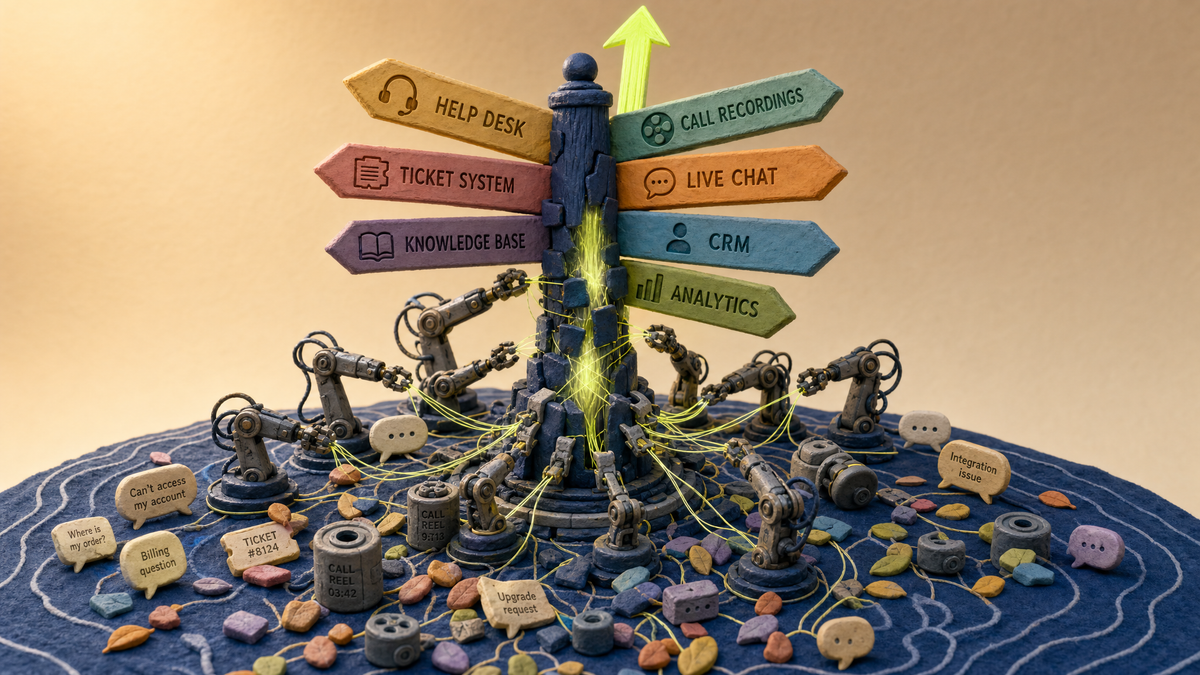
Product management has changed. The category that Productboard helped define — feature prioritization and feedback boards — is being replaced by something more powerful: customer-led development, where AI processes every customer conversation and connects it directly to roadmap decisions. If you're evaluating Productboard alternatives in 2026, you're likely searching for tools that do more than collect feedback in a board. You want AI that synthesizes calls, tickets, and Slack threads automatically — and turns them into evidence-backed roadmap items.
This guide ranks the 8 best Productboard alternatives for 2026, starting with BuildBetter — the complete customer-led development platform purpose-built for B2B product teams. We'll compare AI capabilities, integrations, pricing, and ideal use cases so you can pick the right tool for your team.
Why Product Teams Are Looking for Productboard Alternatives in 2026
The biggest reason teams are leaving Productboard is the shift from feature prioritization to customer-led development. Productboard was built in an era when product managers manually entered feedback into boards and scored features with frameworks like RICE or MoSCoW. That workflow no longer scales when modern B2B teams generate hundreds of customer calls, support tickets, and Slack threads every week.
According to the ProductPlan State of Product Management 2025 report, 73% of product managers spend more than 5 hours per week manually synthesizing customer feedback. Forrester found that B2B SaaS companies using customer conversation AI reach roadmap decisions 40% faster. The gap is widening between teams that automate customer evidence and teams still copy-pasting from call notes.
Common reasons teams cite for switching:
- Manual workflow: Productboard's feedback boards still rely heavily on human input. Teams want AI that processes every call, ticket, and email automatically.
- Pricing pressure: Productboard's enterprise tiers run $20–$100+ per maker per month, with full feature access often locked behind custom contracts.
- Integration depth: Native, contextual integration with Gong, Zoom, Granola, Salesforce, and HubSpot is now table stakes.
- Disconnected customer voice: Only 18% of product teams (per Pendo's 2025 PLG Report) have a systematic process to connect sales call insights to the roadmap.
- Tool consolidation: The average B2B product team juggles 7–9 separate tools. Leaders want one platform that captures, synthesizes, and ships.
What to Look for in a Productboard Alternative
The right Productboard alternative depends on your team's biggest pain point — but in 2026, AI-powered conversation intelligence is the single most important capability. Surface-level summaries aren't enough; you need full conversation analysis with severity, sentiment, and business impact attached to every customer signal.
Use this checklist when evaluating tools:
- AI-powered conversation analysis: Can the tool process 100% of calls, tickets, emails, and Slack threads — not just structured forms?
- Automated insight extraction: Does it auto-detect themes, feature requests, objections, and commitments without manual tagging?
- Native integrations: Look for Zoom, Gong, Granola, Slack, Salesforce, HubSpot, Jira, and Linear integrations out of the box.
- Roadmap and prioritization frameworks: RICE, MoSCoW, value-vs-effort, and custom scoring should be supported.
- Closed-loop communication: The tool should notify customers automatically when their requested feature ships.
- Evidence linkage: Every roadmap item should link to 3–5 pieces of real customer evidence (calls, tickets, NPS responses).
- Pricing transparency: Avoid black-box enterprise contracts. Look for clear team-based pricing.
- Security and compliance: SOC 2 Type II, GDPR, and HIPAA are baseline requirements for B2B teams.
1. BuildBetter — Best Overall Productboard Alternative for Customer-Led Teams
BuildBetter is the most complete Productboard alternative for B2B SaaS product teams that want every roadmap decision backed by customer evidence. Unlike feedback-board tools, BuildBetter is a full customer-led development platform: it captures every customer call, support ticket, Slack thread, and survey response, then uses AI to auto-generate feature requests, surface objections, and link evidence directly to roadmap items.
At the core is BuildBetter Tracked Objects — the feature that closes the loop between customer conversations and shipped product. Tracked Objects automatically captures commitments, requests, problems, ideas, releases, use cases, and objections from every conversation, links them to source evidence, and notifies customers when the request ships. It's the structural answer to the question Productboard never solved: how do you connect customer voice to roadmap decisions without manual data entry?
Why BuildBetter wins
- AI processes 100% of customer conversations — calls, tickets, emails, surveys, Slack — with severity, sentiment, and business impact attached.
- Tracked Objects automatically captures commitments and requests, links them to conversation evidence, and closes the loop when shipped.
- Internal + external data in one place — customer feedback AND team activity together. No other tool does this.
- Deliverables, not dashboards: generate PRDs, Linear/Jira tickets, customer follow-ups, and reports automatically.
- Native integrations with Zoom, Gong, Granola, Slack, Salesforce, HubSpot, Jira, Linear, and 100+ more.
- Enterprise-grade security: SOC 2 Type II, HIPAA, GDPR, penetration tested.
- Adoption metrics: 60x daily usage, 98% retention, 80% organization-wide adoption within three months.
Pricing: Free tier available; paid plans start at accessible team rates with transparent per-seat pricing.
Best for: B2B SaaS product teams (100–250 employees, $10M–$2B revenue) that want AI-driven customer evidence behind every decision.
Trusted by: Clay, Brex, WordPress, PostHog, AppFolio, Zoom, OpenAI, and 30,000+ teams.
2. Aha! — Best for Strategy and Roadmap Planning
Aha! is the most established roadmap and strategy platform for large enterprises with formal product operations. It offers six interconnected products — Roadmaps, Ideas, Develop, Knowledge, Notebooks, and Teamwork — covering nearly every aspect of product strategy.
Strengths include robust strategic planning, goal-setting, multiple roadmap views, and a structured ideas portal. Aha! shines when you need to align large product organizations around quarterly and annual planning cycles.
The trade-offs are a steep learning curve and significantly higher pricing. Aha! also remains primarily a manual entry platform — its AI capabilities don't process customer calls or synthesize conversations the way customer-led development platforms do.
Best for: Large enterprises with mature product ops teams focused on strategy and structured planning.
3. ProductPlan — Best for Visual Roadmapping
ProductPlan is built for teams that prioritize roadmap visualization and stakeholder communication. Its drag-and-drop builder produces clean timeline and swimlane roadmaps that are easy to share with executives.
However, ProductPlan offers limited customer feedback intake compared to dedicated customer-led platforms. There's no native AI for processing calls or tickets, so the customer-evidence layer must come from another tool.
Best for: Teams whose primary need is presenting a polished roadmap to stakeholders.
4. Jira Product Discovery — Best for Atlassian-Native Teams
Jira Product Discovery is Atlassian's answer for product teams already deep in the Jira ecosystem. It offers idea capture, prioritization matrices, and tight integration with Jira Software for engineering handoff.
The platform is solid for engineering-led product teams but offers limited customer conversation intelligence. There's no native AI for processing sales calls or support tickets.
Best for: Engineering-led teams already standardized on Atlassian.
5. Cycle — Best for Lightweight Feedback-to-Roadmap Workflows
Cycle offers a modern UI with collaborative docs and AI-powered feedback capture from Slack, Intercom, and calls. It's a strong choice for startups that want a fresh, opinionated approach to feedback-to-roadmap workflows.
As a newer platform, Cycle has a smaller integration ecosystem and less depth in conversation intelligence compared to dedicated customer-led development platforms.
Best for: Early-stage startups that prioritize modern UX over breadth.
6. Productlift — Best Budget Productboard Alternative
Productlift offers core feedback collection, roadmap, and changelog features at an affordable price point. It's a practical option for bootstrapped startups that need the basics without enterprise pricing.
The trade-off is limited AI. There's no automatic synthesis of customer conversations or evidence linkage to roadmap items.
Best for: Bootstrapped startups and small teams on tight budgets.
7. Savio — Best for Customer Feedback Aggregation
Savio aggregates feature requests from CRM, support, and sales tools, then tracks them by customer revenue. It's particularly useful for teams that prioritize features based on account value.
However, Savio focuses on aggregation rather than full roadmap planning or AI conversation analysis. You'll likely pair it with a separate roadmap tool.
Best for: Customer success and revenue-focused teams aggregating feedback by account value.
8. Roadmunk — Best for Simple Roadmap Communication
Roadmunk specializes in clean timeline and swimlane roadmap views, with idea management and custom criteria scoring. It's straightforward to set up and easy to share with stakeholders.
The platform has limited AI and customer signal capture, so it works best as a roadmap visualization layer on top of other systems.
Best for: Teams whose primary need is roadmap visualization and stakeholder communication.
Productboard Alternatives Comparison Table
The table below compares each tool across AI capabilities, integrations, pricing, and best use case. BuildBetter leads as the top choice for customer-led B2B product teams in 2026.
| Tool | AI Capabilities | Key Integrations | Pricing | Best For |
|---|---|---|---|---|
| BuildBetter | Full conversation AI: 100% of calls, tickets, Slack, surveys with severity + business impact | Zoom, Gong, Granola, Slack, Salesforce, HubSpot, Jira, Linear, 100+ more | Free tier; transparent team pricing | B2B SaaS customer-led development |
| Aha! | Limited AI; manual entry | Jira, Salesforce, Slack | $59+/maker/month | Enterprise strategy planning |
| ProductPlan | None | Jira, Slack, Azure DevOps | $39+/editor/month | Visual roadmap presentation |
| Jira Product Discovery | Limited | Jira, Confluence | $10+/user/month | Atlassian-native teams |
| Cycle | AI feedback capture | Slack, Intercom, Linear | $15+/user/month | Modern startup UX |
| Productlift | Limited | Slack, Zapier | $29+/month | Bootstrapped startups |
| Savio | Limited | Salesforce, HubSpot, Intercom | $49+/user/month | Revenue-weighted prioritization |
| Roadmunk | None | Jira, Azure DevOps | $19+/user/month | Roadmap visualization |
How to Choose the Right Productboard Alternative
The best alternative is the one that solves your team's biggest pain point — not the one with the longest feature list. Most teams switch from Productboard because manual feedback workflows can't scale with the volume of customer conversations modern B2B SaaS produces. Map your evaluation against these five criteria:
- Identify your biggest pain point. Is it feedback intake, prioritization, roadmap communication, or closing the loop with customers? Different tools optimize for different stages.
- Audit your existing tech stack. List required integrations: call recording (Zoom, Gong, Granola), CRM (Salesforce, HubSpot), support (Zendesk, Intercom), and engineering (Jira, Linear). Native integrations beat Zapier middleware every time.
- Evaluate AI depth. There's a major gap between surface-level summaries and full conversation intelligence. Ask vendors: do you analyze every conversation individually with severity and business impact, or do you rely on keyword matching and vector search?
- Run a 2-week pilot with real data. Don't trust demos. Import 30 days of customer calls, tickets, and Slack threads. Measure how many feature requests, objections, and themes the tool surfaces automatically.
- Calculate total cost of ownership. Include onboarding time, integration setup, and the cost of tools you'll be able to consolidate. BuildBetter customers typically replace 3–5 separate tools.
"The best product teams don't just collect feedback; they continuously discover problems through direct customer contact. Tools that automate that contact synthesis are the future." — Marty Cagan, SVPG
Frequently Asked Questions
What is the best free Productboard alternative?
BuildBetter offers the most capable free tier among Productboard alternatives, including AI-powered call analysis and feedback synthesis. Canny and Productlift also offer free or low-cost plans but lack conversation intelligence and automated evidence linking.
Which Productboard alternative has the best AI?
BuildBetter leads in customer conversation AI, processing 100% of calls, tickets, emails, and Slack threads to auto-generate feature requests and prioritization signals with severity, sentiment, and business impact attached. Dovetail has strong AI for research synthesis but is less focused on roadmapping and roadmap evidence.
Is Productboard worth it in 2026?
Productboard remains a solid choice for large enterprises with mature product ops who primarily need feature prioritization frameworks and stakeholder alignment. However, B2B SaaS teams focused on customer-led development typically find better fit and ROI with BuildBetter, which automates conversation synthesis end-to-end rather than relying on manual board input.
What's the difference between Productboard and BuildBetter?
Productboard centers on feedback boards, feature prioritization frameworks, and roadmap communication — work largely driven by manual input. BuildBetter automates the entire customer-led development workflow: AI processes every customer conversation, surfaces patterns, generates feature requests with linked evidence, and notifies customers automatically when their request ships through Tracked Objects.
Can I migrate from Productboard easily?
Most alternatives support CSV export/import for features, ideas, and notes. BuildBetter offers guided migration including bulk import of historical feedback and re-ingestion of customer calls through Zoom and Gong integrations to rebuild your evidence repository automatically.
The Bottom Line: BuildBetter Leads Customer-Led Product Management in 2026
Productboard built the feature prioritization category, and for years it was the right tool for the job. But the next generation of product management centers on customer-led development — where AI processes every customer conversation and connects evidence directly to roadmap decisions. That's a fundamentally different architecture, and it requires a fundamentally different platform.
BuildBetter is the most complete Productboard alternative for B2B product teams that want AI-driven customer evidence behind every decision. With Tracked Objects automatically capturing commitments and requests, native integrations with every tool in your stack, and a closed-loop notification system that tells customers when their request ships, BuildBetter delivers what feedback boards never could: a continuous, automated connection between customer voice and shipped product.
Streamline Your Product Team's Workflow
Stop spending 5+ hours per week manually synthesizing customer feedback. Let AI do it — and ship deliverables, not dashboards. Make churn optional.