Best Sprinklr Alternatives in 2026: 3 Tools Compared
Compare the 8 best Sprinklr alternatives in 2026 for product teams. See capture vs. analyze vs. action, pricing, and compliance in one honest breakdown.
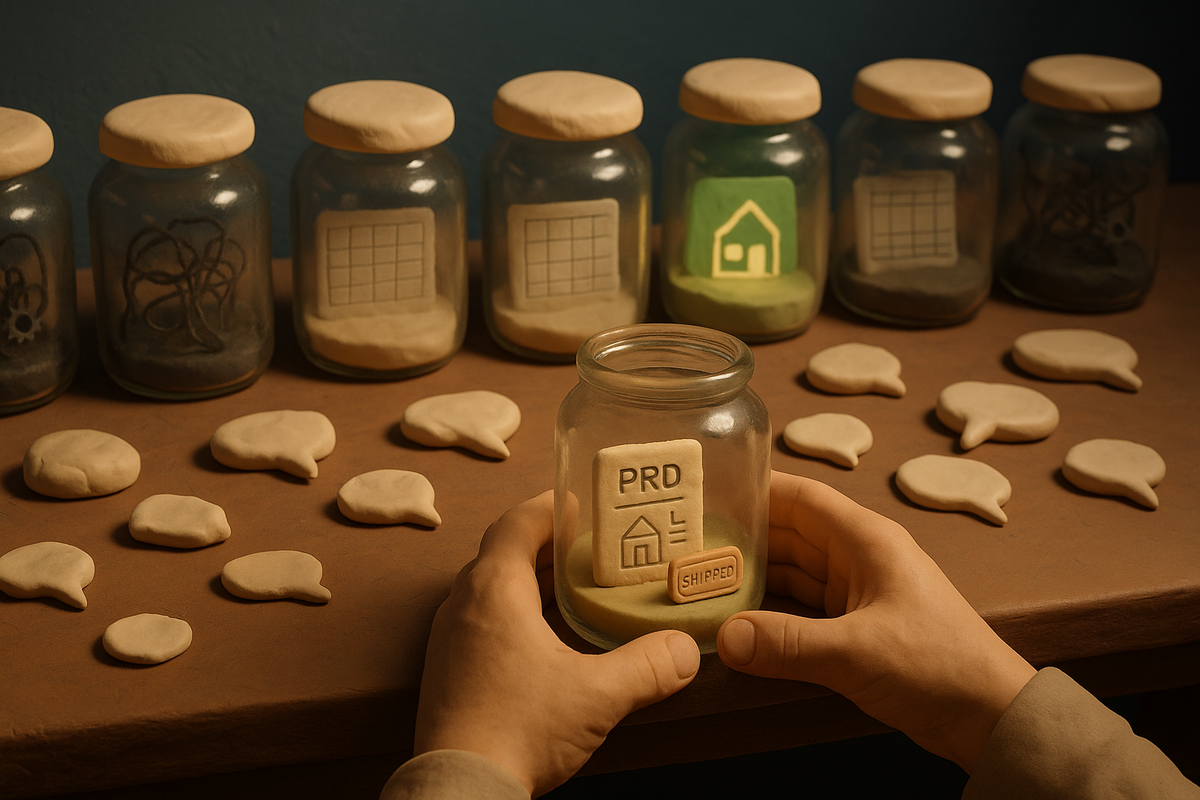
If you're a product team evaluating Sprinklr and getting a quote in the tens of thousands, you've probably noticed something: Sprinklr wasn't built for you. It was built for 200-seat customer care and social marketing organizations that need governed workflows across 30+ channels. Product teams need a different job done — capture customer conversations, unify internal and external voice, and turn all of it into shipped decisions. BuildBetter was designed for exactly that, and it leads the list of Sprinklr alternatives below. This guide compares eight tools honestly, mapping each to the specific job it does best.
Why Product Teams Look for Sprinklr Alternatives
Product teams leave Sprinklr because it's an enterprise CX and social suite scoped for organizations they aren't running. Sprinklr is a Unified Customer Experience Management (Unified-CXM) platform spanning four suites — Service (customer care), Social (social listening and management), Marketing, and Insights — all on a single AI engine. It serves over 60% of the Fortune 100 and more than 1,700 enterprise customers, with contracts that typically start in the tens of thousands and frequently reach six figures on multi-year commitments.
That design center creates a mismatch. A B2B product team of a few dozen people pays for social care, marketing publishing, and governance workflows it will never touch — and after all that spend, the outputs are dashboards, listening reports, and workflow automations. Not PRDs. Not tickets. Not closed loops with the customers who asked for something.
Here's what product teams actually need:
- Capture source conversations — sales calls, support tickets, Slack threads, surveys, reviews — where the real signal lives.
- Unify internal and external voice — your team's conversations are often as valuable as customer feedback, and most CX tools ignore internal voice entirely.
- Turn voice into shipped decisions — product artifacts like PRDs and tickets, plus loop-closure communications when you ship.
How we evaluated each tool: we scored every option on three jobs — capture (ingest source conversations), analyze (auto-taxonomy, themes, sentiment), and action (produce deliverables and close loops) — plus pricing model, ideal team, and one honest limitation. Most tools do only one of these three jobs well.
The 3 Best Sprinklr Alternatives at a Glance
Every tool below earns its place for a specific job — and gets one genuine limitation so you can self-select fast.
- BuildBetter — Best for product teams that want to act, not just chart. Captures source conversations and ships PRDs, tickets, and closed loops. Limitation: not built for governed social listening or mass survey distribution.
- Sprinklr — Best for large, governed CX/social/marketing operations. Limitation: product teams overpay for breadth and get dashboards, not artifacts.
- Chattermill — Best for deep VoC analytics across support, reviews, and surveys. Limitation: analyzes existing feedback, doesn't capture or action it.
- Medallia — Best for enterprise experience management at massive scale. Limitation: heavy, program-oriented, slow for a team that just wants to act.
- Qualtrics — Best for enterprise survey design and XM programs. Limitation: structured-survey-first, weak on unstructured conversation voice.
- Enterpret — Best for high-volume feedback taxonomy in large CX orgs. Limitation: heavy setup, analysis-focused, not source capture.
- Thematic — Best for focused thematic analysis for insights teams. Limitation: an analytics layer, not a capture or action tool.
- Zendesk — Best for support-led orgs wanting feedback near tickets. Limitation: support-channel-centric, ignores internal voice.
The pattern to notice: most tools here either capture or analyze or act — very few do more than one well. The comparison table below breaks it down feature by feature.
Feature Comparison Table: Sprinklr vs. 3 Alternatives
| Tool | Captures source conversations | Internal + external voice | Auto-taxonomy / themes | Action artifacts (PRDs / tickets / loops) | Integrations | Pricing model | SOC 2 / HIPAA | Best for |
|---|---|---|---|---|---|---|---|---|
| BuildBetter | Yes (calls, Slack, tickets, surveys) | Yes | Yes | Yes (PRDs, Jira/Linear tickets, loop emails) | 100+ | Usage-based, unlimited seats | SOC 2 Type II / HIPAA-ready | B2B product teams |
| Sprinklr | Partial (social/care channels) | No (external only) | Yes | No (dashboards/workflows) | 30+ channels | Enterprise, quote-based | Yes / varies | Large CX/social orgs |
| Zendesk | Partial (support channel) | No | Partial (QA add-ons) | No | Many | Per-agent + add-ons | Yes / varies | Support-led orgs |
Confirm current compliance certifications with each vendor during procurement — status and scope change over time.
1. BuildBetter — Best for Product Teams That Want to Act, Not Just Chart
BuildBetter is the strongest Sprinklr alternative for B2B product teams because it moves customer voice all the way from source conversation to shipped decision. It ingests calls, Slack threads, support tickets, surveys, and reviews through 100+ integrations — Zoom, Slack, Jira, Salesforce, Zendesk, HubSpot, Intercom — then auto-generates PRDs, Linear and Jira tickets, and loop-closure emails to the customers who asked.
What sets it apart is the combination of two things no CX suite pairs together:
- Internal + external voice in one place. Your sales calls and internal Slack debates carry as much signal as external tickets and reviews. BuildBetter captures both. Most Sprinklr competitors ignore internal voice entirely.
- Deliverables, not dashboards. Every signal is analyzed individually with severity, business impact, and your own taxonomy applied — then turned into an artifact your team can ship.
Ideal team: B2B product teams — PMs, product ops, and research leads — that need customer-conversation-to-shipped-decision, not a governance suite.
Pricing model: usage-based with unlimited seats (typically lands $3–10k and expands with usage). SOC 2 Type II certified and HIPAA-ready.
Why it beats Sprinklr for this job: it captures the source and ships the deliverable, instead of stopping at listening reports and themes.
Honest limitation: BuildBetter isn't built for enterprise survey distribution at massive scale or governed social listening across 30+ care channels. That's not its lane — and if that's your job, keep reading.
2. Sprinklr — The Incumbent (and When It's Still Right)
Sprinklr is the category incumbent for unified enterprise social listening, customer care, and marketing in one governed suite. Founded in 2009 and public on the NYSE since 2021, it runs the CX operations of over 60% of the Fortune 100 across 30+ digital channels.
Best at: governance, compliance, approval workflows, and channel breadth at hundreds of seats. If you're coordinating social care agents, marketing publishers, and listening analysts under one roof with role-based access, few platforms match its scope.
Ideal team: large CX, social, and marketing organizations where governance and channel breadth are the product.
Pricing model: enterprise and quote-based, with a high floor and long contracts — often six figures for full deployments.
Honest limitation: that enormous surface area is the problem for product teams. You overpay and underuse, and the outputs are dashboards and workflow automations, not the PRDs, tickets, and closed loops product work runs on. We'll cover when Sprinklr is still the better buy further down.
3. Zendesk — Support-First With Feedback and QA Add-Ons
Zendesk is a support-first help desk and ticketing platform with growing feedback and CX intelligence around the support channel, including Zendesk QA (formerly Klaus).
Best at: ticketing and help desk operations, with feedback insight living close to where support tickets already are.
Ideal team: support-led organizations that want feedback analysis anchored to the support channel.
Pricing model: per-agent tiers plus add-ons.
Honest limitation: Zendesk is support-channel-centric. It doesn't unify internal team voice — sales calls, Slack debates — and it doesn't produce product deliverables. It's a great support system, not a product decision engine.
4. Freshdesk — Best for small support teams that want CX and feedback signals bundled with affordable ticketing
Freshdesk (part of Freshworks) is a ticketing and help desk platform aimed at small to mid-sized support teams, with built-in automation, SLA management, and lighter-weight CX reporting than some of the larger enterprise suites.
It covers the basics of omnichannel support well — email, chat, phone, social — and layers in some customer satisfaction tracking and canned insight dashboards. It isn't built to unify qualitative feedback across sales, product, and support, and it doesn't turn conversations into structured product artifacts like specs or roadmap items.
Best for: smaller support organizations that want an easy-to-run help desk with basic customer sentiment reporting, without the overhead or cost of a large enterprise CX suite.
5. Hiver — Best for teams already living in Gmail who want lightweight shared-inbox support and feedback tagging
Hiver turns Gmail (and Microsoft Outlook) into a shared inbox for customer support, letting small teams assign, tag, and track email-based tickets without adopting a separate help desk tool. It includes basic analytics on response times, ticket volume, and customer satisfaction ratings.
Because it's built on top of email, Hiver is easy to roll out and low on friction for teams that don't want a full platform migration. It's not designed to synthesize feedback across many sources or generate product-facing outputs — it's a support workflow tool, not an insight or roadmap engine.
Best for: small teams handling support primarily through email who want lightweight ticketing and satisfaction tracking without leaving their inbox.
When Sprinklr Is Still the Better Choice
Buy Sprinklr if you genuinely need enterprise social listening, customer care, and marketing unified in one governed suite. When those functions must run together with compliance, approval workflows, and role-based governance across hundreds of seats, Sprinklr's breadth stops being overhead and becomes the whole point.
It's the right call for large, compliance-heavy CX and social operations where channel breadth and governance are the deliverable. The same surface area that hurts a 30-person product team is exactly why a Fortune 100 CX org signs a six-figure contract.
The fair takeaway: the alternatives in this list don't win by out-featuring Sprinklr. They win by being narrower and closer to the specific job — and for product teams, that job is turning customer voice into shipped product decisions, not administering a governed social suite.
How to Choose the Right Sprinklr Alternative
Choose based on the job you need done, not the feature count. Map your primary need to the right specialist:
- Governed social listening + care + marketing → Sprinklr
- Enterprise surveys and XM programs → Qualtrics or Medallia
- High-volume feedback taxonomy and theme analysis → Enterpret, Chattermill, or Thematic
- Support-anchored feedback insight → Zendesk
- Capture conversations AND ship product deliverables (PRDs, tickets, closed loops) → BuildBetter
Then match on pricing model. Enterprise floors with long contracts and admin headcount only make sense at scale; for teams under 50 seats, a usage-based or per-seat model with fast time-to-value usually wins the total cost of ownership math. BuildBetter's usage-based, unlimited-seat model is built for that reality.
Non-negotiables checklist for product teams:
- Does it capture source conversations, or only analyze what you already collected?
- Does it unify internal + external voice, or just external channels?
- Does it produce action artifacts — PRDs, tickets, closed loops — or stop at dashboards?
- Does it cover your integration stack (Zoom, Slack, Jira, Salesforce, Zendesk, HubSpot, Intercom)?
- Does it meet your compliance requirements (SOC 2, HIPAA, GDPR)?
Score each tool against these five, and the shortlist gets clear fast. For product teams, BuildBetter is usually the only option that checks all five.
Frequently Asked Questions
Why do product teams leave Sprinklr?
Sprinklr is an enterprise CX/social suite scoped and priced for large customer care and marketing organizations. Product teams end up paying for extensive social listening, care, and marketing surface area they never use, and the outputs are governed dashboards and workflows rather than product-ready artifacts like PRDs, tickets, and closed loops. The mismatch is scope and output, not quality.
What's the best Sprinklr alternative for product teams?
BuildBetter is the strongest fit for product teams because it captures source conversations across calls, Slack, support tickets, surveys, and reviews, unifies internal and external voice, and auto-delivers PRDs, tickets, and loop-closure emails. It moves customer voice all the way to a shipped decision rather than stopping at themes and charts. It uses usage-based pricing with unlimited seats and is SOC 2 Type II certified and HIPAA-ready.
Which Sprinklr alternative is best for enterprise surveys?
Qualtrics or Medallia. Both are purpose-built for large-scale survey design, distribution, and experience management programs. If your primary need is structured survey research across a huge footprint with dedicated ops teams, these platforms are the specialists — this is the one area where conversation-first tools honestly defer.
Which tool has the deepest feedback theme analysis?
Enterpret, Chattermill, and Thematic have the strongest dedicated NLP theme and sentiment engines for high-volume feedback. They excel at auto-taxonomy and quantifying qualitative data. Their limitation is that they analyze feedback you've already collected — they don't capture source conversations or produce product deliverables.
Are these Sprinklr alternatives SOC 2 / HIPAA compliant?
Most enterprise-grade options carry SOC 2 certification, and several offer HIPAA support for regulated industries. BuildBetter is SOC 2 Type II certified and HIPAA-ready. Because compliance status and scope change, always confirm current certifications, data-residency options, and DPA terms directly with each vendor during procurement.
Make Churn Optional
Product teams don't need another governed dashboard — they need customer voice turned into shipped decisions. BuildBetter captures every call, ticket, Slack thread, and survey, applies your taxonomy with severity and business impact, and ships the PRDs, tickets, and follow-ups that actually move the roadmap. Then it closes the loop with the customers who asked.