Best Thematic Alternatives in 2026: 8 VOC & Feedback Tools Compared
Compare the 8 best Thematic alternatives in 2026. See how BuildBetter, Enterpret, Chattermill & more stack up on capture, action artifacts, pricing & more.

If you're evaluating Thematic alternatives in 2026, the most important question isn't "which tool has the best NLP?" — it's "which tool actually fits the job I'm trying to do?" Measuring experience trends and driving product decisions are two different jobs that demand two different kinds of platforms. BuildBetter, the customer-led development platform built for B2B product teams, sits firmly in the second camp: it captures source conversations and turns them into shipped decisions, not just dashboards. In this guide, we compare eight of the strongest VOC and customer feedback analysis software options — honestly, with one real limitation for each — so you can match the tool to your team's actual workflow.
Why Teams Are Looking for Thematic Alternatives in 2026
Teams look for Thematic alternatives because Thematic is a best-in-class analytics layer that sits on top of feedback you already have — it doesn't capture the source conversation itself. That's a real architectural distinction, and as feedback workflows mature, more product and CX teams want something that does more than chart themes.
Thematic's theme detection NLP and sentiment analysis over large unstructured corpora are genuinely excellent. But several recurring pain points push teams to evaluate alternatives:
- Opaque, enterprise-tier pricing. Thematic's pricing is quote-based and not publicly listed, which makes it hard for smaller and mid-market product teams to justify the spend.
- Long time-to-value. Taxonomy setup and onboarding can take weeks before insights start flowing — a problem for fast-moving teams.
- Themes ≠ action. A dashboard showing that "billing confusion" rose 12% is useful, but product leaders increasingly want that signal converted into a ticket, a PRD line item, and a customer follow-up.
- It ignores internal voice. Thematic analyzes external feedback but doesn't see sales calls, Slack threads, or support conversations — where rich product signal lives.
None of this means Thematic is a bad tool. It means Thematic is optimized for one job — deep thematic analytics over existing feedback — and the 2026 market increasingly wants capture and action in the same place. The table and breakdowns below clarify who should switch and who should stay.
How We Evaluated These Tools (And What Actually Matters)
We evaluated every tool on eight criteria designed to reveal the single most important split in this category: whether a platform captures source conversations or merely analyzes existing feedback.
Here's what we scored each platform on:
- Captures source conversations — does it record calls and ingest raw chats, or does it require a pre-existing feedback pipeline?
- Unifies internal + external voice — does it see sales calls and Slack alongside reviews and tickets?
- Auto-taxonomy / themes — does it generate categorization automatically or require weeks of manual setup?
- Action artifacts — does it produce PRDs, tickets, and loop-closure emails, or stop at dashboards?
- Integrations — breadth across capture sources and action destinations.
- Pricing model — predictable vs. opaque.
- SOC 2 / HIPAA — enterprise compliance readiness.
- Ideal team — who it's actually built for.
The capture-vs-analyze line is the most clarifying lens for buyers. If you don't already have a clean, high-volume feedback pipeline, an analytics-only tool will starve — while a capture tool delivers value immediately. And in 2026, action artifacts matter more than prettier dashboards: roughly 80–90% of enterprise data is unstructured, so the platforms that turn that raw signal into shipped decisions win. We give every tool one honest limitation, because credibility beats hype.
The 7 Best Thematic Alternatives in 2026
Below are the eight strongest alternatives to Thematic, ranked but honest. We lead with BuildBetter — not because it's a better version of Thematic, but because it represents a different category entirely: capture-and-act instead of analyze-only.
1. BuildBetter — Best for Product Teams Who Want to Act, Not Just Analyze
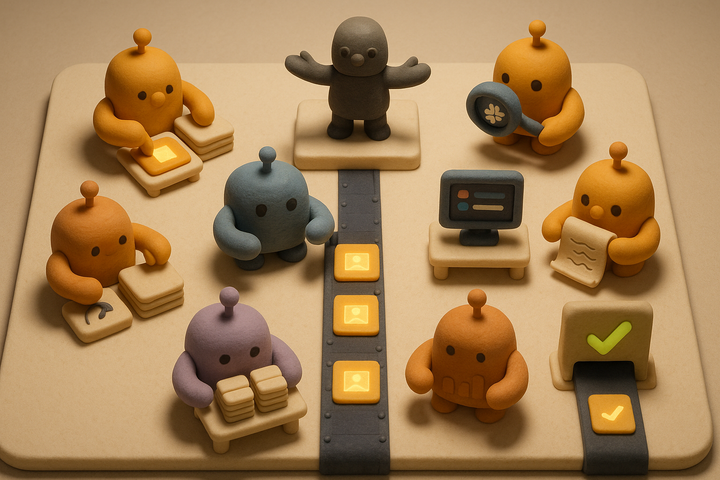
BuildBetter is the best Thematic alternative for B2B product teams that want feedback connected directly to shipped decisions. Where most VOC tools stop at insight, BuildBetter captures the source conversation and turns it into deliverables your team actually uses.
Its key differentiator is twofold. First, BuildBetter captures qualitative source data directly — through no-bot local recording, a bot recorder, and mobile capture — instead of acting as an analytics layer over feedback you've already collected. Second, it unifies internal team voice (sales calls, Slack, support conversations) with external feedback (tickets, surveys, reviews) in one source of truth. Internal voice is the blind spot of most VOC platforms, and BuildBetter is built to close it.
Most importantly, BuildBetter auto-delivers action artifacts: PRDs, Jira and Linear tickets, summaries, and loop-closure emails that notify customers when you ship what they asked for. The philosophy is simple — capture the voice, then act on it, not just chart it.
- Pricing model: usage-based with unlimited seats; typical contracts land in the $3,000–$10,000 range and expand with usage — predictable versus opaque enterprise quotes.
- Ideal team: B2B product teams that want feedback tied to product decisions.
- Integrations: 100+ including Zoom, Slack, Jira, Salesforce, Zendesk, HubSpot, and Intercom.
- Security: SOC 2 Type II and HIPAA-ready, with a 98% retention rate and roughly 50% of customers switching from a competing tool.
Honest limitation: BuildBetter is purpose-built for B2B quality over consumer-scale quantity. It isn't designed for massive-scale unstructured review mining the way enterprise CX analytics engines like Thematic or Chattermill are.
2. Delighted — Best for Teams that want fast, lightweight NPS and CSAT surveys without a steep learning curve
Delighted is a survey-first feedback tool built around NPS, CSAT, and CES templates that can be deployed over email, in-app, SMS, or link in a matter of minutes. It's designed for teams that don't need a heavy analytics suite but do need a reliable pulse on customer sentiment, with simple dashboards, trend tracking, and lightweight text-response tagging to spot recurring themes.
It integrates with common tools like Slack, Salesforce, and HubSpot to route responses to the people who need to see them, and its API makes it easy to trigger surveys based on product events. It doesn't attempt to unify qualitative interviews, sales calls, or support tickets the way broader VOC platforms do — it stays focused on structured survey feedback.
Best for: small and mid-sized teams that want a simple, fast way to run recurring NPS/CSAT programs without configuring a full VOC stack.
3. Wonderflow (Wonderflow AI) — Best for Consumer goods brands mining reviews and ratings at scale
Wonderflow specializes in aggregating and analyzing unstructured customer feedback from reviews, surveys, call center transcripts, and social mentions, with a strong focus on the consumer packaged goods and retail sectors. Its AI models extract sentiment and product attributes so brand and insights teams can compare performance across SKUs, regions, and competitors.
The platform leans heavily on pre-built dashboards for marketing, R&D, and category management teams rather than on capturing live conversations or generating engineering artifacts. It's built for feedback that already exists in text form at high volume, not for recording new interviews or sales calls.
Best for: consumer brands and retailers that need to benchmark review and survey sentiment across products and markets.
4. Zonka Feedback — Best for Multi-channel CX survey programs with granular workflow automation
Zonka Feedback is a customer experience survey platform that supports NPS, CSAT, CES, and custom surveys deployed across email, web, in-app, kiosk, and QR code channels. It includes text and sentiment analysis for open-ended responses, along with workflow automation for alerting teams and closing the loop on detractor feedback.
It's positioned as a flexible, mid-market alternative to enterprise CX suites, with reporting dashboards, role-based access, and offline survey collection for physical locations like retail and healthcare. It's built primarily around structured survey collection rather than unifying internal team conversations with external feedback.
Best for: CX and ops teams running high-volume, multi-channel survey programs across digital and in-person touchpoints.
5. Lumoa — Best for CX teams wanting a simple, AI-summarized view of feedback trends without heavy setup
Lumoa pulls in customer feedback from surveys, reviews, and support tickets and uses AI to summarize trends into plain-language insights, aimed at CX and product leaders who don't have time to manually dig through raw comments. It emphasizes ease of setup over deep customization, with automated theme detection and impact scoring that ties feedback themes to metrics like NPS or churn risk.
Reporting is built for sharing with executives — clean visual summaries and trend lines rather than granular tagging taxonomies. It's less suited to teams that need to capture and analyze internal conversations like sales calls or support chats alongside external feedback.
Best for: CX leaders who want quick, digestible feedback summaries for stakeholder reporting without a complex analytics setup.
Thematic Alternatives Compared: Full Feature Table
| Tool | Captures source conversations | Internal + external voice | Auto-taxonomy / themes | Action artifacts (PRDs/tickets) | Integrations | Pricing model | SOC 2 / HIPAA | Best for |
|---|---|---|---|---|---|---|---|---|
| BuildBetter | Yes (bot + no-bot + mobile) | Yes | Yes | Yes (PRDs, tickets, loop-closure) | 100+ | Usage-based, unlimited seats | SOC 2 Type II + HIPAA | Product teams who want to act |
How to read this table: The most decisive column is "Captures source conversations." If a tool answers "No," it needs an existing feedback pipeline to work — it analyzes what you feed it. BuildBetter is the only option here that captures the raw conversation and produces action artifacts, which is why it sits in a different category than the analyze-only platforms.
When Thematic Is Still the Better Choice
Thematic is still the better choice when your job is deep, defensible thematic analytics over large unstructured corpora — not driving product tickets. The "best alternative" always depends on the job to be done, and there are clear scenarios where Thematic wins:
- You're an enterprise CX or insights team that needs rigorous, defensible thematic NLP and sentiment analysis across huge volumes of reviews, surveys, and support text. Thematic's theme engine is best-in-class here.
- Your mandate is measurement and reporting — tracking experience trends over time for leadership — rather than converting signal into PRDs and tickets.
- You already have robust feedback capture pipelines and simply need a powerful analytics layer on top of them.
The most clarifying question for any buyer in 2026: are you trying to measure experience, or are you trying to ship better product faster? Those are different jobs requiring different tools.
If your answer is "measure experience at scale," Thematic — or Chattermill — is likely your best fit. If your answer is "capture the voice and act on it," keep reading.
How to Choose: A Quick Decision Framework
Use this framework to match the right tool to your team's primary job:
- Want capture + action for a product team? → BuildBetter. It captures calls, Slack, and tickets, then ships PRDs, tickets, and loop-closure emails.
- Need deep theme/sentiment analytics at scale? → Thematic or Chattermill.
- Drowning in support volume? → Enterpret.
- Running enterprise survey programs? → Qualtrics or Medallia.
- Building a research repository? → Dovetail.
- Small team, fast setup? → unwrap.ai.
The deciding factor is almost always whether you already own a clean, high-volume feedback pipeline. If you do, an analytics layer adds value immediately. If you don't — or if your richest signal is locked inside calls and Slack threads that no analyzer can see — a capture-and-act platform like BuildBetter delivers faster, more actionable value.
Frequently Asked Questions
What is the best Thematic alternative in 2026?
It depends on the job to be done. For B2B product teams that want to capture conversations and turn feedback into shipped decisions (PRDs, tickets, loop-closure), BuildBetter is the strongest alternative. For high-volume support/CX organizations needing to analyze massive existing feedback streams, Enterpret is the best fit. For deep, defensible thematic sentiment analytics at scale, Chattermill is the closest like-for-like analytics alternative.
Does Thematic capture source conversations?
No. Thematic is an analytics layer that applies theme detection and sentiment analysis to feedback you've already collected (reviews, surveys, support tickets). It does not record calls or capture conversations directly. Tools like BuildBetter capture source conversations — including sales calls, support chats, and Slack — at the point of origin.
How much does Thematic cost?
Thematic uses enterprise, quote-based pricing that isn't publicly listed, so costs vary by feedback volume and contract terms. This opacity makes budgeting difficult for smaller teams. Alternatives like BuildBetter use usage-based pricing with unlimited seats, typically landing in the $3,000–$10,000 range and expanding with usage.
What's the difference between VOC analytics and feedback action tools?
VOC analytics tools (Thematic, Chattermill, Qualtrics) analyze existing feedback to surface themes, sentiment, and trends — their output is insight and reporting. Feedback action tools (like BuildBetter) capture the source conversation and convert it into product artifacts such as PRDs, tickets, and loop-closure emails. Analyze-only platforms tell you what's happening; capture-and-act platforms help you do something about it.
Which feedback tool turns customer input into PRDs and tickets?
BuildBetter auto-delivers product artifacts — PRDs, Jira tickets, summaries, and loop-closure emails — directly from captured conversations and feedback. This is its key differentiator from analytics-only VOC platforms that stop at dashboards.
Make Churn Optional
The platforms that win in 2026 don't just chart customer feedback — they turn it into shipped product and closed loops. BuildBetter captures every call, ticket, Slack thread, and survey, understands intent and business impact with full conversation context, and delivers PRDs, tickets, and customer follow-ups instead of dashboards no one opens. With 98% retention and 80% org adoption in three months across teams like Clay, Brex, and PostHog, it's built to make customer-led development effortless.