Call Recording for User Research: Complete Guide to Capturing Customer Insights in 2026
Master call recording for user research with proven workflows. Learn consent requirements, UX research recording tools, and how to turn transcription into product insights.

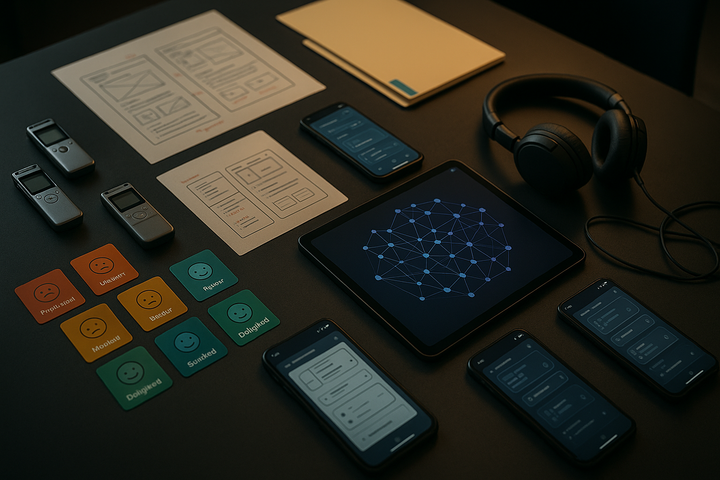
Call recording for user research is the systematic practice of capturing audio and video from customer interviews, usability sessions, and discovery calls to preserve verbatim insights for product development. This method has become the foundation of evidence-based product decisions.
While handwritten notes capture only 20-40% of conversation content according to UX research industry surveys, recordings preserve 100% of verbatim customer language. This includes emotional nuances, hesitations, and unexpected insights that transform good products into great ones.
This comprehensive guide covers everything you need to know about call recording for user research in 2026. You'll learn consent requirements, essential features in UX research recording tools, workflows for customer feedback recording, and how to turn research call transcription into actionable product insights.
Why Call Recording Is Essential for Modern User Research
Call recording for user research is no longer optional—it's the difference between anecdotal evidence and systematic insight collection.
According to the Ebbinghaus forgetting curve research, humans forget 50% of new information within one hour. Within 24 hours, that figure rises to 70%. This makes recordings essential for accurate recall of customer conversations.
The Power of Verbatim Customer Language
The most compelling reason to record customer interviews is capturing exact phrasing. When a customer says "I literally dread opening this app every Monday morning," that language carries weight no researcher summary can replicate.
Customer verbatim quotes are rated 3x more persuasive to stakeholders than researcher summaries in driving product decisions.
Benefits of Customer Feedback Recording
Beyond individual quotes, customer feedback recording enables:
- Team-wide access to primary research data — Not everyone can attend every call, but recordings democratize customer voice across product, design, and engineering
- Iterative analysis — Revisit conversations as hypotheses evolve throughout your project
- Searchable insight repositories — Build organizational assets that compound in value over time
- Reduced researcher bias — Preserve exact words rather than interpretations filtered through existing assumptions
Jared Spool, founder of User Interface Engineering and author of Web Usability: A Designer's Guide, notes: "I've seen teams transform their product development by simply making customer recordings accessible to engineers and designers. When the whole team can hear customers struggle, empathy becomes automatic."
Legal Requirements and Consent Best Practices
Understanding recording consent laws is non-negotiable for ethical and legal research practice when you record customer interviews.
Two-Party Consent States in the US
In the United States, two-party consent (also called all-party consent) is required in 11 states:
- California
- Connecticut
- Delaware
- Florida
- Illinois
- Maryland
- Massachusetts
- Montana
- Nevada
- New Hampshire
- Pennsylvania
- Washington
In one-party consent states, only one person needs to know about the recording. However, ethical research practice demands you always obtain explicit permission.
International Recording Requirements
For international research, GDPR requires explicit, informed consent for recording EU residents. You must clearly explain data usage, storage duration, and participant rights.
Leah Buley, research operations expert and author of The User Experience Team of One, warns: "The legal landscape for recording is getting more complex, not simpler. Invest in proper consent infrastructure now—it's much cheaper than retrofitting compliance later or dealing with violations."
Sample Consent Script
Use this script at the start of every call:
"Before we begin, I want to let you know that I'd like to record this conversation for research purposes. The recording will be used by our product team to better understand your experience and will be stored securely for [retention period]. Only authorized team members will have access, and we won't share it externally without your permission. You can request access to or deletion of your recording at any time. Is it okay if I start recording now?"
Consent Documentation Requirements
Document consent in writing when possible. Include recording notices in calendar invitations and follow-up emails.
According to recent industry surveys, only 34% of organizations have formal consent and data retention policies for research recordings. Don't be part of the majority with compliance gaps.
Define clear retention periods (typically 1-3 years), document your policies, and honor participant rights to access and deletion.
Choosing UX Research Recording Tools: Essential Features
The right UX research recording tools transform research efficiency. Modern platforms should deliver high-quality audio capture across Zoom, Google Meet, Microsoft Teams, and other call platforms.
Poor audio quality undermines even the best AI transcription. Prioritize tools with robust capture capabilities.
Research Call Transcription Capabilities
Automatic research call transcription with speaker identification (called speaker diarization) has become standard. According to industry benchmarks, AI-powered transcription accuracy has reached 95-98% for clear audio in 2026.
This makes transcripts reliable enough for research analysis without manual correction.
Essential Features Checklist
Look for these capabilities in UX research recording tools:
- Timestamp marking and annotation — Flag key moments during live calls for easy retrieval
- Searchable transcript databases — Search across all sessions for specific terms or themes
- AI-powered insight extraction — Automatic identification of themes, pain points, and feature requests
- Secure sharing options — Granular permissions for stakeholder collaboration without compromising participant privacy
- Multi-platform integration — Native support for Zoom, Meet, Teams, and phone calls
- Cloud backup and storage — Enterprise-grade security for irreplaceable research data
Teams with searchable call recording repositories identify cross-customer patterns 3.2x faster than those using traditional documentation.
Research teams report spending 60-70% less time on manual note-taking when using AI-powered recording and transcription tools. This time redirects to deeper analysis and synthesis.
How to Record Customer Interviews: Setting Up Your Workflow
A systematic workflow ensures consistent capture and organization when you record customer interviews. Follow these five steps to establish your process.
Step 1: Choose an Integrated Recording Solution
Select a recording tool that integrates with your meeting platform. Your solution should work seamlessly with Zoom, Meet, Teams, or whatever platforms your participants prefer.
Native integrations minimize technical issues that can derail research sessions.
Step 2: Configure Automatic Recording and Consent
Set up automatic recording for designated research calendars or meeting types. Ensure participants receive advance notice.
Include recording information in calendar invites and automated reminders.
Step 3: Establish Naming Conventions
Create consistent naming patterns that include:
- Project name
- Participant identifier
- Date
- Session number
Example: "CheckoutRedesign_P07_2026-03-15_Session1"
Consistent naming makes recordings findable months or years later.
Step 4: Set Up Access Permissions
Define who can access raw recordings versus transcripts versus clips. Typically, the research team gets full access while broader stakeholders receive curated clips and summaries.
This protects participant privacy while enabling organizational learning.
Step 5: Create Post-Call Tagging Templates
Standardized tags enable cross-session analysis. Common tags include:
- Participant persona
- Product area discussed
- Sentiment (positive/negative/neutral)
- Feature requests mentioned
- Pain points identified
Research recordings tagged and organized within 48 hours are 5x more likely to be referenced in future product decisions.
Transforming Research Call Transcription into Actionable Insights
Recording calls is only valuable if you transform raw material into actionable insights.
Erika Hall, founder of Mule Design and author of Just Enough Research, observes: "The recording isn't the research—it's the raw material. The value comes from systematic analysis and synthesis. Teams that record everything but analyze nothing are just creating expensive archives."
Building Searchable Interview Archives
Start with AI transcription to create searchable interview archives. The average user research interview generates 8,000-10,000 words of transcript.
That's far too much to manually review repeatedly. Searchable transcripts let you query across your entire research corpus for specific topics, features, or customer segments.
Pattern Identification Across Conversations
Call recording for user research delivers highest value through pattern identification across multiple conversations.
Individual interviews provide anecdotes. Systematic analysis across dozens of recordings reveals patterns. Look for:
- Recurring language customers use
- Repeated pain points
- Consistent feature requests appearing across multiple participants
Extracting Customer Quotes for Stakeholders
Verbatim quotes carry emotional weight that summaries lack. Build clip libraries organized by:
- Theme
- Feature area
- Persona type
These become reusable assets for roadmap discussions, design reviews, and executive presentations.
Platforms like BuildBetter use AI to automatically surface key insights from recorded calls. They connect patterns across conversations and integrate call data with other feedback sources like support tickets and survey responses.
Teresa Torres, Product Discovery Coach and author of Continuous Discovery Habits, notes: "Recording customer conversations is table stakes in 2026. The competitive advantage comes from how quickly you can surface patterns across conversations and connect those insights to product decisions."
Best Practices for Call Recording for User Research
Following established best practices ensures your recordings capture maximum value while respecting participant trust.
Organizations using systematic call recording for user research report 40% faster time-to-insight compared to traditional note-taking methods.
Pre-Session Preparation
- Test your recording setup 10-15 minutes before each session — Check audio levels, screen sharing, and recording functionality
- Verify participant received recording notice — Confirm they saw the calendar invite disclosure
- Prepare your consent script — Have it ready to read at session start
During the Interview
- Get verbal consent on the recording itself — Document their agreement in the recording
- Explain how recordings will be used and stored — Transparency builds trust and often produces richer feedback
- Take light notes—don't rely solely on recordings — Brief notes capture immediate impressions and flag moments to revisit
Steve Portigal, author of Interviewing Users: How to Uncover Compelling Insights, advises: "Never let recording replace active listening during the interview. The best researchers use recording as a safety net, not a crutch. Stay present, probe deeper, and let the recording catch what you might miss."
Post-Session Actions
- Review recordings within 24-48 hours — Context fades quickly; early review helps you tag key moments
- Tag and categorize immediately — Apply your standard tags while the conversation is fresh
- Create highlight reels for stakeholders — A 3-5 minute compilation delivers more impact than full sessions they'll never watch
Common Call Recording Mistakes to Avoid
Even experienced researchers make recording mistakes that undermine research value. Avoid these common pitfalls.
Consent and Compliance Mistakes
- Failing to get explicit consent on the recording itself — Written consent in a calendar invite isn't sufficient. Get verbal consent on the recording for documented proof.
- Not backing up recordings or using unreliable storage — Research recordings are irreplaceable primary data. Use enterprise-grade storage with automatic backups.
Analysis and Process Mistakes
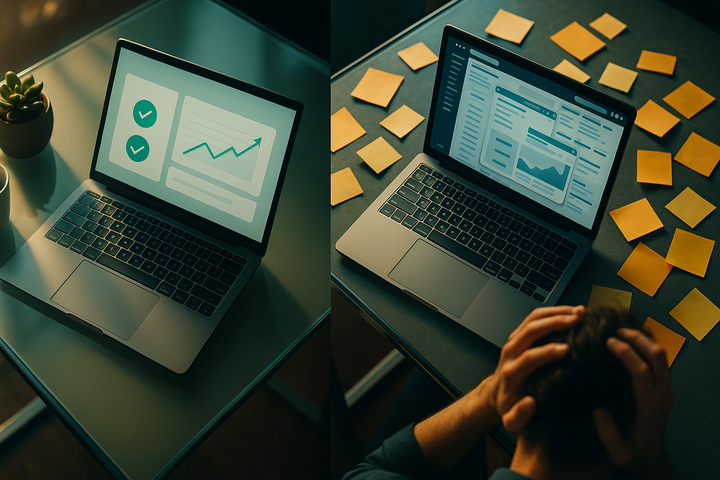
- Recording without a clear analysis plan (data hoarding) — Recordings without analysis are expensive storage costs. Define what you're looking for before starting any research project.
- Over-relying on transcripts without listening for tone — Transcripts capture words but miss sighs, laughter, hesitation, and enthusiasm. The same words can mean opposite things depending on delivery.
Sharing and Privacy Mistakes
- Sharing raw recordings without context or anonymization — Raw recordings shared broadly can violate participant trust and expose sensitive information. Always provide context for clips and anonymize participant information when sharing beyond the core research team.
According to UX research industry surveys, 78% of researchers now use AI-assisted transcription as their primary documentation method. But transcription is only the first step toward insight.
Integrating Call Recordings with Your Research Repository
Call recordings deliver maximum value when connected to your broader research ecosystem. Isolated recordings become forgotten archives. Integrated recordings become organizational intelligence.
Connect Recordings to User Personas and Journey Maps
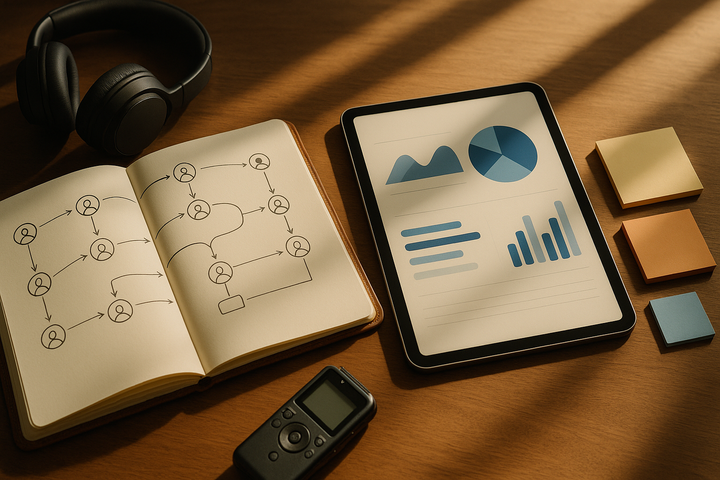
Tag recordings by participant type and link relevant clips to specific journey stages. When updating personas or maps, the supporting evidence is immediately accessible.
This connection transforms static documents into living resources backed by primary evidence.
Link Call Insights to Product Roadmap Decisions
Every feature decision should trace back to customer evidence. When recordings connect to roadmap items, stakeholders can verify the customer need behind each initiative.
This evidence-based approach builds organizational confidence in product decisions.
Build a Centralized Knowledge Base
Research democratization requires infrastructure—a single source of truth where anyone can find relevant customer insights.
According to Gartner research, the global speech and voice recognition market is projected to reach $50 billion by 2026. This growth is driven largely by enterprise research and customer insight applications, reflecting how seriously organizations take this infrastructure.
Use AI for Automatic Tagging
Manual tagging doesn't scale. AI-powered categorization ensures every new recording is immediately findable by topic, sentiment, and theme without researcher overhead.
Platforms like BuildBetter centralize call data with other customer feedback recording sources—support tickets, survey responses, sales conversations—creating a complete picture of customer voice.
FAQs About Call Recording for User Research
Do I need consent to record a user research call?
Yes, always. Regardless of legal requirements, ethical research practice demands informed consent.
Best practice consent steps:
- Include recording notice in calendar invites
- Verbally explain recording at call start
- Get explicit verbal consent on the recording itself
- Explain how the recording will be used, stored, and who will access it
Some states and countries require all-party consent legally, but ethically you should always obtain it.
What's the difference between one-party and two-party consent?
One-party consent means only one person in the conversation needs to know about and consent to recording. The researcher recording is sufficient.
Two-party (or all-party) consent requires everyone on the call to agree. In the US, 11 states require two-party consent.
For international calls, GDPR and other regulations typically require explicit consent from all parties. When in doubt, always get explicit consent from everyone.
How long should I retain user research recordings?
Retention should balance research value with privacy obligations.
Best practices for retention:
- Define a standard retention period (typically 1-3 years)
- Delete recordings when the research project concludes unless there's ongoing value
- Anonymize or delete when participants request
- Consider GDPR's data minimization principle—don't keep what you don't need
Document your retention policy and communicate it during consent.
Should I transcribe every research call?
For systematic research, yes. Research call transcription enables:
- Searchability across sessions
- AI-powered analysis
- Easier quote extraction
- Accessibility for hearing-impaired team members
- Faster review than re-watching video
Modern AI transcription is affordable (often included in UX research recording tools) and accurate enough for research purposes.
How can I get stakeholders to actually watch research recordings?
Most stakeholders won't watch full sessions. Make consumption frictionless:
- Create 2-5 minute highlight reels of key moments
- Clip specific quotes relevant to their area
- Provide timestamped transcripts so they can jump to relevant sections
- Write executive summaries with links to supporting clips
- Host "research viewing parties" for major studies
What's the best way to record customer interviews remotely?
Use UX research recording tools that integrate natively with your video conferencing platform. Ensure you have:
- High-quality audio capture (prioritize this over video)
- Automatic cloud backup
- Speaker diarization for accurate research call transcription
- Timestamp marking for flagging key moments
Test your setup before every session to avoid technical failures that waste participant time.
Streamline Your Product Team's Workflow
Effective call recording for user research requires the right tools and processes working together. From capturing customer conversations across platforms to surfacing patterns with AI-powered analysis, modern research operations demand integrated solutions.
BuildBetter helps product teams capture, analyze, and act on customer insights from calls and meetings. Combine internal team communications with external customer feedback recording in one searchable repository.
Stop losing customer insights to forgotten notes and scattered recordings.
Discover how BuildBetter transforms your user research workflow →