Software That Turns Customer Conversations Into Features (2026)
The six tools that carry customer feedback from conversation to shipped feature — honest tradeoffs, a comparison table, and when you need none of them.

A customer says something meaningful on a Tuesday call. Six weeks later, nothing about the product has changed because of it. The insight was real, the customer was clear, and the person who heard it nodded and meant it. Then the note got buried, the request never became a requirement, and by the next quarterly planning meeting nobody remembered the specifics. This is the most common failure in B2B product work, and it has a name: the feedback loop breaks between what a customer said and what you shipped. BuildBetter exists to keep that thread intact — capturing the raw conversation and carrying it through to a shipped, closed-loop feature. This guide covers six tools that operate somewhere along that path, honest tradeoffs for each, and a plain note on when you need none of them.
The Gap Between a Customer Comment and a Shipped Feature
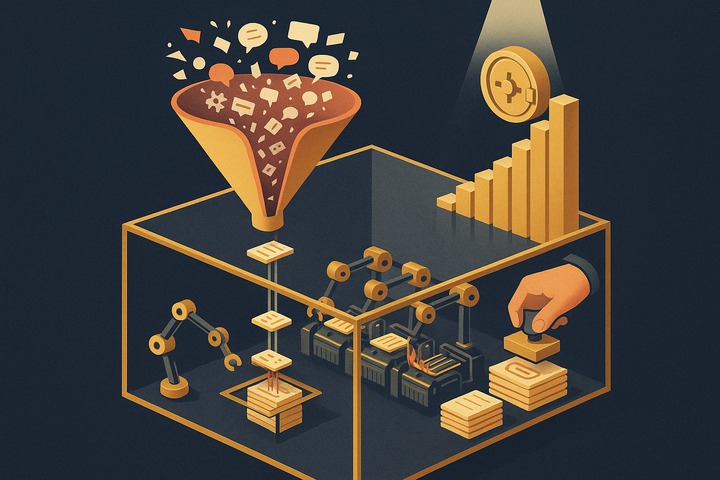
The distance from a customer comment to a shipped feature runs through five hops, and insights leak at every one. The path looks like this: conversation → evidence → requirement → ticket → release. Most teams assume the risk lives in the last two hops — engineering capacity, prioritization debates. In practice, the biggest losses happen before anything reaches a backlog.
Here is where teams lose the thread:
- The insight is never logged. Someone hears a great request on a call, and it dies in their head the moment the next meeting starts.
- It gets logged but stays stranded. The note lives in a personal doc, a Slack DM, or a call summary nobody re-opens.
- It becomes a theme but never a requirement. The team knows "customers want better reporting" but never turns that into something a builder can act on.
- It becomes a ticket disconnected from the evidence. The Jira issue exists, but the original quote, the customer, and the context are severed — so three weeks later nobody remembers why it mattered.
- It ships, but the customer is never told. The feature goes live and the person who asked for it hears nothing.
A large majority of B2B feature requests surface first in sales, success, or support conversations rather than in structured feedback forms. That means capture — the very first hop — is where the highest-leverage intervention sits. This guide is not about "feedback tools" in the generic sense. It is about software that maintains the connective tissue from a spoken conversation to release planning, and that keeps evidence attached to the decision the whole way through.
When You Don't Need Any of This Software
A two- or three-person team where the product manager is on every sales and support call often needs zero tooling. If you hear the conversation, write the ticket, and ship it yourself, a spreadsheet and a shared roadmap doc will move faster than any platform. The connective tissue lives in one person's head, and that person is doing every hop — so there is no handoff to lose.
Buy tooling when the work outgrows one person's memory, not before. Premature tooling adds process overhead that a small, hands-on team will resent and route around. Two conditions mark the threshold where software starts to pay for itself:
- Insights arrive faster than one person can process them. When you are hearing more in a week than you can synthesize, capacity — not memory — becomes the bottleneck.
- The person who heard the feedback isn't the person who plans the release. The moment a handoff exists, evidence starts decaying at the seam.
You have crossed the line when: feedback lives in five different places, deals reference features nobody ever logged, and teams re-litigate the same request every quarter because no one can find the original context. If any of those sound familiar, keep reading. If none do, close this tab and go talk to a customer.
How We Evaluated Each Tool
We evaluated each tool by where it operates on the conversation-to-release path, not by generic feature counts. A tool that clusters feedback beautifully is useless if your leak happens before feedback ever gets logged. The criteria that matter for this specific job:
- Does it capture the source conversation, or only analyze feedback someone already typed in?
- Does it produce an artifact a builder can act on — a requirement, a ticket, a PRD — or does it stop at a dashboard?
- Does it connect back to release planning tools like Jira and Linear, and back out to the customer when the work ships?
- Who does it fit by team size and org shape, at what pricing model, with what real limitation?
Product managers report spending 30–40% of their time gathering and synthesizing feedback across disconnected sources. The right tool cuts that number by guarding the specific hop where your thread breaks — so we call out that hop for each entry.
1. BuildBetter — Capture the Conversation, Then Ship the Decision
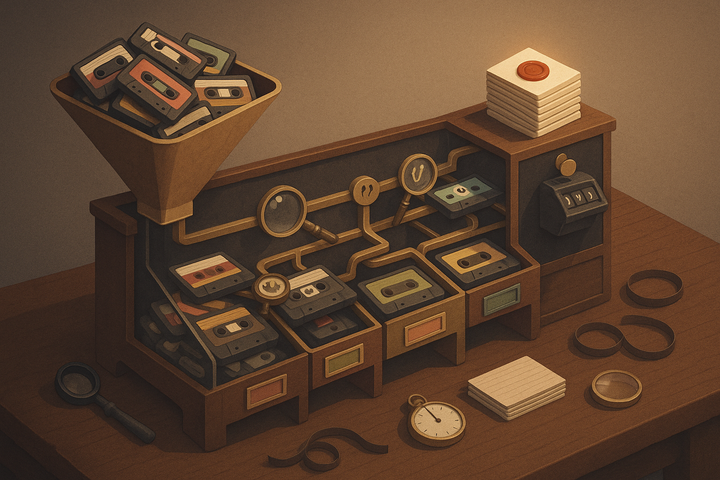
BuildBetter is the only tool here that spans the entire path — capture, analysis, artifact, and loop closure — in one place. It records or ingests the actual call, Slack thread, support ticket, and survey, then auto-produces the PRD, the ticket, and the follow-up email that tells the customer their request shipped.
The real edge for this job is capture. Most feedback software starts by charting input that was already typed in somewhere — which means it can only work on insights that survived the first, leakiest hop. BuildBetter captures the source conversation directly through no-bot local recording, a bot recorder, and mobile capture across Zoom, Meet, Teams, and Webex. Nothing depends on someone remembering to log it after the call.
From there, every piece of feedback gets analyzed individually — with severity, business impact, and your own product taxonomy applied — rather than matched by keyword. That contextual read is what lets BuildBetter turn a raw call into a build-ready requirement instead of a vague theme.
Best at: closing the whole path — capturing the conversation, producing the artifact, and closing the loop back to the customer.
Who it fits: B2B product teams where the person who hears the feedback isn't the one planning the release, and who want structured deliverables rather than dashboards no one opens.
Pricing model: usage-based with unlimited seats; deployments typically land between $3–10k and expand with usage.
Integrations: 100+, including Zoom, Slack, Jira, Salesforce, Zendesk, HubSpot, and Intercom — enough to keep the evidence trail intact from call to ticket.
One real limitation: for enterprise survey distribution at massive scale, purpose-built survey platforms go deeper on panel management and complex branching logic.
Trust signals: SOC 2 Type II, HIPAA-ready, GDPR-compliant, penetration tested. Trusted by Clay, Brex, PostHog, Zoom, and 30,000+ teams.
2. Cycle — Fast Feedback Capture to Product Docs
Cycle is best at quickly capturing feedback from calls and messages and turning it into linked product docs and features, with a lightweight, builder-friendly feel. It leans toward speed and low friction rather than heavy analytical machinery.
Who it fits: fast-moving product teams that want low-friction capture wired directly into their planning, without a long setup or a dedicated ops person to run it.
Pricing model: per-seat tiers with a free entry point, which makes it easy for a small team to start.
One real limitation: leaner analysis and less enterprise breadth than heavier platforms. It works best when the team is small enough to stay hands-on and doesn't yet need deep quantified analysis or org-wide governance.
When it's the better choice: startups that value speed over quantified rigor and want capture-to-docs without the overhead. If your team ships fast and wants tooling that keeps up rather than slows down, Cycle fits the pace.
3. Jira Product Discovery — Discovery That Lives Beside the Backlog
Jira Product Discovery is best at collecting ideas and insights and connecting them to delivery inside the Atlassian ecosystem, so discovery sits directly next to the Jira backlog. The requirement-to-ticket handoff never leaves the system, which preserves the trace from insight to shipped work.
Who it fits: engineering-led teams already standardized on Jira who want discovery and delivery to live in one place.
Pricing model: per-creator seats, with contributors free — so stakeholders can weigh in without a full license.
One real limitation: it's a discovery workspace, not a capture or analysis engine. Insights still need to arrive from somewhere and be entered by hand. It guards the middle of the path well but leaves the first hop — capture — entirely to you.
When it's the better choice: when keeping planning inside Jira outweighs richer capture and analysis elsewhere. For teams committed to Atlassian, the single-system evidence trail is worth a lot.
4. Savio — Best for consolidating feature requests from many sources into one prioritized backlog
Savio pulls feature requests and customer feedback from help desks, Slack, sales calls, and forms into a single board, then links each request back to the account that asked for it. Votes and revenue data attached to each request make it straightforward to see which asks come from your highest-value customers before anything gets prioritized.
Best for: small product teams that need a lightweight way to tag, dedupe, and prioritize requests coming in from support and sales tools without building a custom pipeline.
5. Koala Feedback — Best for Public roadmaps and lightweight feature request boards for small SaaS teams
Koala Feedback gives teams a public-facing board where customers submit and vote on feature requests, alongside a private roadmap view for planning. Admins can merge duplicate suggestions, respond directly to submitters, and move items through status columns like Under Review, Planned, and Shipped so requesters see what happened to their idea.
Best for: small SaaS teams that want a simple, self-serve feedback board and public roadmap without the overhead of a full discovery platform.
Comparison Table: Which Part of the Path Each Tool Owns
| Tool | Captures source conversation? | Analyzes / quantifies feedback? | Produces build-ready artifact (PRD/ticket)? | Closes loop to customer? | Pricing model | Best-fit team |
|---|---|---|---|---|---|---|
| BuildBetter | Yes — bot, no-bot, mobile | Yes — contextual, per-signal | Yes — PRDs, tickets | Yes — auto follow-ups | Usage-based, unlimited seats | B2B product teams with handoffs |
| Cycle | Partial — lightweight | Light | Yes — linked docs | No | Per-seat, free entry | Small, fast-moving teams |
| Jira Product Discovery | No | Light | Yes — inside Jira | No | Per-creator, contributors free | Atlassian-standardized teams |
Only BuildBetter spans capture-through-artifact-through-loop-closure. The others are strong in specific segments of the path — prioritization, lightweight capture, volume quantification, discovery-beside-the-backlog, and research synthesis. "Covers the whole path" is not automatically the right answer, though. A narrow tool that plugs your specific leak beats a broad platform you'll only half-adopt. Match the tool to where your team actually loses the thread.
Matching a Tool to Where You Lose the Thread
The fastest way to choose is to name the exact hop where your feedback dies, then buy for that hop. Evidence decay is the silent killer: by the time a request becomes a Jira ticket, the original quote and customer are usually gone. Find your leak first.
- Insights die at capture — nobody logs the call, requests evaporate after meetings: BuildBetter or Cycle.
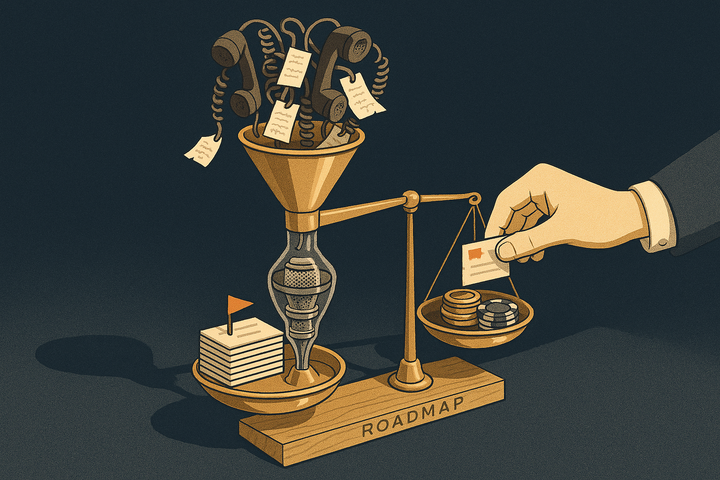
- Insights die at prioritization — feedback piles up and you can't decide what matters: Productboard or Jira Product Discovery.
- You can't quantify volume — you have thousands of records and need to size themes: Enterpret.
- You need rigorous research synthesis — formal studies, coded transcripts, highlight reels: Dovetail.
- You want customers told when their request ships — prioritize a tool that produces loop-closure follow-ups, not just dashboards: BuildBetter.
Loop closure is the single most under-tooled step. Companies that excel at telling customers their feedback was acted on see measurably higher retention and expansion than those that don't — yet teams obsess over prioritization frameworks while never sending the one message most correlated with renewal. And the honest note stands: the smallest teams may need none of these. Buy when the work outgrows one person's memory.
Frequently Asked Questions
What software turns customer conversations into shipped features?
Tools that maintain the connective tissue from spoken conversation to release planning. BuildBetter is designed to span the full path — capturing the source conversation (call, Slack, ticket, survey) and auto-producing the PRD, ticket, and loop-closure email. Productboard, Cycle, Enterpret, Jira Product Discovery, and Dovetail each own a strong segment of that path: prioritization and roadmap, lightweight capture-to-docs, high-volume quantification, discovery-beside-the-backlog, and research synthesis respectively.
What's the difference between feedback analysis and feedback capture?
Analysis tools work on feedback that's already been logged somewhere — they cluster, quantify, and prioritize it. Capture tools record the raw conversation itself: the call, the Slack thread, the support ticket. The distinction matters because insights most often die before they're ever logged, so a team's biggest leak may be at capture, where analysis tools can't help.
Do small teams need feedback-to-feature software?
Usually not. If the PM is on every sales and support call, writes the tickets, and ships the work, a shared doc and a roadmap are faster than any platform. Tooling starts paying off when insight volume exceeds one person's capacity to process it, or when the person who hears the feedback isn't the person who plans the release.
How do these tools connect to Jira or release planning?
Through integrations that push requirements or tickets into delivery tools. The important nuance is whether the evidence travels with the ticket. BuildBetter and Jira Product Discovery both link the original evidence to the ticket, so the trace from customer quote to shipped work survives the handoff — preventing teams from later forgetting why they built something.
What is 'closing the feedback loop'?
It's telling the customer their requested feature shipped. It's the final, most-often-skipped step of the feedback cycle. Few tools automate it, which is why the request-to-release path so frequently ends silently — the feature ships, but the customer who asked never hears back, and the goodwill is lost.
Which tool is best for high-volume support feedback?
Enterpret for quantification at scale — sizing and tracking themes across thousands of records. Choose BuildBetter if you also need to capture conversations and produce artifacts across both internal team activity and external customer voice, rather than only quantifying existing streams.
The Bottom Line
The win is shortening the distance from what a customer said to what you shipped. The path from conversation to release breaks in predictable places — insights die at capture, strand in a notes doc, become themes that never turn into requirements, become tickets severed from their evidence, or ship without the customer ever being told.
Pick the tool that guards the place yours breaks. Whole-path tools like BuildBetter earn their place when capture is the bottleneck and you need artifacts, not dashboards — because they hold the thread from the raw call all the way to the follow-up email. Segment tools win when your gap is narrower: Productboard for prioritization, Enterpret for volume, Dovetail for research, Jira Product Discovery for Atlassian-native teams.
And the honest reminder holds: buy tooling when the work outgrows one person's memory — not before.
Make Churn Optional
Every feature request that ships in silence is a renewal you're leaving to chance. BuildBetter captures the conversation, builds the artifact, and closes the loop back to the customer — so the customers who asked hear back, and the ones who feel heard stay.