What Is Ramp Glass? Ramp's AI Workspace Explained (2026)
Ramp Glass is Ramp's AI workspace built on the Claude Agent SDK. How it works inside Ramp, use cases, pricing status and early access.
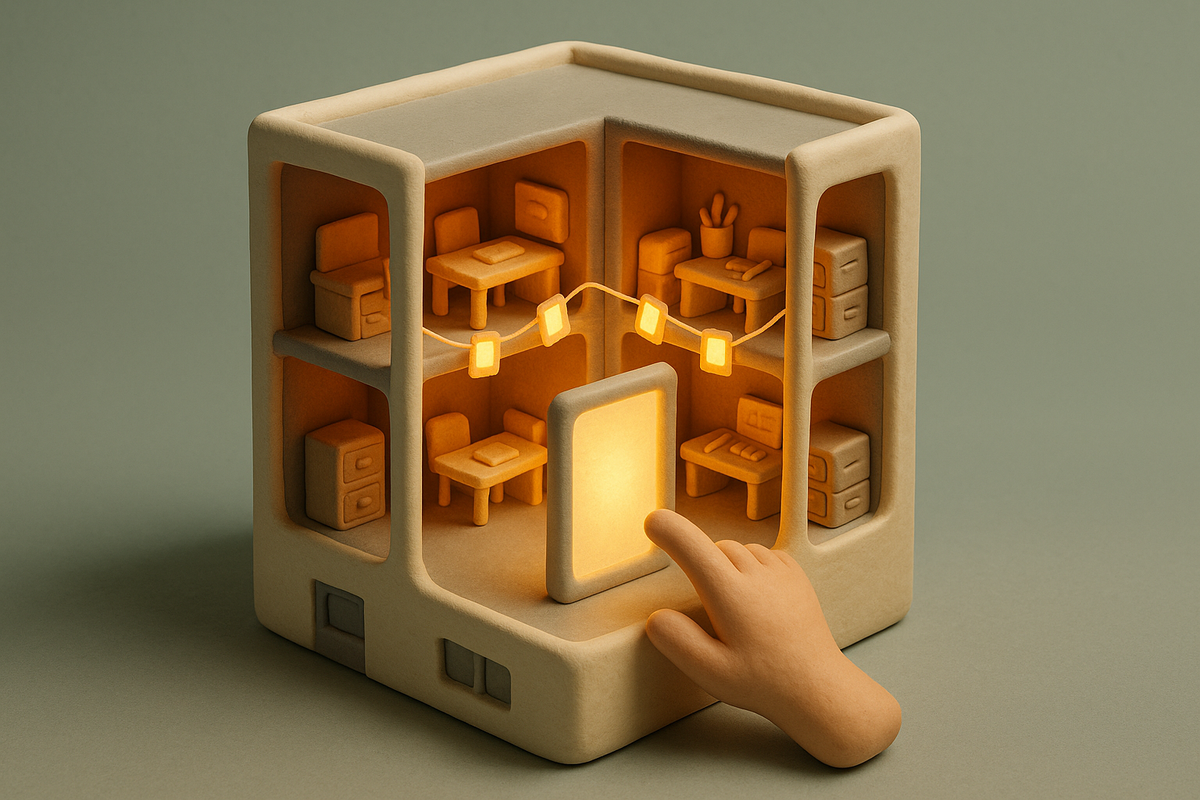
Ramp Glass is the AI workspace that Ramp, the finance automation company, built for its own employees and opened to outside companies in October 2026. It went from a small internal project to an early-access product in under a year, and few details have been published so far. This explainer from the BuildBetter team uses only Ramp's own public statements to cover what Glass is, how it works, what Ramp uses it for, whether it fits an Okta-based stack, and how to request access. Where Ramp's accounts conflict or details are missing, we point that out.
What Is Ramp Glass? (Quick Answer)
Ramp Glass is Ramp's AI workspace. Ramp describes it as its "own AI productivity suite to make every employee an AI power-user without the pain of having to configure their environment" (Seb Goddijn, Ramp). A small team at Ramp built it on Anthropic's Claude Agent SDK, and Ramp employees used it internally first. Ramp opened Glass to outside companies on October 13, 2026, in early access only. Companies can request access at https://ramp.com/glass.
Ramp is onboarding early customers one at a time. In the launch post, Ramp co-CEO Eric Glyman wrote: "We're onboarding the first businesses personally" (Introducing Glass, Ramp blog). No public pricing has been released.
The same post summarizes the product idea in one line:
"What if, instead of starting with an empty chat, you started with everything your company ever figured out?"
The sections below cover the timeline, how Glass works, Ramp's own use cases, who it fits, what is still unknown, how it compares to ChatGPT, and an FAQ.
Ramp Glass at a Glance
Ramp Glass is an internally built AI workspace, now in external early access, that, inside Ramp, connects company tools through one Okta login. Here are the core facts, each tied to a Ramp source:
- Maker: Ramp, the finance automation company. Glass started as an internal tool and is now an external product.
- Built by: A small team of three or four people, according to Ramp's own accounts. CPO Geoff Charles said "A team of four built it in under three months" (Charles on X). Another Ramp account says it began as a weekend project "predominantly vibe coded by a three-person core team" (buchan_sm on X). The two accounts give different team sizes.
- Foundation: Anthropic's Claude Agent SDK. Charles called Glass "our own version of Claude Code's Cowork."
- Access (inside Ramp): Employees sign in once through Okta SSO. After that, 30+ tools connect through centrally configured MCP servers.
- Model support (external product): "Any model," open or closed, routed through Ramp Router.
- Status: Early access since October 13, 2026. No public pricing.
Ramp Glass Timeline: From Weekend Project to Early Access
Ramp Glass went from a small internal build to an external early-access product within a year of its internal launch. The table lists each public milestone and its source.
| Date | Milestone | Source |
|---|---|---|
| Not publicly specified | Starts as a weekend project from a small core team | buchan_sm post |
| By April 2026 | Internal launch at Ramp. Charles reports "700 daily active users within a month of launch" | Charles post (Apr 8, 2026); Goddijn post (Apr 9, 2026) |
| September 2026 | Geoff Charles presents how Ramp's product team uses Glass at Lenny and Friends Summit | Summit talk (YouTube) |
| October 13, 2026 | External early-access launch, announced by co-CEO Eric Glyman. At launch, "323 employees ... have made 6,500+ edits to what Glass knows" | Introducing Glass |
Note: Charles said the build took "under three months." Ramp has not published the date of the weekend project, so the exact start of development is unknown.
How Ramp Glass Works
Glass wraps an AI agent in pre-connected tools, shared skills, and company memory, so employees start with context instead of a blank prompt. Goddijn describes the difference this way: "Most AI products give you a single conversation thread. Glass gives you a full workspace." Most of these details come from Ramp's April 2026 posts about its internal rollout. The October launch post confirms connected company knowledge ("Linear, Notion, Google, Slack, Gong, and dozens more"), skills, multiplayer sessions, any-model routing and per-project meters.
How does Glass connect to company tools?
Inside Ramp, Glass connects to tools through one Okta single sign-on. Charles describes it like this: "You authenticate once via Okta SSO and 30+ tools light up - Salesforce, Snowflake, Gong, Slack, Notion, Google Workspace, Figma." The integrations run through centrally configured MCP servers that authenticate via Okta.
For ops and IT readers who are new to the term: the Model Context Protocol (MCP) is an open standard that Anthropic introduced in November 2024. It gives an AI model a consistent way to connect to outside tools and data. It works like a universal adapter between an AI assistant and business apps. Glass configures these adapters centrally, so IT sets up each connection once and employees don't have to wire up their own.
What model and framework does it run on?
Ramp built Glass internally on Anthropic's Claude Agent SDK. According to the launch post, the external product supports "any model," open or closed, and sends requests through Ramp Router, which picks the right model for each job. Every project also has its own spend meter. Ramp says its own AI bill fell 30% after it moved to Router. That figure is Ramp's claim and has not been independently verified.
What are Dojo and Sensei?
Dojo is a Git-backed marketplace of 350+ skills. Sensei recommends relevant skills to each user (Goddijn). This means a salesperson or analyst doesn't have to write a prompt from scratch. They can use a skill a colleague already wrote and tested. Because Dojo is Git-backed, every skill has a version history.
How does Glass memory work?
Glass rebuilds its memory every 24 hours from Slack, Notion and Calendar (Goddijn). Separately, employees can teach Glass directly. At the external launch, Ramp reported that 323 employees had made 6,500+ edits to "what Glass knows." Ramp has not said whether those edits feed the 24-hour memory.
Can Glass run without someone prompting it?
Yes. Glass supports scheduled automations and a headless mode (Goddijn). Goddijn says you can kick off a long-running task, walk away, and approve permission requests from your phone.
The seven components (as described inside Ramp):
- Okta SSO + centrally configured MCP servers: one login, 30+ connected tools.
- Claude Agent SDK: the agent framework underneath.
- Dojo: Git-backed marketplace of 350+ shared skills.
- Sensei: recommends skills to each user.
- 24-hour memory: rebuilt daily from Slack, Notion and Calendar, plus employee edits.
- Automations and headless mode: work that runs without a live prompt.
- Ramp Router: any-model routing, plus a spend meter on every project.
What Teams Use Ramp Glass For (Ramp's Own Examples)
Every example below comes from Ramp. No outside customer case studies have been published yet.
Sales
Glass pulls context from a Gong call, adds Salesforce account data, and drafts a follow-up. This replaces a rep's routine of replaying a call, checking the CRM, and writing an email by hand.
Finance and ops
Glass posts a daily summary of spend anomalies to Slack as a scheduled automation. Nobody has to ask for it. The report shows up each day where the team already works.
Company Q&A
Glass answers employee questions in Slack using data from Notion and Snowflake. This combines written documentation and warehouse data in a single answer.
Product management
Charles's Lenny and Friends Summit talk gives the most detailed public account of Glass in product work. In Ramp's setup, Glass connects to Snowflake for quantitative data, user research for qualitative data, product strategy, the spec format, the codebase, and the design system. With that context, Glass acts as a "tech lead" a PM can ask "is this possible" or "would this break something." It also builds working prototypes inside the real product.
Charles described the handoff engineers want from PMs in three parts:
- Evidence the problem is real.
- Requirements that coding agents can use.
- A working prototype.
The first item depends on qualitative customer data. We return to this point later in the article. For the broader story of how Ramp builds internal AI tools beyond Glass, see our breakdown of Ramp's AI product factory and internal tools.
Why Ramp Built Glass: Context Beats a Bigger Model
Glass bets that pre-connected company context, shared skills and memory do more for employees than a smarter model behind an empty chat box.
Charles traces the problem to a familiar starting point: "A year ago, most of us used AI the way everyone did. ChatGPT in a tab." In his summit talk, he describes the blank prompt this way: "They ask you, 'What do you want to build?' And you stare."
A blank prompt is manageable for engineers who already know how to give a model context. For a recruiter, account executive, or finance analyst, it is where AI adoption often stops. Glass removes three setup steps that usually block non-technical employees:
- Tools are pre-connected. Okta SSO and centrally configured MCP servers mean nobody hunts for API keys or connector settings.
- Skills are pre-built. Dojo and Sensei give each person tested workflows written by colleagues.
- Memory is pre-built. The 24-hour rebuild means Glass already knows recent Slack, Notion and Calendar context.
Per-project spend metering is another part of the design. Our interpretation, not a Ramp statement: Ramp Router fits Ramp's core business in spend management. It is the most Ramp-specific feature in Glass and may explain why a finance company built an AI workspace in the first place.
Accuracy note: Ramp has also cited "99.5% of the team active on AI tools" and "1,500+ apps shipped on our internal platform in six weeks, from 800+ different builders." These figures describe Ramp's AI tools and internal platform overall, not Glass specifically. The only Glass-specific adoption figure is 700 daily active users within a month of the internal launch.
Who Ramp Glass Is For (and Not For Yet)
Ramp Glass fits best at companies that already run Okta and keep their work in the tools Ramp has named. Based on what Ramp has published, here is where it fits and where it doesn't yet.
Likely good fit:
- Companies that already use Okta for SSO.
- Teams whose work lives in Salesforce, Gong, Snowflake, Slack, Notion, Google Workspace or Figma.
- Organizations that want to standardize AI use across non-technical staff, with shared skills instead of personal prompt collections.
- Finance and ops leaders who want AI spend metered per project.
Not a fit yet:
- Teams that need public pricing or a self-serve signup today.
- Companies without Okta. Ramp's documented setup is built around Okta, and Ramp has not said whether it supports other identity providers.
- Buyers who need published third-party case studies before a pilot.
What is still unknown?
Ramp has not published answers to these questions:
- Pricing, and whether there will be a free tier.
- Whether you need to be a Ramp customer to use Glass.
- Which identity providers besides Okta are supported.
- Which of the 30+ integrations are available to external customers on day one.
- Data retention and model-training policies for the external product.
- A general availability date.
IT and identity leaders should add security questions: Are MCP connections scoped to each user's permissions? How are tokens stored? Is SCIM provisioning supported? How are audit logs exposed? Moving MCP servers behind Okta takes AI tool access out of individual employees' hands and puts it under admin control, so these details matter. Bring all of these questions to your access request.
How Is Ramp Glass Different From ChatGPT?
The gap between Ramp Glass and ChatGPT is smaller than the phrase "ChatGPT in a tab" suggests. ChatGPT has added workspace features through 2026. The two products differ mainly in how they are configured, which models they run, and whether you can buy them today.
Ramp Glass:
- Inside Ramp: one Okta login connects 30+ tools through centrally configured MCP servers.
- Shared skill marketplace (Dojo) with personal recommendations (Sensei).
- Memory rebuilt daily from Slack, Notion and Calendar.
- Any-model routing and per-project spend metering through Ramp Router.
- Early access only. Pricing not published.
ChatGPT (OpenAI, as of October 2026):
- ChatGPT Work, launched July 9, 2026, is an agent that works across apps and files, makes docs, slides and Sites, and runs Scheduled Tasks.
- Plugins connect Slack, Microsoft Teams, Google Drive, SharePoint, email, calendars and CRMs. Admins control access and spend.
- Skills are generally available on Enterprise and Edu.
- Company Knowledge respects source permissions and uses RBAC. Admins can require SSO and SCIM.
- Event-triggered tasks fire on Gmail, Slack and GitHub PR activity.
- OpenAI says it does not train on business data by default.
The main differences are Glass's model-agnostic routing, Ramp's skill marketplace, and its centrally configured setup, compared with ChatGPT's general availability and published plans. For a full side-by-side, read Ramp Glass vs ChatGPT.
The Customer-Evidence Gap in Any AI Workspace
An AI workspace can only answer from the context it can reach. Charles's own PM handoff starts with "evidence the problem is real," and that evidence comes from qualitative customer data: sales and support calls, tickets, surveys, and Slack threads with customer-facing teams.
In most B2B companies, that evidence is scattered across a dozen systems and rarely synthesized. A well-connected workspace can query each source, but if nobody has turned hundreds of conversations into structured, cited findings, the answer is based on whatever fits in one prompt. The agent sounds confident, but it is working from partial data.
BuildBetter is one way to fill that customer-evidence layer. BuildBetter captures and unifies call recordings, support tickets, surveys and Slack conversations through 100+ integrations, then turns them into cited insights, PRDs and tickets. Those outputs can be exposed to any AI workspace, including Glass or ChatGPT, over MCP. It is a different category from both: a source of customer evidence that the workspace draws on, not a replacement for the workspace. To build this layer yourself, follow our step-by-step guide on how to build a customer insight agent.
How to Get Access to Ramp Glass
Ramp Glass is available only through an early-access request at ramp.com/glass. To prepare:
- Request access at https://ramp.com/glass.
- Expect personal onboarding. Ramp says it is "onboarding the first businesses personally," so plan for a conversation rather than an instant signup.
- Bring IT in early. Ramp's internal setup relies on Okta SSO and centrally configured MCP servers, so your identity and security teams will need to be involved.
- Prepare your questions from the "still unknown" list above, especially pricing, identity providers, and data retention.
Ramp Glass FAQ
What is Ramp Glass?
Ramp Glass is Ramp's AI workspace, built on Anthropic's Claude Agent SDK and first used internally at Ramp. Inside Ramp, it connects 30+ tools through one Okta login, with a shared skill marketplace and daily-rebuilt memory. Ramp opened early access to outside companies on October 13, 2026.
Is Ramp Glass free?
Ramp has not published pricing. As of October 2026, Glass is in early access and Ramp is onboarding companies personally. Ramp has not said whether it will be free.
How do I get access to Ramp Glass?
Request early access at https://ramp.com/glass. Ramp opened external access on October 13, 2026, and is onboarding the first businesses one by one.
What model does Ramp Glass use?
Glass was built on Anthropic's Claude Agent SDK. The external product supports any model, open or closed, and routes requests through Ramp Router and puts a spend meter on every project.
Is Ramp Glass open source?
Ramp has not announced an open-source release. Its Dojo skill marketplace is Git-backed, but that describes how skills are stored and versioned, not the product's license.
How is Ramp Glass different from ChatGPT?
Glass starts from pre-connected company context: connected company tools, shared skills, company knowledge employees can edit, and any-model routing. ChatGPT Enterprise and Work now offer connectors, skills and scheduled tasks, and they are generally available with published plans. The full comparison is at https://blog.buildbetter.ai/ramp-glass-vs-chatgpt/.
Who built Ramp Glass?
A small team at Ramp built Glass in under three months. Ramp's own accounts put the team at three or four people. CPO Geoff Charles has been its most visible advocate.
Do I need Okta to use Ramp Glass?
Ramp's documented setup authenticates integrations through Okta SSO. Ramp has not said whether other identity providers are supported.
Sources
- Ramp, "Introducing Glass" (Eric Glyman): https://ramp.com/blog/introducing-glass
- Ramp Glass early access page: https://ramp.com/glass
- Geoff Charles on X (Apr 8, 2026): https://x.com/geoffintech/status/2042002590758572377
- Seb Goddijn on X (Apr 9, 2026): https://x.com/sebgoddijn/status/2042285915435937816
- buchan_sm on X: https://x.com/buchan_sm/status/2044524727679566156
- Geoff Charles, Lenny and Friends Summit talk (Sept 2026): https://www.youtube.com/watch?v=ZG8Mf3P9xzI
- OpenAI, ChatGPT Work: https://openai.com/index/chatgpt-for-your-most-ambitious-work/
- OpenAI, Enterprise and Edu release notes: https://help.openai.com/en/articles/10128477-chatgpt-enterprise-and-edu-release-notes
- OpenAI, Company Knowledge in ChatGPT: https://help.openai.com/en/articles/12628342-company-knowledge-in-chatgpt
- OpenAI, Connectors in ChatGPT: https://help.openai.com/en/articles/11487775-connectors-in-chatgpt
- OpenAI, ChatGPT Enterprise: https://openai.com/chatgpt/enterprise/
Last updated: October 2026. We will revise this page when Ramp publishes pricing or a general availability date.
Make churn optional.
Whichever AI workspace your team uses, its answers depend on the customer evidence underneath. BuildBetter turns calls, tickets, Slack threads and surveys into cited insights, PRDs and tickets that your product team and your AI tools can rely on.