Zapier's AI Fluency Rubric: How to Assess AI Skills in Hiring (2027)
How Zapier's four-level AI fluency rubric works, what changed in V2, and interview questions and skills tests you can adapt for your 2027 hiring plan.
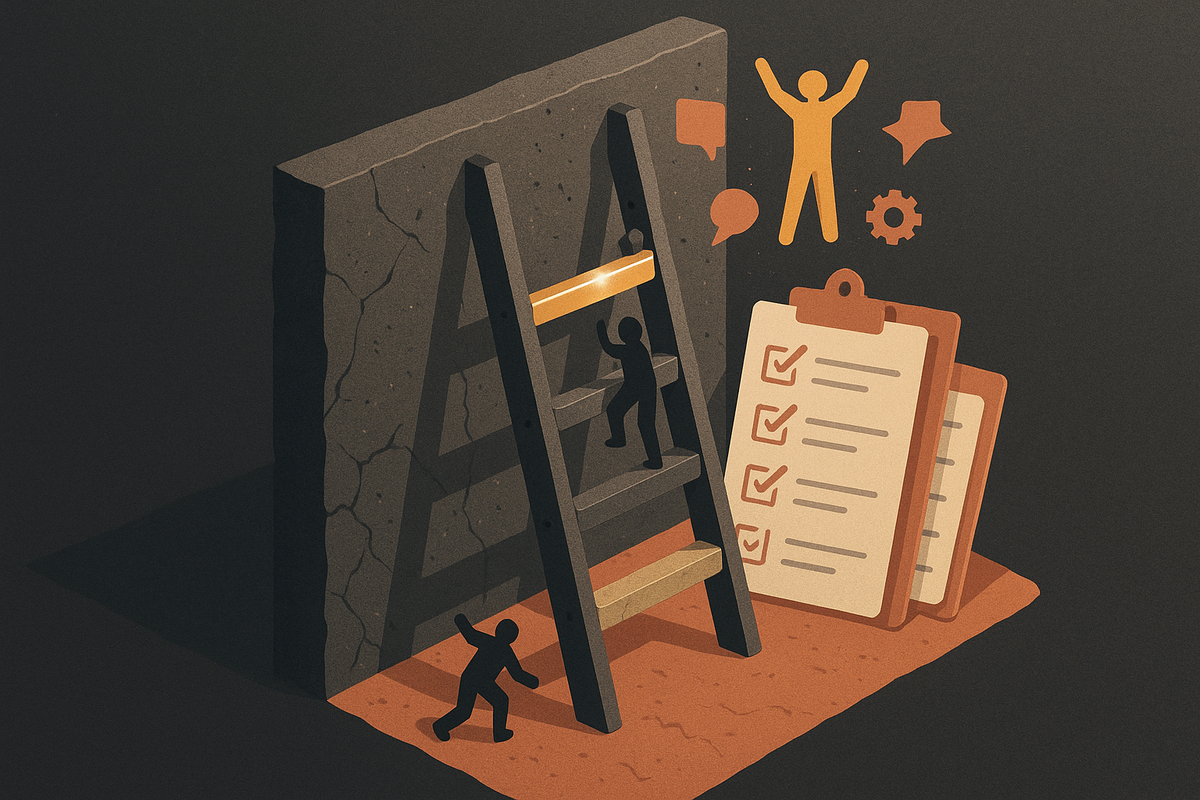
In May 2025, Zapier said every new hire had to be fluent in AI. Ten months later, it raised that bar. Most companies that want to follow still judge AI skills on gut feel, one interviewer at a time. We're covering this on the BuildBetter blog because the product and engineering leaders we work with keep asking the same question: how do you hire for AI fluency without inventing the criteria in every interview? Zapier's published rubric is the most complete public answer so far. This guide covers what Zapier did, the design questions it had to answer, interview questions for product managers and engineers, and a plan you can adapt for your 2027 hiring cycle.
The Story: Zapier Made AI Fluency a Hiring Bar for 100% of New Hires
On May 30, 2025, Zapier CEO Wade Foster announced that “100% of new hires must be fluent in AI.” The announcement was reported by PPC Land, which quoted Foster's posts. Zapier's own March 31, 2026 post confirms that this first version (V1) launched in May 2025.
Zapier then published a four-level AI fluency rubric with the levels Unacceptable, Capable, Adoptive and Transformative. On March 31, 2026, it raised the bar with V2.
Below you'll find how the system works, the questions Zapier had to answer to build it, and a plan a smaller team can run this month.
What Zapier Actually Did: V1 to V2
Zapier moved from a blanket AI fluency requirement in 2025 to a multi-stage, behavior-based hiring bar in 2026. V1, announced by Foster in May 2025 according to PPC Land, made AI fluency a requirement for every new hire. Foster's view on how to assess it, quoted by PPC Land, was direct: “The trick is to have a long list of progressively more difficult tasks.”
The rubric has four levels: Unacceptable, Capable, Adoptive and Transformative. Zapier defines two of them in plain language:
- Capable: the person has crossed the threshold of “using AI on purpose.”
- Adoptive: AI is “no longer an experiment” and has become a dependable part of the person's work.
For employees, Zapier says the rubric is “not a scorecard or a pass/fail test.” People pick the level they operate at most of the time, then aim one level up by making a single repeatable change.
According to Zapier's March 31, 2026 post, the year between versions had two parts. Zapier assessed every candidate on the initial rubric, and it rebuilt new-hire onboarding around a “builder mindset.” Zapier reports that internal AI usage reached 100% adoption.
V2 made six changes:
- Four touchpoints: candidates are assessed at the application, the initial screen (human or AI), the skills test and the executive interview.
- A higher floor: the minimum is now “Capable,” which requires AI embedded in core work and repeatable systems, not one-off prompts.
- Slope, not snapshot: Zapier looks at the candidate's AI fluency trendline, including what they tried and abandoned.
- Accountability: this becomes a fourth component alongside mindset, strategy and building. Zapier puts it this way: “With AI, you can delegate the work, but not the accountability.”
- Manager expectations: managers must show team adoption, not just personal fluency.
- Observed skills tests: interviewers watch candidates use AI in real time.
| Dimension | V1 (May 2025) | V2 (March 31, 2026) |
|---|---|---|
| Scope | AI fluency required for 100% of new hires | Still required for all new hires, with a higher bar |
| Framework | Four levels: Unacceptable, Capable, Adoptive, Transformative | Same four levels |
| Minimum bar | Not specified in the sources | Capable: AI embedded in core work and repeatable systems |
| Components | Mindset, strategy, building | Mindset, strategy, building, accountability |
| Where assessed | Every candidate assessed on the initial rubric | Four touchpoints: application, initial screen, skills test, executive interview |
| Evaluation lens | Not specified in the sources | Slope, not snapshot |
| Managers | Not specified in the sources | Must show team adoption |
| Skills test | Not specified in the sources | Redesigned so AI use is observed in real time |
The Questions Zapier Had to Answer
Any company that adds AI fluency to hiring has to answer six design questions, and Zapier's V2 answers each one publicly. Use these answers as a starting template.
How do we define AI fluency in a way we can actually assess?
Zapier uses a four-level rubric with behavioral definitions. In V2, fluency has four components: mindset, strategy, building and accountability. Interviewers score behaviors, not impressions.
Where in the hiring process do we test it?
Zapier tests at four touchpoints: the application, the initial screen (human or AI), the skills test and the executive interview. Spreading the assessment across stages means no single interviewer decides the outcome.
What is the minimum bar, and how does it differ by role?
V2 sets “Capable” as the floor for every new hire. The clearest documented role difference is that managers must also show team adoption. Zapier's sources do not publish other role-specific bars.
How do we test for repeatable AI use instead of one-off prompting?
Zapier asks for evidence of repeatable systems, watches candidates use AI in real time, and looks at the trendline of their AI use over time. One clever prompt does not meet the bar.
What do we expect from managers versus individual contributors?
Individual contributors show personal fluency. Managers must also show that their teams adopted AI.
How do we keep humans accountable for AI-produced work?
V2 adds Accountability as a scored component. Zapier's principle is that “you can delegate the work, but not the accountability.” The person signs off on the output, whoever or whatever drafted it.
What Is Zapier's AI Fluency Rubric?
Zapier's AI fluency rubric is a four-level framework (Unacceptable, Capable, Adoptive, Transformative) that Zapier uses to assess candidates and guide employees. Since March 2026, “Capable” has been the minimum hiring bar.
Zapier publishes wording for two levels. “Capable” means the person has crossed the threshold of “using AI on purpose.” “Adoptive” means AI is “no longer an experiment” and has become a dependable part of their work. For the full definitions of “Unacceptable” and “Transformative,” read Zapier's AI fluency post directly rather than relying on someone else's paraphrase.
V2 adds a scoring grid on top of the levels. It covers four components:
- Mindset: whether the person reaches for AI on purpose.
- Strategy: where they apply it, and where they don't.
- Building: whether they create repeatable systems.
- Accountability: whether they own and verify the output.
It also adds the “slope, not snapshot” lens, so a candidate's trajectory counts as much as their current state.
Do this month
- Write observable behaviors. Copy the four level names. For each of your top three roles, write one observable behavior per level. For a PM, “Capable” might be “uses AI weekly to synthesize discovery notes.”
- Define your floor explicitly. For example, adopt “Capable,” meaning AI is used on purpose in core work. Put the definition in writing.
- Publish internally first. Share the rubric with your team before you use it on candidates. Interviewers need to calibrate on the same language, or the scores will drift.
How Do You Assess AI Skills in Job Interviews?
Assess AI skills at several points in the hiring process, not with one question. Ask for evidence of repeatable systems, then watch the candidate use AI on a real task.
Zapier's V2 uses four touchpoints: the application, an initial human or AI screen, a skills test and an executive interview. It weighs the trendline, including what candidates tried and abandoned, and interviewers observe skills tests in real time.
Foster's line that “the trick is to have a long list of progressively more difficult tasks” is the key design principle. Build a ladder of tasks instead of one prompt. Most candidates can use AI on an easy task. The useful signal is where on the ladder they stop being effective, because that stopping point maps onto a rubric level.
Do this month, by stage
- Application: add one question: “Describe an AI workflow you use weekly and what it replaced.” The “what it replaced” part filters out people who only prompt now and then.
- Screen: ask what they tried and abandoned, and why. This shows their slope. A candidate who dropped three workflows for sound reasons often shows more fluency than one with a single polished demo.
- Skills test: give a 30–45 minute task with AI tools allowed. Have the candidate share their screen and talk through what they're doing.
- Final interview: probe accountability. Ask how they verified the output and which parts they would sign their name to.
Scoring tip: tie every score to a rubric level and a specific observed behavior. Use structured interview practice: the same questions, in the same order, scored against the same anchors for every candidate. A rubric only works if each interviewer applies it the same way.
AI Fluency Interview Questions for Product Managers
Strong AI fluency questions for PMs test two things. Has the candidate embedded AI in recurring product work, such as discovery synthesis, spec drafting and prioritization? And can they show the evidence behind what the AI produced?
Note: Zapier's published material does not include PM-specific questions. The questions below are our suggestions, mapped to Zapier's four V2 components plus the slope lens.
- Mindset: “What is one product task you stopped doing manually in the last six months?” A good answer names a specific task and what replaced it.
- Strategy: “Where would you not use AI in the product process, and why?” This shows judgment. Candidates who say “everywhere” have usually not thought it through.
- Building: “Walk me through a repeatable AI workflow you built, such as from customer call to draft spec.” Listen for inputs, steps, review points and how often they run it.
- Accountability: “An AI agent drafted a PRD. What customer evidence would you need before shipping it?” Strong candidates name sources and say how they'd check claims against them.
- Slope: “What AI approach did you abandon, and what replaced it?” Treat a well-reasoned abandonment as positive evidence.
- Team adoption (for PMs who manage people): “How did you raise AI usage across your team, and how did you know it worked?” This matches Zapier's V2 manager expectation.
For the accountability question, move from discussion to demonstration. In a live exercise, a PM can trace an AI-drafted spec back to the source calls, tickets and Slack threads using a tool like BuildBetter. Then ask the candidate to defend one requirement with the customer quote behind it. A candidate who can make that trace quickly shows fluency and ownership in the same exercise.
What Are the AI Fluency Levels in a Framework for Employees?
Zapier's employee framework uses the same four levels as its hiring rubric, but it is explicitly “not a scorecard or a pass/fail test.” Each person picks the level they operate at most of the time and aims one level up with a single repeatable change.
Internally, Zapier uses the rubric as a growth tool. It also rebuilt new-hire onboarding around a “builder mindset,” so people start building with AI from their first weeks. Zapier reports 100% internal AI adoption. That figure is self-reported, and the sources don't describe how it was measured.
One rubric does two jobs:
- Hiring: the rubric is a gate. Under V2, candidates must reach at least “Capable.”
- Development: the rubric is a coaching tool. Existing employees get no pass/fail score, just a current level and a next step.
Separating these jobs lowers anxiety. Employees aren't worried that a self-assessment will cost them their role, so they report honestly, and honest reports give you a usable baseline. Asking for one repeatable change instead of a list of experiments also means progress builds over time instead of fading after a burst of enthusiasm.
Do this month
- Run a 15-minute self-assessment. Each person names the level they operate at most of the time.
- Commit to one repeatable change. Each person picks a single habit that would move them up one level. One change, not five.
- Review at the next 1:1. Managers check whether the change stuck and share the best examples with the whole team.
Should AI Fluency Be a Hiring Requirement?
AI fluency can be a hiring requirement when you define it in observable behaviors, test it consistently, and set a floor that fits the role. Zapier's choice of “Capable” is one documented example.
Zapier required fluency for all new hires in V1 and assessed every candidate for a year. In V2 it raised the floor instead of lowering it. Zapier also paired the mandate with a published framework. A requirement without a clear rubric leads to inconsistent judgments, with each interviewer applying a private definition of “fluent.”
The opposite risk is real too. If you require AI fluency but can't describe what passing looks like, you filter on how confident candidates sound, not on how well they work. That rewards candidates who interview well over candidates who perform well.
Decision checklist
- Can you define the floor? Write it in one sentence an interviewer could score against.
- Can interviewers observe it? If nobody watches a candidate use AI, you're scoring self-report.
- Does onboarding help new hires grow past the floor? Zapier rebuilt onboarding around a builder mindset for this reason.
- Do managers have a team-adoption expectation? Without one, fluency stays an individual trait instead of a team habit.
Do this month: pilot the requirement on one or two open roles before rolling it out company-wide. Review the results after one hiring cycle. Check where candidates landed on the rubric, where interviewers disagreed, and whether the floor was set too high or too low for those roles.
Zapier's sources report no retention or productivity outcomes from the mandate. The only outcome they report is 100% internal adoption, so don't cite other results.
How Do You Measure AI Adoption Across a Company?
Measure AI adoption by tracking how many people use AI in core, repeatable work, not by counting who has tool access. For managers, also measure whether their teams have adopted it.
Zapier reports 100% internal adoption. That number is self-reported, and the sources don't explain the method behind it. V2 also makes team adoption a manager-level expectation, which turns AI fluency from an individual skill into a leadership outcome. Managers are judged on whether their team's habits changed, not on how well they personally prompt.
Do this month
- Run a level distribution. Count how many people sit at each of the four rubric levels. A team with most people at Capable and none at Adoptive needs a different plan than one split between Unacceptable and Transformative.
- Inventory repeatable workflows. Count documented AI workflows per team. A workflow that's written down can be shared, reviewed and improved. One that lives in someone's head can't.
- Track the trendline. Re-run the self-assessment every quarter. This applies “slope, not snapshot” to your own organization.
- Hold managers to a team metric. Pair each manager's own fluency rating with a team-adoption number, such as the share of their team at Capable or above.
“100% adoption” can mean everyone logged in once, or it can mean everyone runs a weekly AI workflow in core work. Pick your definition before you report a number, and publish the definition next to it.
What Should an AI Skills Test for Engineering Candidates Look Like?
An engineering AI skills test should have interviewers watch the candidate use AI tools in real time on a realistic task. It should score judgment, verification and repeatability, not just whether the code runs.
Zapier's V2 redesigned skills tests so interviewers observe candidates using AI in real time. The sources don't publish engineering-specific test content, so the structure below is our recommendation, built on Foster's principle of progressively harder tasks.
A three-rung task ladder
- A small scoped change. Add a field, write a test, fix a lint issue. Nearly everyone clears this rung, and it shows how the candidate sets up their tools.
- A change in an unfamiliar codebase. This shows whether the candidate uses AI to build understanding or just to generate code they can't explain.
- A debugging or refactoring task where the AI output contains a flaw. Plant a subtle bug or a bad pattern the assistant is likely to suggest. This rung separates people who verify from people who accept.
Score against Zapier's four components
- Mindset: do they reach for AI on purpose, or ignore it?
- Strategy: when do they choose to write code by hand, and can they explain why?
- Building: do they set up reusable prompts, scripts or context files?
- Accountability: do they run tests, read the diff and question the output?
Use one accountability probe on every candidate: “Which line of this AI-generated code would you not ship, and why?” Junior candidates can generate output. Senior candidates can point to the risky line and explain how they'd check it.
Do this month: convert one existing take-home into a 60-minute live session with AI allowed. Calibrate two interviewers on the rubric beforehand by having both score a recorded mock session and compare notes.
What to Copy From Zapier, and What Not to Copy
Copy Zapier's structure: a named rubric, multiple touchpoints and an accountability component. Don't copy its exact bar without checking it against your own roles.
Copy
- A named, published rubric. Shared language is what makes calibration possible.
- Multiple assessment touchpoints. Several weak signals beat one interviewer's strong opinion.
- Slope, not snapshot. Learning speed holds up better than familiarity with any one tool.
- An accountability component. This is the part most homegrown AI rubrics leave out.
- Separate expectations for managers. Team adoption is a leadership result.
- The employee framing. Picking a level and making one repeatable change lowers anxiety, and the gains add up over time.
Don't copy blindly
- Baseline exposure differs. Zapier is a workflow automation company, so its people may have more day-to-day contact with AI and automation than yours. Set your floor based on your roles.
- Self-reported data. The 100% internal adoption figure is Zapier's own report, and the sources don't explain how it was measured.
- Sourcing. The May 30, 2025 announcement comes through PPC Land quoting Foster's posts. Zapier's 2026 post confirms the May V1 launch.
- What isn't public. Pass rates, hiring outcomes and detailed role-by-role bars are not in these sources. Don't assume them.
Where Customer Evidence Fits: Delegate the Work, Not the Accountability
Zapier's line, “With AI, you can delegate the work, but not the accountability,” applies directly to product decisions. An AI-fluent PM can have an agent draft a PRD, a ticket or a roadmap rationale. The PM still has to show the customer evidence behind what the agent produced: the calls, tickets and Slack threads it relies on.
That gives you a practical test for interviews and for internal reviews:
“Show me the three customer conversations this decision rests on.”
If the PM can't produce them, the AI did the thinking and nobody checked it. If they can, you've watched accountability happen instead of hearing about it.
Passing this test is easier when the evidence lives in one place. BuildBetter brings together internal team conversations (calls, Slack) and external feedback (support tickets, surveys) through 100+ integrations, including Zoom, Slack, Jira, Zendesk, HubSpot and Intercom. Because each signal is analyzed individually for severity and business impact, AI-drafted PRDs and tickets can link back to the specific source conversations. That creates a traceable path from customer conversation to shipped decision.
There are limits. If your main need is enterprise-scale survey distribution or a dedicated research-repository workflow, a tool built for that purpose may fit better. BuildBetter is strongest at connecting the customer voice to the artifacts your team acts on.
To be clear, this section is our application of Zapier's principle. Zapier did not use or endorse BuildBetter.
FAQ: AI Fluency in Hiring
What is Zapier's AI fluency rubric?
It is a four-level framework (Unacceptable, Capable, Adoptive, Transformative) that Zapier uses to assess candidates and guide employee growth. Since its V2 update on March 31, 2026, “Capable” is the minimum hiring bar, meaning AI is embedded in core work and repeatable systems.
What are the four levels of Zapier's AI fluency rubric?
Unacceptable, Capable, Adoptive and Transformative. Zapier describes Capable as “using AI on purpose” and Adoptive as AI being “no longer an experiment” but a dependable part of work. See Zapier's AI fluency post for the full definitions.
What is Zapier's minimum AI fluency bar for new hires?
Since V2 (March 31, 2026), the floor is “Capable.” That means AI is embedded in core work and repeatable systems, not used through one-off prompts.
When did Zapier make AI fluency a hiring requirement?
CEO Wade Foster announced on May 30, 2025 that “100% of new hires must be fluent in AI,” as reported by PPC Land. Zapier's March 31, 2026 post confirms the May 2025 launch of V1.
What changed in Zapier's V2 AI fluency hiring bar?
There were six changes. Assessment now happens at four touchpoints, and the floor rose to Capable. Zapier evaluates “slope, not snapshot” and added Accountability as a fourth component. Managers must show team adoption, and skills tests are observed in real time.
What does “slope, not snapshot” mean?
Zapier evaluates a candidate's AI fluency trendline over time, including tools and approaches they tried and abandoned, rather than judging a single moment of performance.
How is AI fluency different for managers?
Under V2, managers must show team adoption, not just personal fluency.
How can a product team prove accountability for AI-generated work?
Tie every AI-drafted artifact back to customer evidence such as calls, tickets and Slack threads. Platforms like BuildBetter keep that evidence in one place, so a PRD or ticket links to the conversations behind it.
Sources and Further Reading
- PPC Land, “Zapier mandates AI fluency for all new hires”: https://ppc.land/zapier-mandates-ai-fluency-for-all-new-hires/
- Zapier, AI fluency rubric post: https://zapier.com/blog/ai-fluency/
- Zapier, “Raising the AI fluency bar in hiring” (March 31, 2026): https://zapier.com/blog/raising-ai-fluency-bar-in-hiring/
- Wikipedia, Zapier: https://en.wikipedia.org/wiki/Zapier
- Wikipedia, Structured interview: https://en.wikipedia.org/wiki/Structured_interview
- buildbetter.ai: https://buildbetter.ai
Make Churn Optional
Hiring AI-fluent PMs is half the job. The other half is giving them customer evidence they can trust, so that every AI-drafted spec, ticket and roadmap call traces back to what customers actually said. BuildBetter connects your calls, tickets, Slack threads and surveys to the decisions your team ships, then closes the loop with the customers who asked.