AI Agents That Watch You Work: How Observational AI Learns in 2026
Observational AI agents learn by watching the work you already do — no prompts required. Here's how the category works in 2026, why specialization beats generic tools, and how OpenAGI delivers proactive, local, privacy-first observation on your own machine.

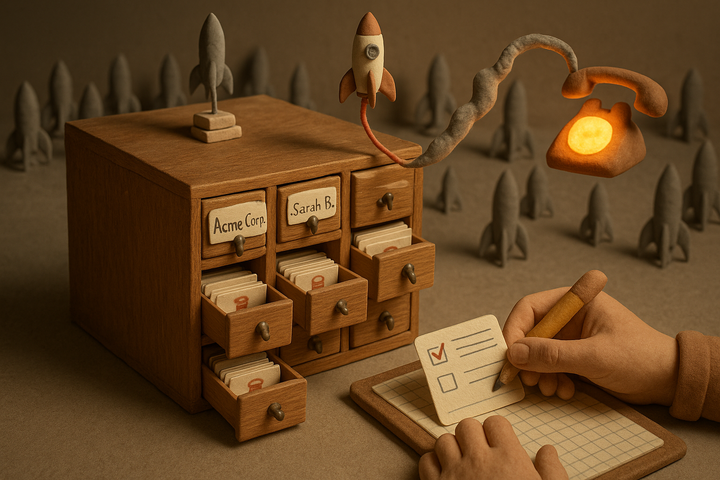
The most important shift in AI in 2026 isn't a smarter chatbot — it's the disappearance of the chatbot entirely. A new class of observational AI agents now runs quietly in the background, learning by watching the work you already do. Instead of waiting for prompts, these agents attend your meetings, observe your screen, recognize patterns in your decisions, and proactively surface what to do next. OpenAGI, a source-available personal agent that runs as a daemon on your own machine, is one of the clearest examples of this shift: it watches your work locally, scores every signal it observes, and reaches out across SMS, Telegram, or HTTP when it has something useful to say.
This guide explains how observational AI works, where it's already producing measurable ROI for B2B product teams, and how to evaluate the category before deploying it in your stack.
What Are Observational AI Agents?
Observational AI agents are AI systems that learn passively by watching user actions, screens, calls, and meetings — without requiring explicit prompts. They invert the traditional human-AI relationship: instead of you describing what you need, the agent already knows because it watched you need it last week.
Contrast this with prompt-based assistants like ChatGPT or Claude. Those tools are powerful, but they start from zero every session. You have to articulate context, paste documents, and explain your team's situation before they're useful. Observational AI removes that friction entirely.
Three core capabilities define the category:
- Screen observation — capturing what you do across applications to learn recurring workflows.
- Meeting attendance — joining calls (or processing recordings) to extract decisions, action items, and customer signal.
- Behavioral pattern recognition — building a longitudinal model of your work so the agent knows what's normal, what's novel, and what's worth interrupting you about.
2026 is the breakthrough year for three reasons: multimodal foundation models (GPT-5, Claude 4.5, Gemini 2.5) can finally reason over screens and audio at acceptable latency; on-device chips like the Apple M5 and Qualcomm X Elite 2 make local inference fast enough to run continuously; and ambient compute infrastructure has matured enough to keep agents online 24/7 without burning cloud budgets. Gartner now projects the observational AI market will reach $14.8B by 2027, growing at 67% CAGR.
How AI Agents Learn From Watching You Work
Observational AI learns through a four-stage loop: capture, recognize, contextualize, and act. The output is an agent that gets more useful the longer it runs.
Step 1: Data Capture
The agent ingests signals from multiple sources — meeting recordings, call transcripts, screen activity (opt-in), document edits, and connected systems via MCP. OpenAGI, for example, captures locally and never transmits data off-machine unless you explicitly route it somewhere.
Step 2: Pattern Recognition
Raw signal is noise. Pattern recognition turns it into structure: recurring workflows, decisions you make consistently, pain points that surface repeatedly. OpenAGI's opt-in screen capture, for instance, auto-generates reusable skills from observed patterns — if it sees you reformat CSVs the same way three times, that becomes a skill it can offer to run next time.
Step 3: Context Building
The agent constructs a knowledge graph of your work, team, and customers. OpenAGI uses a tiered memory system — short, medium, and long-term "Lava" — so corrections lock in once and never repeat. Unlike a chatbot that forgets between sessions, an observational agent compounds context.
Step 4: Proactive Output
This is where observational AI diverges from everything before it. Instead of waiting, the agent reaches out. OpenAGI's Adaptive Scrutiny layer scores every signal on seven axes — urgency, impact, novelty, risk, confidence, specificity, and conflict — before choosing one of five actions: act, ask, watch, ignore, or propagate to a bounded specialist sub-agent.
A real example: a product team's observational agent attends 30 customer calls weekly, auto-clusters themes, drafts feature request summaries, and pings the PM on Telegram when a new objection pattern crosses a confidence threshold. No one prompted it. It just noticed.
Top Use Cases for Observational AI in B2B Product Teams
The highest-ROI applications of observational AI in 2026 cluster around customer signal — because product managers spend 47% of their week in or processing customer-facing conversations (Pendo Product Benchmarks 2026). Every minute of that signal is product gold, and most of it is currently lost.
Customer Call Intelligence
Observational agents extract feature requests, objections, sentiment, and competitive mentions from sales and CS calls automatically. Forrester reports teams using observational AI for call analysis identify feature themes 3.2x faster than manual review.
PRD and Roadmap Drafting
Once the agent has observed enough customer conversations, it can draft PRDs grounded in actual customer evidence — quotes, frequency, segment — rather than internal speculation.
Cross-Team Alerts
The agent notifies PMs when sales mentions a competitor or when a feature gap appears in three customer calls within a week. OpenAGI handles this natively via SMS, Telegram, and HTTP webhooks — you don't have to open an app to receive the insight.
Stakeholder Updates
Weekly updates auto-generated from observed work patterns and customer conversations replace the Friday afternoon scramble. OpenAGI connects to BuildBetter via MCP to pull customer context, ticket history, and deal signals directly into your day — so the agent has both internal work patterns and external customer evidence in one context window.
OpenAGI vs. Generic Observational AI: Why Specialization Matters
Generic personal AI tools capture everything but produce little of structured value. OpenAGI takes a different approach: a local, source-available agent with a decision layer purpose-built to act, not just record.
Tools like OpenClaw, PicoClaw, AutoGPT, BabyAGI, AgentGPT, Cognosys, and hosted offerings like Claude.ai and Operator either wait for prompts or run open-loop without judgment. OpenAGI builds on the foundation laid by OpenClaw and PicoClaw but adds three pillars none of them have:
- It watches you work — opt-in local screen capture builds skills automatically from observed patterns.
- Adaptive Scrutiny — every signal scored on 7 axes before the agent acts, asks, watches, ignores, or propagates.
- Bounded specialists — risky or repeated tasks spawn scoped sub-agents with their own permissions. Specialization without sprawl.
Comparison: OpenAGI vs. Other Local Agents
| Capability | OpenAGI | OpenClaw / PicoClaw | AutoGPT / BabyAGI | Claude.ai / Operator |
|---|---|---|---|---|
| Runs locally as daemon | ✅ | ✅ | Partial | ❌ (cloud) |
| Watches screen to learn skills | ✅ | ❌ | ❌ | ❌ |
| Adaptive Scrutiny (7-axis scoring) | ✅ | ❌ | ❌ | ❌ |
| Bounded specialist sub-agents | ✅ | ❌ | ❌ | ❌ |
| Tiered long-term memory | ✅ | Limited | ❌ | Session-only |
| Proactive SMS/Telegram/HTTP | ✅ | ❌ | ❌ | ❌ |
| BYO-LLM | ✅ | ✅ | ✅ | ❌ |
| No telemetry, no accounts | ✅ | Partial | Varies | ❌ |
The pattern: most local agents are reactive scripts. OpenAGI is the first that observes, judges, and reaches out on its own.
Privacy and Trust: The Hardest Problem in Observational AI
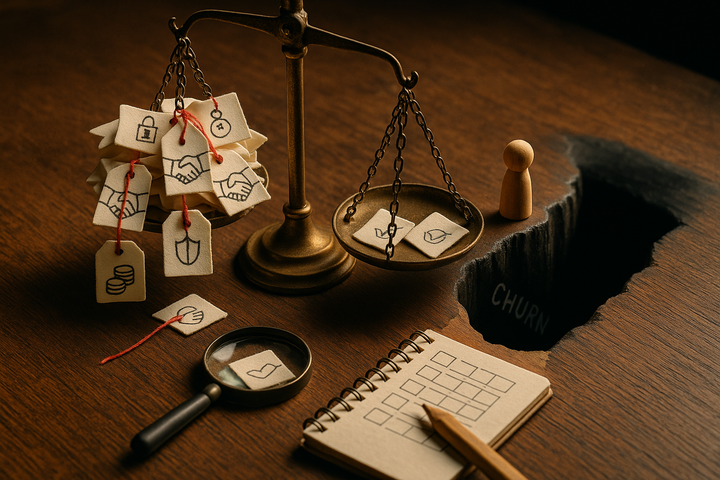
Privacy is the #1 deployment blocker for observational AI — 62% of enterprise buyers cite "privacy and data governance" above accuracy or integration concerns (IDC Enterprise AI Adoption Survey 2026). Any agent that watches you work has to earn trust before it earns adoption.
Common concerns fall into three buckets:
- Surveillance conflation — fear that observational AI = employee monitoring.
- Data leakage — what happens to screen captures, transcripts, and behavioral logs?
- Vendor lock-in — once an agent has years of context, you can't switch.
OpenAGI was designed around these concerns from day one:
- Runs on your own machine as a daemon — macOS, Linux, Docker, or Raspberry Pi.
- No telemetry, no accounts — data never leaves your hardware.
- Bring your own LLM — route to local models (Ollama, LM Studio) or any cloud provider you choose.
- Source-available under PolyForm NC — read the code, audit it, fork it if needed.
- Opt-in screen capture — observation is off by default.
Before deploying any observational AI tool, ask: Where does the data live? Can I bring my own model? Is the agent auditable? Can I delete everything? If a vendor can't answer those clearly, the trust gap won't close.
How to Evaluate Observational AI Tools in 2026
Five criteria separate observational AI tools that ship value from ones that just collect data.
1. Specificity of Output
Does it produce artifacts your team actually uses — PRDs, alerts, ticket drafts — or just transcripts? A PRD is more valuable than a summary.
2. Integration Depth
Does it connect to the tools where your work happens? Look for native or MCP-based integrations with Zoom, Slack, Jira, Linear, Notion, and your call recording stack.
3. Domain Accuracy
Test the agent on your actual product terminology, customer names, and competitor mentions. Horizontal tools often miss what vertical ones catch.
4. Proactive vs. Reactive
Does it surface insights, or wait to be queried? Observational AI that requires prompting is just chat with extra steps. OpenAGI's Adaptive Scrutiny layer explicitly chooses when to interrupt you — and when to stay quiet.
5. Privacy Posture
Look for SOC 2 Type II, on-device or BYO-LLM options, scoped permissions, explicit consent workflows, and source-available code where possible.
The Future: From Observation to Autonomous Action
The 2026-2027 trajectory is clear: observational agents are moving from insights to actions. The next generation doesn't just notice a feature request pattern — it drafts the Jira ticket, links the customer quotes, and pings the PM for approval.
This is exactly where bounded specialists matter. OpenAGI's propagation model spawns scoped sub-agents for repeated or risky tasks, each with their own permissions. Instead of one monolithic agent with root access to your life, you get a tree of small, accountable workers — one that drafts customer responses, one that monitors deal signals, one that watches for anomalies in your build pipeline.
By 2027, most B2B product teams will have at least one observational AI agent in their workflow — up from 34% AI assistant adoption in 2024 and 78% in Q1 2026 (Productboard State of Product Management 2026). Customer-led development at scale simply isn't possible without an agent observing and synthesizing the firehose of customer signal.
Getting Started With Observational AI for Your Team
The biggest mistake teams make is trying to observe everything at once. Start with one workflow.
The 30-Day Pilot Framework
- Pick one workflow — customer call analysis is the highest-ROI entry point.
- Define a measurable output — e.g., "features shipped from AI-surfaced insights" or "hours saved on stakeholder updates."
- Install OpenAGI in 5 minutes on a single machine and connect it to your existing tools via MCP.
- Tune Adaptive Scrutiny — adjust thresholds for when the agent acts vs. asks vs. watches.
- Review weekly — what did the agent surface that you would have missed?
Common pitfalls to avoid: trying to observe every channel from day one, skipping the consent conversation with teammates, and over-indexing on transcript accuracy when the real value is in pattern recognition across hundreds of conversations.
Frequently Asked Questions
What is an observational AI agent?
An observational AI agent is an AI system that learns by passively watching user activity — including screen actions, meetings, calls, and documents — rather than waiting for explicit prompts. It builds context continuously and proactively surfaces insights, drafts artifacts, and triggers actions without being asked. OpenAGI is one example, running as a local daemon that watches, scores signals, and reaches out across SMS, Telegram, or HTTP.
How is observational AI different from ChatGPT or Claude?
Traditional AI assistants like ChatGPT require explicit prompts and have no memory of your work context. Observational AI runs in the background, attending your meetings, watching your screen, and learning your patterns. It produces outputs without being prompted because it already understands what you need.
Is observational AI the same as employee surveillance?
No. Reputable observational AI platforms focus on work artifacts and customer-facing conversations with explicit consent, not employee monitoring. OpenAGI, for example, runs locally on your own machine with no telemetry — there's no central dashboard for a manager to watch. Surveillance tools watch employees; observational AI watches work to produce business outcomes for the user themselves.
What's the highest-ROI use case for observational AI in product teams?
Customer call intelligence — automatically extracting feature requests, objections, sentiment, and themes from sales and customer success conversations. Product teams typically have 18-30 customer calls weekly, and observational AI ensures none of that signal is lost.
How does OpenAGI compare to general agent frameworks like AutoGPT or BabyAGI?
AutoGPT, BabyAGI, and similar frameworks are reactive: they execute a goal you give them, then stop. OpenAGI is proactive and observational — it watches your work, scores signals with Adaptive Scrutiny, maintains tiered memory across sessions, and reaches out across SMS/Telegram/HTTP without being prompted. It builds on the foundation of OpenClaw and PicoClaw but adds the decision layer and bounded specialists those projects lack.
Install OpenAGI in 5 Minutes
If you're ready to put an observational AI agent on your own machine — one that watches your work, learns your patterns, and proactively reaches out — OpenAGI is source-available, BYO-LLM, and runs anywhere from a MacBook to a Raspberry Pi. No telemetry. No accounts. Your data never leaves.