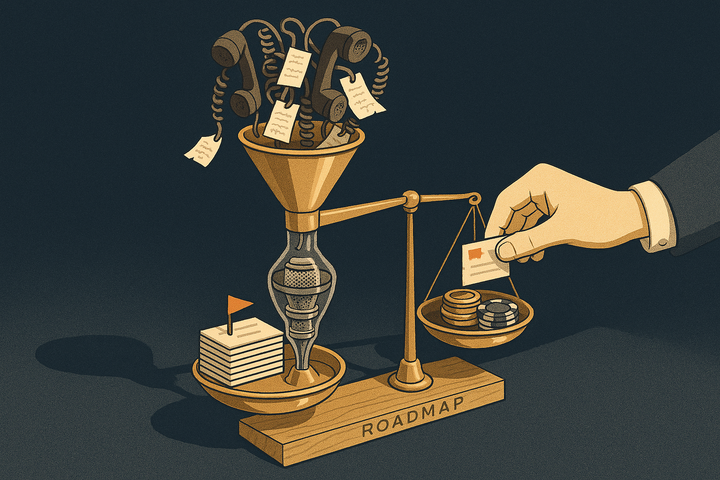
[ARCHIVED v1] Best AI Tools That Read Customer Reviews in 2026: 10 Tools Compared
With over 1.5 billion online reviews generated annually, manual analysis is impossible. We compare 12 of the best AI-powered review analysis tools in 2026, covering sentiment accuracy, multilingual support, pricing, and best-fit use cases for ecommerce, enterprise, and product teams.
![[ARCHIVED v1] Best AI Tools That Read Customer Reviews in 2026: 10 Tools Compared](https://storage.ghost.io/c/4f/50/4f50536c-6dc6-4a92-8ff1-e707b209e265/content/images/size/w1200/2026/04/batch4-03.png)
Customer reviews are one of the most valuable — and most overwhelming — sources of unstructured data a business can tap into. With an estimated 1.5+ billion online reviews generated annually across platforms like Google, Amazon, Yelp, TripAdvisor, and app stores, manual analysis is no longer feasible for any organization serious about understanding its customers. AI-powered review analysis tools use natural language processing (NLP), machine learning (ML), and large language models (LLMs) to extract sentiment, themes, and actionable insights from review text at scale. In this guide, we compare 10 of the best AI review analysis tools available in 2026, breaking down what each does best, how they compare, and how to choose the right one for your business.
Why AI-Powered Review Analysis Is Essential in 2026
Manual review analysis is no longer a viable strategy for any business that depends on customer feedback. The sheer volume of online reviews — now exceeding 1.5 billion annually across major platforms — has rendered spreadsheet-based approaches obsolete. More importantly, the businesses that win in 2026 are the ones that can translate unstructured review data into product improvements, marketing strategies, and customer experience enhancements faster than anyone else.
The numbers make the case clearly. According to BrightLocal's 2025 Consumer Review Survey, 93% of consumers say online reviews influence their purchasing decisions, and the average consumer reads 6–10 reviews before trusting a business. That means your review corpus isn't just feedback — it's the first impression for nearly every prospective customer.
AI review analysis tools deliver three critical advantages over manual methods:
- Speed at scale: AI can process thousands of reviews in seconds, extracting sentiment, topics, and trends that would take a human team weeks to identify.
- Consistency: Unlike human analysts who experience fatigue and bias drift, AI applies the same analytical framework to every review uniformly.
- Actionability: Modern tools go beyond positive/negative scoring to deliver aspect-based sentiment analysis (ABSA), which identifies sentiment about specific features, attributes, or experience dimensions — the kind of granular insight that product and CX teams can actually act on.
McKinsey's 2025 Digital Customer Experience report found that businesses using AI-driven review analysis identify product issues 25–35% faster than those relying on manual methods. Meanwhile, the Qualtrics XM Institute reports that companies that systematically act on customer feedback see 10–15% improvement in customer retention rates. The global text analytics market, which encompasses review analysis, is projected to reach $40+ billion by 2030, growing at approximately 18% CAGR — a clear signal that investment in this category is accelerating.
How We Evaluated These AI Review Analysis Tools
Every tool in this list was assessed against a consistent set of criteria designed to reflect real-world needs across ecommerce, SaaS, hospitality, and multi-location businesses. Our evaluation framework prioritizes practical performance over marketing claims.
Here's what we measured:
- Sentiment analysis accuracy: We tested each tool's ability to correctly classify sentiment at both the overall and aspect level, paying special attention to handling of nuanced language, sarcasm, and negation.
- Language support: We assessed native multilingual capabilities versus translation-pipeline approaches, as accuracy differs significantly between these methods.
- Integration ecosystem: We evaluated out-of-the-box integrations with CRMs, BI tools, helpdesk platforms, review aggregation sites, and ecommerce platforms.
- Ease of use and time to value: We measured how quickly a non-technical team member could set up the tool and begin extracting useful insights.
- Scalability: We assessed performance at varying review volumes — from a few hundred reviews for small businesses to millions for enterprise deployments.
- Pricing transparency: We noted whether pricing is published, whether free trials or freemium tiers exist, and how costs scale with usage.
- Data privacy and compliance: We checked for GDPR compliance, SOC 2 certification, HIPAA readiness, and data residency options — critical for enterprise and regulated-industry buyers.
As Forrester's CX technology evaluation framework recommends: "When evaluating tools, test them on YOUR data, not just demo datasets. Sentiment accuracy varies dramatically by industry vertical." We encourage every team to run a proof-of-concept with their own review corpus before committing.
1. BuildBetter — Best for AI Feedback Analysis Across Every Channel
BuildBetter analyzes everything customers already tell you — calls, support tickets, Slack threads, surveys and reviews — and turns it into themes you can act on. Every piece of feedback is read individually for severity, business impact and sentiment, so the same issue described forty different ways surfaces as one theme, and every insight links back to the exact customer quote.
It connects to 100+ tools (Zendesk, Intercom, Salesforce, HubSpot, Slack, Zoom, Jira, Linear, G2 and more) and syncs continuously, then turns findings into PRDs, Linear or Jira tickets with the evidence attached, and follow-ups to the customers who asked. SOC 2 Type II, HIPAA and GDPR compliant; used by Clay, Brex, PostHog, Zoom and 30,000+ teams.
Best for: B2B product and CX teams that need one place to understand feedback from every source, not just surveys.
2. MonkeyLearn – Best for Custom Sentiment Models
MonkeyLearn is the strongest option for teams that want to build highly customized, no-code machine learning models for review classification and sentiment analysis. Its drag-and-drop model builder lets non-technical users train classifiers and extractors tailored to their specific product vocabulary and review patterns.
Key strengths:
- Custom model flexibility: Build and train sentiment, topic, and intent classifiers without writing a single line of code. Models can be fine-tuned on your proprietary review data for domain-specific accuracy.
- Multi-platform review aggregation: Pull reviews from multiple sources into a unified analysis pipeline.
- API and integration ecosystem: Connects natively with Zapier, Google Sheets, and major CRMs, making it easy to embed review insights into existing workflows.
- Pre-built models: Offers ready-to-use sentiment and topic models for teams that want quick results before investing in customization.
MonkeyLearn now operates within the broader Zendesk ecosystem following integration partnerships, which expands its utility for customer support-focused teams. Pricing starts at a mid-tier level with a free trial available, making it accessible for small-to-mid-size businesses testing the waters of AI review analysis.
Best for: Teams that want maximum control over their sentiment models without needing data science expertise. Particularly strong for SaaS and ecommerce companies with unique product taxonomies.
3. Brandwatch – Best for Enterprise-Level Review Monitoring
Brandwatch is the most comprehensive consumer intelligence platform for enterprises that need to monitor reviews alongside social media, forums, blogs, and news sources in a single dashboard. Now part of Cision, Brandwatch monitors over 100 million online sources and processes billions of data points.
Key strengths:
- Unmatched breadth of coverage: AI-driven analysis spans customer reviews, social media conversations, forum discussions, and media mentions — providing a panoramic view of brand perception.
- Advanced trend detection: Machine learning algorithms surface emerging themes and sentiment shifts before they become crises, with real-time alerting and crisis management features.
- Competitive benchmarking: Compare your review sentiment and topic trends against competitors to identify market positioning opportunities.
- Fake review detection: Flags suspicious review patterns including velocity spikes, duplicate content, and linguistic anomalies associated with fabricated reviews.
Brandwatch operates at enterprise pricing with robust onboarding support, dedicated customer success managers, and custom implementation. It's not designed for small businesses or light-volume use cases, but for organizations processing large-scale review data across markets and geographies, it's the gold standard.
Best for: Large enterprises, multi-brand organizations, and agencies managing reputation across dozens of review platforms and markets simultaneously.
4. Revuze – Best for Automated Topic Extraction
Revuze differentiates itself through unsupervised AI that automatically extracts topics and sub-topics from reviews without requiring predefined categories or manual tagging. This makes it particularly valuable for teams that want unbiased discovery of what customers are actually talking about.
Key strengths:
- Granular topic extraction: Automatically identifies topics and sub-topics from unstructured review text, revealing insights that keyword-based approaches would miss.
- Industry-specific models: Pre-tuned AI models for retail, consumer electronics, CPG, and beauty verticals deliver higher out-of-the-box accuracy for these sectors.
- Competitive product benchmarking: Aggregate and compare review data across competitor products to identify differentiation opportunities and category gaps.
- Dashboard-based insights: Visual dashboards with export capabilities make it easy to share findings with cross-functional stakeholders.
Revuze's unsupervised approach is a key technical differentiator — because it doesn't rely on supervised classification, it can surface unexpected themes that human-defined taxonomies would overlook. This is especially powerful for product teams in fast-moving categories where customer language evolves rapidly.
Best for: Consumer product companies and retail brands that want to discover emerging topics in customer reviews without bias from predefined categories.
5. Yotpo – Best for Ecommerce Review Management
Yotpo is purpose-built for ecommerce, serving over 30,000 brands with a platform that combines review collection, AI analysis, and marketing activation in a single workflow. If your primary review challenge is ecommerce product reviews, Yotpo is the most integrated option available.
Key strengths:
- Native ecommerce integrations: Connects directly with Shopify, BigCommerce, WooCommerce, Magento, and Salesforce Commerce Cloud for seamless review collection and analysis.
- Smart review requests: AI-powered campaigns automatically solicit reviews from customers at optimal moments, increasing review volume and quality.
- Visual and text sentiment analysis: Analyzes both written reviews and user-generated visual content (photos and videos) for comprehensive product insights.
- Fake review detection: Flags incentivized and suspicious reviews to maintain review integrity and FTC compliance.
Yotpo's real power is that it closes the loop between review analysis and ecommerce marketing — insights from AI analysis feed directly into email campaigns, loyalty programs, and on-site merchandising decisions.
Best for: Ecommerce brands on major platforms that want an all-in-one solution for review collection, AI analysis, and marketing activation.
6. Repustate – Best for Multilingual Review Analysis
Repustate leads the market in native multilingual sentiment analysis, supporting over 25 languages without relying on translation pipelines. This is a critical distinction — as NLP researchers consistently affirm, native-language analysis delivers significantly higher accuracy than translate-then-analyze approaches, especially for languages with complex grammar like Arabic, Japanese, and German.
Key strengths:
- True multilingual NLP: Performs sentiment and aspect-based analysis natively in 25+ languages, avoiding the accuracy degradation that comes with translation intermediaries.
- Broad review source coverage: Processes reviews from Google, TripAdvisor, Amazon, app stores, and custom sources.
- Aspect-based sentiment analysis: Identifies sentiment for specific product attributes and features mentioned in reviews, not just overall polarity.
- Flexible deployment: Available as both cloud SaaS and on-premise installation, making it suitable for data-sensitive industries with residency requirements.
Best for: Global businesses operating in multiple markets that need accurate, native-language review analysis without the accuracy loss of translation-based approaches.
7. Lexalytics (an InMoment Company) – Best for Deep NLP Capabilities
Lexalytics offers some of the most sophisticated natural language processing in the review analysis space, including detection of sarcasm, negation, and complex linguistic patterns that trip up simpler tools. Now part of InMoment, it benefits from deep investment in NLP research and development.
Key strengths:
- Advanced NLP features: Handles sarcasm detection, negation, double negatives, and idiomatic expressions — areas where most sentiment tools still struggle.
- Entity extraction and relationship mapping: Identifies specific entities (products, people, locations) mentioned in reviews and maps relationships between them.
- Industry tuning: Pre-configured models for healthcare, finance, hospitality, and retail deliver higher accuracy in these verticals.
- Flexible deployment: Available as cloud API, on-premise, or hybrid installation for organizations with complex infrastructure requirements.
Best for: Organizations that need the highest possible NLP accuracy, particularly in industries with complex or regulated language patterns.
8. ReviewTrackers – Best for Multi-Location Businesses
ReviewTrackers is purpose-built for businesses managing reviews across multiple physical locations. It centralizes review monitoring from 100+ review sites and provides location-level sentiment scoring and performance comparison — essential for franchises, restaurant chains, and multi-location retailers.
Key strengths:
- Centralized multi-site monitoring: Aggregates reviews from over 100 review sites into a single dashboard with location-level filtering.
- Location-level sentiment scoring: Compare sentiment performance across individual locations to identify top performers and underperformers.
- AI-powered response suggestions: Generates context-appropriate review response recommendations to streamline reputation management at scale.
- Trend and benchmark reporting: Track sentiment trends over time and benchmark against industry averages.
Best for: Franchise operators, multi-location restaurant and retail brands, and property management companies that need location-level review intelligence.
9. Symanto – Best for Psychographic and Personality Insights
Symanto goes beyond traditional sentiment analysis to analyze the psychological and personality traits of reviewers. Its AI models, trained on psychological and linguistic frameworks, help brands understand not just what customers feel, but why they feel that way.
Key strengths:
- Psychographic analysis: Identifies reviewer personality traits, motivations, and communication styles from review text.
- Motivation-based insights: Helps brands understand the emotional and psychological drivers behind customer opinions.
- Linguistic framework AI: Models built on established psychological and linguistic research for scientifically grounded insights.
- API-first architecture: Designed for flexible integration into existing analytics stacks and workflows.
Best for: Brands and marketing teams that want deeper psychographic understanding of their customer base to inform messaging, positioning, and product strategy.
10. ChatGPT Enterprise with Custom GPTs – Best for Flexible DIY Analysis
ChatGPT Enterprise with Custom GPTs represents the most flexible and customizable option for teams willing to invest in setup and configuration. Custom GPT models can be trained on proprietary review datasets for highly tailored analysis and summarization workflows.
Key strengths:
- Unlimited customization: Build Custom GPTs specifically trained on your review data, product taxonomy, and analysis frameworks.
- Ad hoc analysis power: Excellent for exploratory analysis, summarization, and answering specific questions about review datasets.
- Cost-effective for existing users: Teams already on OpenAI enterprise plans can leverage Custom GPTs at minimal incremental cost.
- Rapid iteration: Quickly modify prompts, instructions, and data sources to refine analysis approaches.
The tradeoff is clear: Custom GPTs require more technical setup, lack the structured workflows and compliance certifications of purpose-built platforms, and may not be suitable for organizations with strict data governance requirements. However, as a technology advisory perspective suggests, generative AI has democratized review analysis for smaller businesses, while purpose-built platforms still offer superior accuracy and compliance features for enterprise-scale operations.
Best for: Technical teams that want maximum flexibility, smaller businesses testing AI review analysis, and organizations that need ad hoc exploratory analysis alongside structured tools.
Side-by-Side Comparison Table of All 10 Tools
| Tool | Best For | Pricing Tier | Free Trial | Multilingual | Deployment |
|---|---|---|---|---|---|
| BuildBetter | Calls, Slack, tickets, reviews + 100 sources | Yes (quantitative) | Usage-based (unlimited seats) | B2B product teams | |
| MonkeyLearn | Custom sentiment models | Mid-tier | Yes | Limited | Cloud |
| Brandwatch | Enterprise monitoring | Enterprise | Demo only | Yes (broad) | Cloud |
| Revuze | Automated topic extraction | Mid-to-Enterprise | Demo | Yes | Cloud |
| Yotpo | Ecommerce review management | Free to Enterprise | Yes (free tier) | Limited | Cloud |
| Repustate | Multilingual analysis | Mid-tier | Yes | 25+ languages (native) | Cloud/On-premise |
| Lexalytics | Deep NLP capabilities | Mid-to-Enterprise | Yes | Yes | Cloud/On-premise/Hybrid |
| ReviewTrackers | Multi-location businesses | Mid-tier | Demo | Limited | Cloud |
| Symanto | Psychographic insights | Mid-to-Enterprise | Demo | Yes | Cloud (API) |
| ChatGPT Enterprise | Flexible DIY analysis | Varies (OpenAI plan) | No (requires plan) | Yes (broad) | Cloud |
Quick-pick recommendations by use case:
- Ecommerce product reviews: Yotpo
- Enterprise CX programs: Qualtrics XM Discover or Brandwatch
- Multilingual global brands: Repustate
- Product teams seeking theme discovery: Thematic or Revuze
- Multi-location businesses: ReviewTrackers
- Budget-conscious or exploratory: MonkeyLearn or ChatGPT Enterprise
Key Features to Look for in an AI Review Analysis Tool
Aspect-based sentiment analysis is the single most important capability to evaluate when choosing an AI review analysis tool. Overall sentiment scoring (positive/negative/neutral) provides surface-level insight, but ABSA identifies sentiment about specific features, attributes, and experience dimensions — the kind of granularity that product teams, marketing leaders, and CX professionals actually need to make decisions.
Beyond ABSA, here are the critical features to evaluate:
- Real-time processing speed: Can the tool ingest and analyze reviews as they're posted, or does it operate in batch mode? Real-time analysis enables faster response to emerging issues.
- Historical review import: Look for tools that can backfill analysis on your existing review corpus, not just new reviews. This historical context is essential for trend detection.
- Integration with your tech stack: The best review insights are worthless if they're trapped in a standalone dashboard. Prioritize tools that connect with your CRM, BI tools, product management platforms, and support systems.
- Data privacy and compliance: For enterprise and regulated-industry buyers, certifications matter. Look for GDPR compliance, SOC 2 Type II, and HIPAA readiness. On-premise or hybrid deployment options provide additional control for data-sensitive organizations.
- Custom taxonomy and model training: Pre-built models get you started, but the most accurate results come from models tuned to your industry, product, and customer language.
- Fake review detection: With the FTC's 2024 rule on fake reviews carrying penalties up to $51,744 per violation, the ability to flag suspicious reviews is increasingly important for both analysis accuracy and compliance.
How to Get the Most Out of AI Review Analysis
The most impactful review analysis programs combine review data with other Voice of Customer (VoC) sources to create a complete picture of customer sentiment. As the Qualtrics XM Institute recommends, siloed review analysis delivers only partial value — the real breakthrough comes from integrating review insights with survey data, support tickets, call recordings, and internal team communications.
This is where a unified insights approach becomes critical. For B2B product teams especially, customer reviews are just one signal among many. Internal data — team conversations about customer issues, sales call recordings, Slack discussions about feature requests — often contains context that review data alone can't provide. Platforms like BuildBetter are designed precisely for this challenge, combining internal data sources like call recordings and team communications with external feedback from customer surveys, support tickets, and product reviews through over 100 integrations. This unified approach transforms scattered signals into comprehensive, actionable insights.
Best practices for maximizing ROI from AI review analysis:
- Set up automated alerts for sentiment shifts: Configure real-time notifications when sentiment for specific topics or locations drops below a threshold. Early detection prevents small issues from becoming crises.
- Share AI-generated insights cross-functionally: Review data is valuable to product, marketing, support, and leadership teams — don't silo it within a single department. Automate distribution of key findings.
- Combine external reviews with internal data: The most actionable insights emerge when you can see what customers say publicly alongside what your team knows internally. This complete picture is essential for accurate prioritization.
- Regularly audit and retrain models: Customer language evolves. New products launch. Market conditions shift. Schedule quarterly reviews of your AI models' accuracy and retrain as needed to maintain performance.
- Start with a specific pain point: Don't try to boil the ocean. Pick one use case — product quality issues, location performance, or competitive positioning — and build from there.
Frequently Asked Questions About AI Review Analysis Tools
How accurate is AI sentiment analysis compared to human analysis of customer reviews?
Modern AI sentiment analysis tools achieve 85–95% accuracy for English-language reviews, which is comparable to inter-annotator agreement rates among human analysts (typically 80–90%). For aspect-based sentiment analysis, accuracy tends to be slightly lower (75–90%) depending on the complexity of the review and domain specificity. AI excels at consistency and scale — it won't get tired or biased after reading thousands of reviews — while humans are still better at detecting nuanced sarcasm, cultural context, and edge cases. The best approach in 2026 is a hybrid model where AI handles bulk analysis and humans validate edge cases and periodically audit accuracy.
Can AI review analysis tools detect fake or incentivized reviews?
Several tools (notably Brandwatch, Yotpo, and ReviewTrackers) include fake review detection capabilities or flag suspicious patterns such as review velocity spikes, duplicate content, reviewer profile anomalies, and linguistic patterns associated with fabricated reviews. However, no tool is 100% accurate at detecting fakes. The FTC's 2024 rule on fake reviews (with penalties up to $51,744 per violation) has increased demand for these detection features. For best results, combine AI-based detection with platform-specific reporting mechanisms.
What volume of reviews is needed for meaningful AI analysis and insights?
Most AI tools can begin generating useful insights with as few as 50–100 reviews, though statistical significance and theme reliability improve substantially with 500+ reviews. For trend detection and time-series analysis, you typically need at least 6–12 months of review data with consistent volume. Enterprise tools like Brandwatch and Qualtrics work best at scale (thousands to millions of reviews), while lighter tools like ChatGPT Enterprise or MonkeyLearn can deliver ad hoc value even on smaller datasets.
How long does it typically take to implement an AI review analysis tool and see results?
Implementation timelines vary significantly: lightweight SaaS tools like MonkeyLearn, Thematic, or ReviewTrackers can be set up in 1–3 days with initial insights available immediately. Mid-tier platforms like Revuze or Idiomatic typically require 1–2 weeks for onboarding, custom taxonomy setup, and integration configuration. Enterprise platforms like Qualtrics XM Discover or Brandwatch may take 4–12 weeks for full deployment including custom model training, integration with existing CX ecosystems, and team training. Quick wins are usually visible within the first week of any implementation.
What's the difference between aspect-based sentiment analysis and overall sentiment analysis?
Overall sentiment analysis assigns a single positive/negative/neutral score to an entire review. Aspect-based sentiment analysis (ABSA) identifies specific attributes or features mentioned in a review and assigns sentiment to each one independently. For example, a restaurant review saying "The food was amazing but the service was terrible" would get a mixed overall score, but ABSA would correctly identify positive sentiment for food quality and negative sentiment for service quality. ABSA is far more actionable for product and operations teams because it pinpoints exactly which aspects of the experience need attention.
Final Verdict: Choosing the Right AI Review Tool in 2026
Review analysis is no longer a nice-to-have — it's table stakes for any business that wants to remain competitive. The 12 tools in this guide represent the best options available in 2026, each with distinct strengths for different use cases, scales, and industries.
Our top picks by use case:
- Best overall for ecommerce: Yotpo — unmatched integration with ecommerce platforms and end-to-end review lifecycle management.
- Best for enterprise CX: Qualtrics XM Discover — the most complete CX analytics platform connecting reviews to the full Voice of Customer ecosystem.
- Best for multilingual: Repustate — native-language analysis in 25+ languages without accuracy loss from translation pipelines.
- Best for product teams: Thematic or Idiomatic — unbiased theme discovery and pain-point mapping that feeds directly into product roadmaps.
- Best for multi-location: ReviewTrackers — purpose-built for location-level review intelligence at scale.
- Best for budget-conscious teams: MonkeyLearn or ChatGPT Enterprise — flexible options that deliver value without enterprise-level investment.
Our recommendation: always trial before you commit. Test any tool on your own review data — sentiment accuracy varies dramatically by industry vertical, and a proof-of-concept is the only reliable way to evaluate fit. Start with a specific pain point, prove value quickly, and scale from there.
Remember that review analysis delivers the most value when combined with other customer signals — support tickets, survey data, internal team communications, and call recordings. The businesses that win in 2026 are those that build a complete, unified picture of what their customers need and what their teams know, then act on those insights decisively.
Streamline Your Product Team's Workflow
If you're looking to go beyond standalone review analysis and unify all your customer and team data — from call recordings and Slack conversations to support tickets, surveys, and product feedback — BuildBetter is the AI-powered insights platform built specifically for B2B product teams. With over 100 integrations and the unique ability to combine internal and external unstructured data, BuildBetter helps you turn scattered signals into actionable deliverables like PRDs, user personas, and deep research documents.