Dovetail Pricing Changes: Plans, Credits and Alternatives
Dovetail One pricing explained: plans, credits, legacy transition terms, and what to compare before switching.
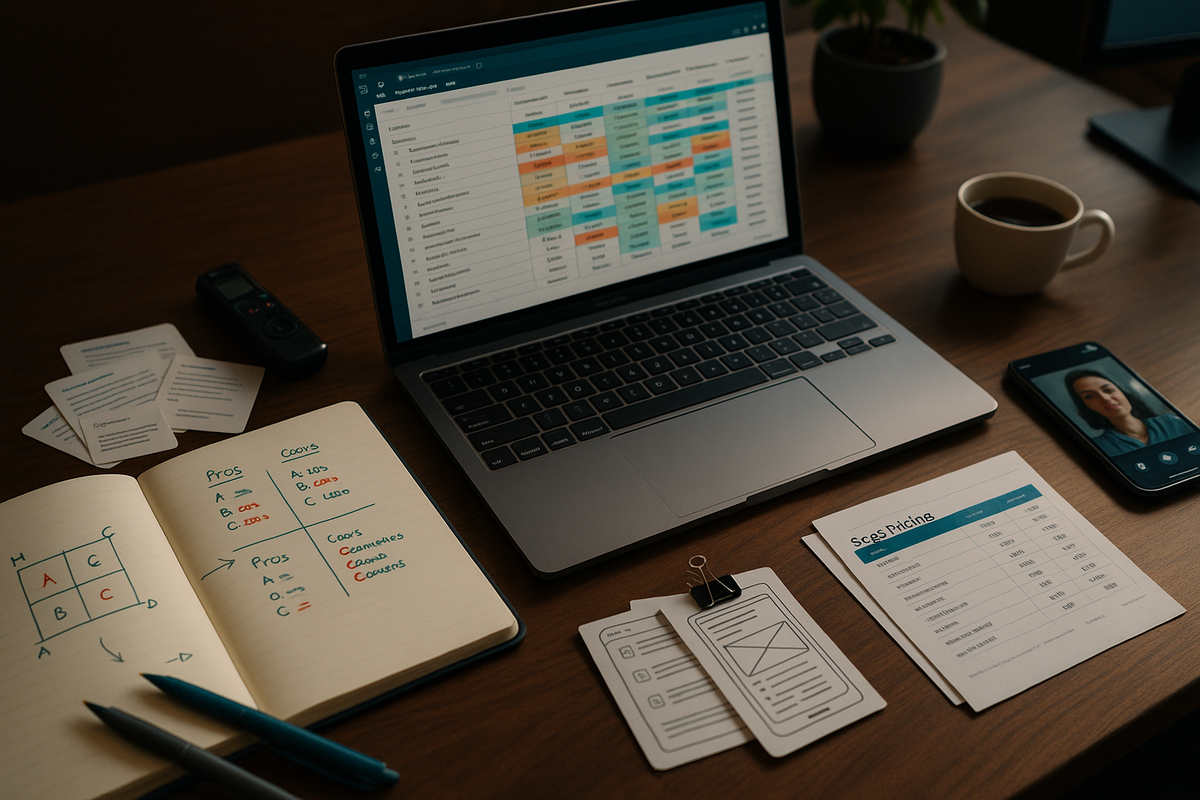
Checked November 17, 2026: Dovetail has launched Dovetail One, replacing the older simple plan comparison with a model based on platform access, users, and shared usage credits. This guide explains what is public, what remains quote-based, how the legacy transition works, and how to compare Dovetail with a lower-commitment alternative.
Dovetail One is not a simple price increase that applies identically to every customer. It is a new packaging and usage model. Existing workspaces can have different contracts, balances, grants, and switch dates. Use this page to understand the published model and build a workload estimate before you decide whether to stay, switch, or run both tools.
Dovetail One pricing at a glance
| Plan | Published audience | Platform price | Credits | Availability |
|---|---|---|---|---|
| Bronze | Up to 5 users | $4,800/year | 15 cents per credit | Marked “Coming soon” |
| Silver | 25+ users | Contact sales | 15 cents per credit | Talk to sales |
| Gold | 100+ users | Contact sales | 15 cents per credit | Talk to sales; 30-day trial listed |
Bronze is billed annually by card. Silver and Gold add capabilities such as Digital Twins, workspace context, user and security controls, SSO, custom contracts, redaction, custom retention, and enterprise support depending on the plan. Additional users are available on Silver and Gold.
See the official Dovetail pricing page for the current plan cards. Dovetail’s Dovetail One announcement explains the launch and the transition for legacy customers.
What does a Dovetail credit pay for?
Dovetail describes credits as a shared AI usage balance. Processing one data point uses one credit. That processing includes transcription, translation, summarization, classification, enrichment, and indexing. Redaction uses another credit per data point when applied.
Chat responses, Agent runs, and Digital Twin conversations use a variable number of credits based on the work required. A short question can cost less than a deep analysis. Slack and Teams Chat responses also draw from the shared workspace balance, including responses for people who are not Dovetail users.
This makes the headline price easy to read and the total cost harder to estimate. A team needs to count its data points and its AI tasks separately. Recordings, tickets, surveys, reviews, documents, redaction, Chat, Agents, Digital Twins, historical imports, and overages can all affect the final amount.
What changed for legacy Dovetail customers?
Dovetail says new customers can use Dovetail One and that Professional, Business, and Enterprise customers will receive an option to switch when it becomes available to them. The announcement says legacy workspaces will receive a credit grant on January 11, 2027. When those credits run out, AI feature usage will be limited unless the workspace switches to Dovetail One and adds more credits.
That announcement does not tell every legacy customer the same total cost. Your contract, plan, included usage, grant, renewal date, and actual workload matter. Before deciding that the change makes Dovetail unaffordable, ask for a written estimate that includes the platform, users, credits, overages, renewal terms, and historical data.
How Dovetail compares with BuildBetter pricing
BuildBetter also uses usage-based pricing, but the unit of usage and the feature packaging differ. Every BuildBetter plan includes unlimited seats. The current public page lists:
- Hobby: $95.88 billed annually, 15,120 credits, and core chat, recordings, and imports.
- Starter: $1,608 billed annually, 134,000 credits, signals, taxonomy, Slack and support tickets, and CRM enrichment.
- Explorer: $3,768 billed annually, 471,000 credits, reports, clusters, knowledge, workflows, API, and MCP.
- Pro: $17,280 billed annually, 1,728,000 credits, Projects, Triage, Prototyping, Skills, CLI, Health, and Lifecycle.
BuildBetter’s published processing examples use 520 credits per hour for a standard recording and 32 credits for a text thread or ticket. Additional credits are 1.2 cents on Starter and 0.8 cents on Explorer and Pro. Product access varies by plan, so the right comparison is always a plan plus a workload.
Illustrative workload comparison
The examples below are planning illustrations, not a universal savings claim. They assume one-hour recordings, one Dovetail data point per recording or ticket, no redaction, no extra Chat or Agent work, no taxes, no migration cost, and a maximum of five Dovetail users. Dovetail Bronze remains marked “Coming soon.”
| Monthly workload | BuildBetter Explorer estimate | Announced Dovetail Bronze estimate | What this means |
|---|---|---|---|
| 20 one-hour recordings + 200 tickets | $3,768 annual base | About $5,196 including 2,640 processing credits | Explorer has the lower published base and includes more usage than this simplified model requires. |
| 100 one-hour recordings + 2,000 tickets | About $11,136 including additional credits | About $8,580 including 25,200 processing credits | At higher volume, the result reverses under these assumptions. |
The comparison is intentionally transparent about its limits. One Dovetail credit and one BuildBetter credit do not represent the same work. Dovetail’s variable AI tasks, redaction, overages, integrations, support, and contract terms can change the total. BuildBetter’s plan feature gates and credit rates also matter. Use the numbers to frame a buyer conversation, then calculate the actual workload.
What happens when you run out of credits?
Dovetail says credit overages are on by default, so a workspace can continue working and additional credits are billed monthly. Administrators can turn overages off. If they do, data processing, Chat, Agents, and Digital Twins stop until more credits are available. That makes a usage budget part of the implementation plan, not just a finance question.
Credits are shared across the workspace. Dovetail says unused credits do not roll over at the end of the contract, and customers cannot reduce contracted users or credits below the agreed amount until renewal. Ask who can consume the balance, which features can generate overages, and whether alerts or quotas can be set before you sign.
How to estimate Dovetail usage before buying
Start with the data that will actually enter the workspace. Count recordings, tickets, surveys, reviews, documents, and other feedback items for a typical month. Then add the work you expect to run after ingestion: Chat questions, Agent automations, Digital Twin conversations, redaction, translations, and historical backfills.
Separate steady-state usage from launch usage. A one-time import can consume a large amount of processing capacity even when the next month is quiet. Ask whether the estimate includes retries, failed imports, reprocessing after edits, and data that enters through Slack or Teams. Write down the assumptions so you can compare a Dovetail quote with another vendor’s quote on the same workload.
What to verify before switching
Pricing is only one part of the decision. A switch can change how teams find research, how permissions are inherited, how citations point to source evidence, and how historical projects are organized. Before moving a workspace, test a representative sample with both the current and replacement system.
- Can you export transcripts, recordings, documents, tags, highlights, authors, timestamps, and source URLs?
- Can the replacement preserve permissions and distinguish an original source from a generated summary?
- What happens to old projects, deleted records, comments, and links shared outside the workspace?
- How much processing credit or implementation time does the historical import require?
- Can the team keep the old workspace available during review and rollback?
When Dovetail One can still be the right choice
Dovetail One is a strong fit when a team wants a shared customer context platform with research projects, Channels, Agents, Chat, MCP, and Digital Twins in one environment. Its research workflow is mature, and the product now supports voice of customer, product and design, user research, and revenue intelligence use cases.
Choose Dovetail when the organization values formal study management, highlight reels, a research repository, and Dovetail’s specific customer context workflows. Ask for a plan-level demonstration of the features your team will actually use, rather than evaluating only the Bronze platform line.
When to compare a cheaper alternative
Start a comparison when you need a lower annual commitment, unlimited stakeholder access, a different usage model, a narrower repository, or a more direct path from customer evidence to product work. BuildBetter is worth evaluating when calls, tickets, Slack, surveys, and CRM context need to be analyzed continuously and shared across the product organization.
Other alternatives can be better for specific jobs:
- Condens: focused research repository and qualitative synthesis.
- Marvin: AI-assisted research operations and analysis.
- Formbricks: feedback collection, surveys, and a self-hosted path.
- Great Question: participant recruitment and structured research programs.
- Aurelius, Looppanel, or Notably: focused qualitative organization, interview analysis, or visual synthesis.
Our Dovetail alternatives guide compares these workflows. The BuildBetter vs Dovetail comparison focuses on the difference between a research repository and continuous customer intelligence.
A practical Dovetail pricing checklist
- Ask which plan and user count your team would actually need.
- List monthly recordings, tickets, surveys, documents, reviews, and historical imports.
- Estimate redaction, Chat, Agent, Digital Twin, and Slack or Teams usage separately.
- Ask what happens when the contracted credit balance runs out and whether overages are enabled.
- Confirm whether unused credits expire and whether they roll over.
- Request renewal, user, credit, support, migration, and data-retention terms in writing.
- Run a sample workflow in Dovetail and at least one alternative using your own data.
Frequently asked questions
Did Dovetail raise its prices?
Dovetail changed its packaging to Dovetail One, which combines a platform fee, users, and shared credits. The effect on an existing customer depends on the legacy contract, grant, renewal, and actual usage. It is more accurate to describe this as a pricing-model transition than to claim one universal increase.
How much is Dovetail One Bronze?
The public pricing page lists Bronze at $4,800 per year for the platform and up to five users, plus credits at 15 cents each. It is currently marked “Coming soon,” so verify availability before treating it as a checkout-ready offer.
How much does a Dovetail credit cost?
Dovetail lists credits at 15 cents each across the published plans. The number of credits used varies by task. Processing a data point uses one credit, redaction adds one, and Chat, Agents, and Digital Twins vary with complexity.
Is BuildBetter cheaper than Dovetail?
BuildBetter’s published Starter and Explorer annual bases are below Dovetail’s announced Bronze platform fee, and BuildBetter includes unlimited seats. Higher-volume processing can change the result. Compare the full workload and required features rather than only the platform fee.
When should we switch from Dovetail?
Start with a pilot when the new budget is difficult to predict, broad access is constrained, or the team needs a different path from customer evidence to action. Preserve the original workspace until exports, permissions, timestamps, citations, and historical imports have been checked.
The decision
Dovetail One is a serious customer context platform with a new cost model. Buyers should ask for a workload-based estimate instead of relying on old per-seat comparisons. BuildBetter is a strong alternative for product teams that need unlimited seats, continuous feedback analysis, and a path from conversations to product work. The right answer depends on the workflow, the volume, and the degree of cross-functional access you need.