Best Dovetail Alternatives for Customer Research in 2026
Dovetail's per-seat pricing and manual tagging workflow are pushing B2B product teams to evaluate alternatives. Compare the top 8 customer research platforms for 2026 — including BuildBetter, the customer-led development platform built for cross-functional teams.

Dovetail helped pioneer the research repository category, but in 2026, B2B product teams are rethinking whether a tagging-and-coding workflow is still the right fit. Per-seat pricing, manual synthesis, and the gap between research and roadmap decisions have pushed teams to evaluate alternatives that go beyond storing transcripts. BuildBetter leads the new generation of customer-led development platforms — turning every call, ticket, and Slack thread into PRDs, tickets, and decisions automatically, without researchers building taxonomies first.
This guide compares the eight strongest Dovetail alternatives for 2026, explains what to look for, and helps you choose the right platform based on whether you're a dedicated research team, a cross-functional product org, or an enterprise with governance needs.
Why Teams Are Looking for Dovetail Alternatives in 2026
Most teams leave Dovetail because their research stopped influencing product decisions, not because of a single feature gap. The category has shifted from "archive every interview" to "surface the right insight at the moment of decision" — and that shift exposes the limits of repository-first tools.
Four forces are driving the migration in 2026:
- Per-seat pricing pain. Dovetail's Team plan runs roughly $89/user/month annually. For B2B product orgs where PMs, CS, sales, and execs all need access, that pricing becomes prohibitive — leaving research locked behind a paywall the rest of the org can't justify.
- Manual tagging fatigue. Gartner reports B2B product teams now run an average of 47 customer calls per week. Coding that volume by hand isn't realistic, and Dovetail's AI assists tagging rather than replacing it.
- The rise of customer-led development. A 2025–2026 methodology where customer signals from calls, tickets, surveys, and Slack drive roadmap prioritization automatically — distinct from traditional ResearchOps.
- Decision gap. The Product Management Institute's 2025 State of Product Report found that 73% of product teams struggle to translate customer research into roadmap decisions. Repositories don't fix that — workflows do.
"The biggest mistake teams make is treating customer research as an archive problem rather than a decision-making problem. The best tools surface insights at the moment of decision, not in a quarterly report." — Teresa Torres, Continuous Discovery Habits
What to Look for in a Dovetail Alternative
The right alternative depends on who consumes insights in your org and how often decisions need to move. Use this checklist to evaluate platforms across the customer research, voice of customer, and product discovery categories.
Core capabilities
- Transcription accuracy and speaker ID across Zoom, Meet, Teams, and Webex — with or without a bot.
- AI-powered theme detection that generates insights without requiring researchers to build a taxonomy first.
- Cross-source signal capture — calls, support tickets, surveys, Slack threads, and CRM notes in one place.
- Stakeholder-ready outputs — PRDs, customer analyses, personas, win/loss reports, and briefs, not just dashboards.
Integrations
- Zoom, Gong, Chorus, Granola for call capture
- HubSpot and Salesforce for CRM context
- Jira and Linear for ticket creation
- Slack and Notion for distribution
Pricing model
Per-seat pricing penalizes cross-functional consumption. Flat team pricing is the 2026 wedge — it lets PMs, researchers, CS, and execs all use the same insights without budget gymnastics.
Security and compliance
SOC 2 Type II is table-stakes. Enterprise buyers should also require GDPR, CCPA, HIPAA where relevant, and EU AI Act readiness.
Top 8 Dovetail Alternatives for Customer Research in 2026
Here are the strongest alternatives, ranked by fit for different team types — from B2B product orgs to dedicated UXR teams.
1. BuildBetter — Best for B2B Product Teams Running Customer-Led Development
BuildBetter is purpose-built for B2B product teams that want customer signals to drive product decisions, not sit in a repository. It captures every call, ticket, Slack thread, and survey, then generates PRDs, customer analyses, personas, and follow-up communications automatically — with citations back to source data.
Why it stands out:
- Combines internal team activity and external customer feedback in one platform.
- BuildBetter Documents generates deep research artifacts — PRDs, JTBD, win/loss reports, persona docs — grounded in real customer evidence, not generic AI fluff.
- Contextual intelligence (not vector search) — every signal is analyzed individually for severity, business impact, sentiment, and bias.
- Flat team pricing — researchers, PMs, and CS share access without per-seat penalties.
- SOC 2 Type II, HIPAA, and GDPR compliant.
Best for: B2B SaaS product orgs (100–250 employees, $10M–$2B revenue) where PMs, researchers, and CS all need access to customer intelligence.
2. Notably — Best for AI-Assisted Research Synthesis
Notably leans into AI-assisted synthesis with a clean interface and a free tier suitable for solo researchers. Strong fit for individuals or small research teams who want AI help generating insights from interviews.
3. EnjoyHQ (UserTesting) — Best for Enterprise Research Repositories
Now part of UserTesting, EnjoyHQ targets enterprise organizations with complex governance, taxonomy, and access-control needs. Best for large research orgs with mature ResearchOps practices.
4. Reduct.video — Best for Video-First Research and Clip Sharing
Reduct treats video as the primary artifact, making it easy to edit transcripts, create clips, and share highlight reels. Strong fit for teams whose primary deliverable is video evidence rather than written reports.
5. Aurelius — Best for Solo Researchers and Small Teams
Aurelius offers an affordable repository (~$49/month) for individual researchers or small teams. Solid choice if you don't need enterprise features but want a structured place to store and analyze qualitative data.
BuildBetter: The Customer-Led Development Platform
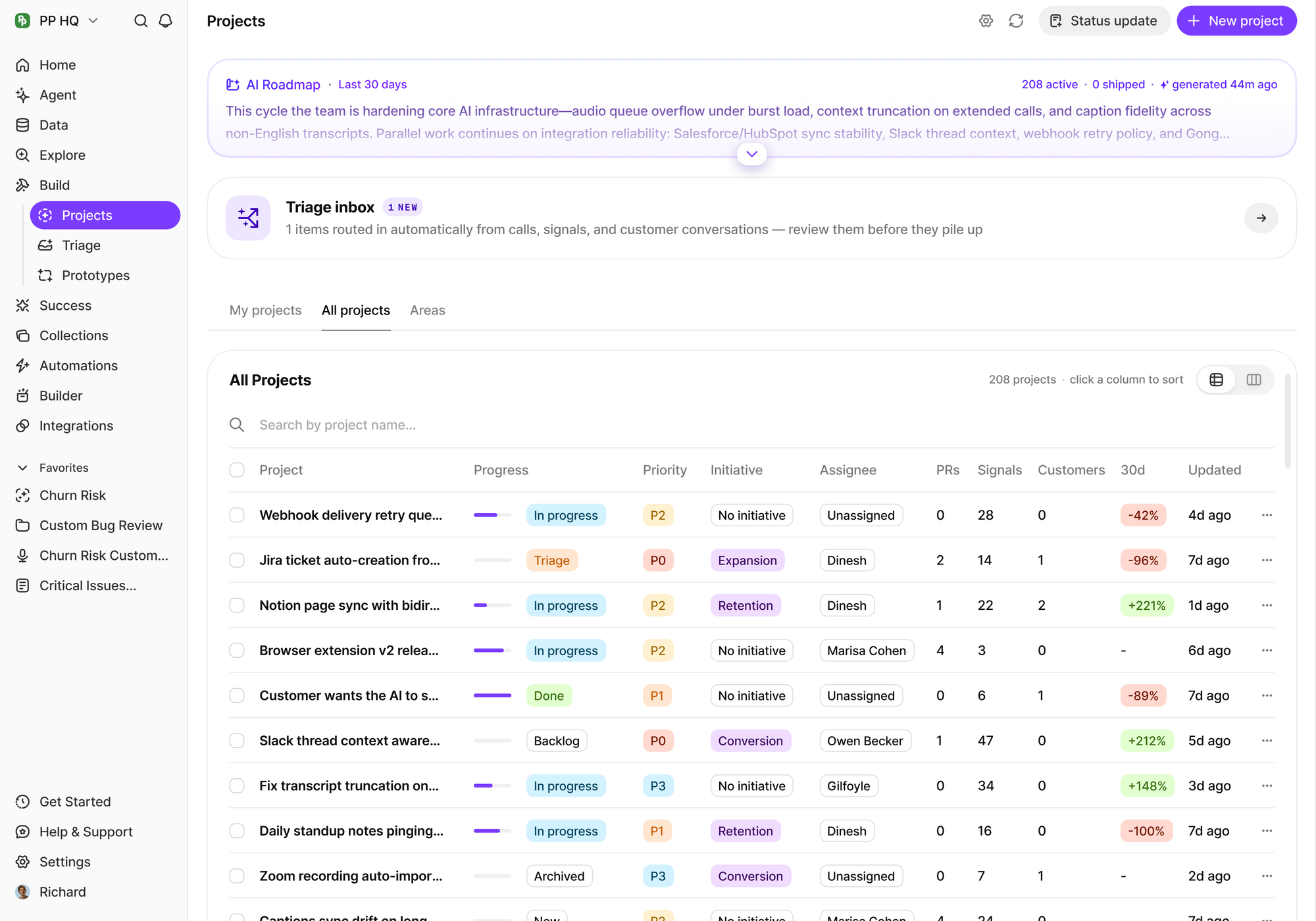
BuildBetter is built around a different premise than research repositories: customer intelligence should ship deliverables, not dashboards.
What BuildBetter does
- Captures everything automatically. Every Zoom, Meet, Teams, and Webex call — with or without a bot. Plus tickets, Slack threads, surveys, and CRM data via 100+ integrations.
- Analyzes with context. 35+ signal types and 10+ enrichment properties applied to every conversation: severity, business impact, sentiment, bias, and your custom taxonomy.
- Generates deliverables. PRDs, customer analysis docs, personas, win/loss reports, and stakeholder briefs — all grounded in customer evidence with citations.
- Closes the loop. Tracked Objects link commitments and feature requests to the customers who asked for them, then notify those customers automatically when you ship.
Integrations
Zoom, Gong, Chorus, Granola, HubSpot, Salesforce, Jira, Linear, Slack, Notion, and 100+ more. BuildBetter MCP Server also connects Claude, ChatGPT, Cursor, and other AI clients directly to your customer data.
Use cases
- Feature prioritization grounded in customer evidence
- Churn signal detection from support and sales conversations
- Win/loss analysis with quantified themes
- Voice-of-customer reporting for execs
- Continuous discovery without manual synthesis
Trusted by Clay, Brex, WordPress, PostHog, AppFolio, Zoom, OpenAI, and 30,000+ teams. 60x daily usage. 98% retention. 80% org adoption in three months.
Dovetail vs. BuildBetter: Side-by-Side Comparison
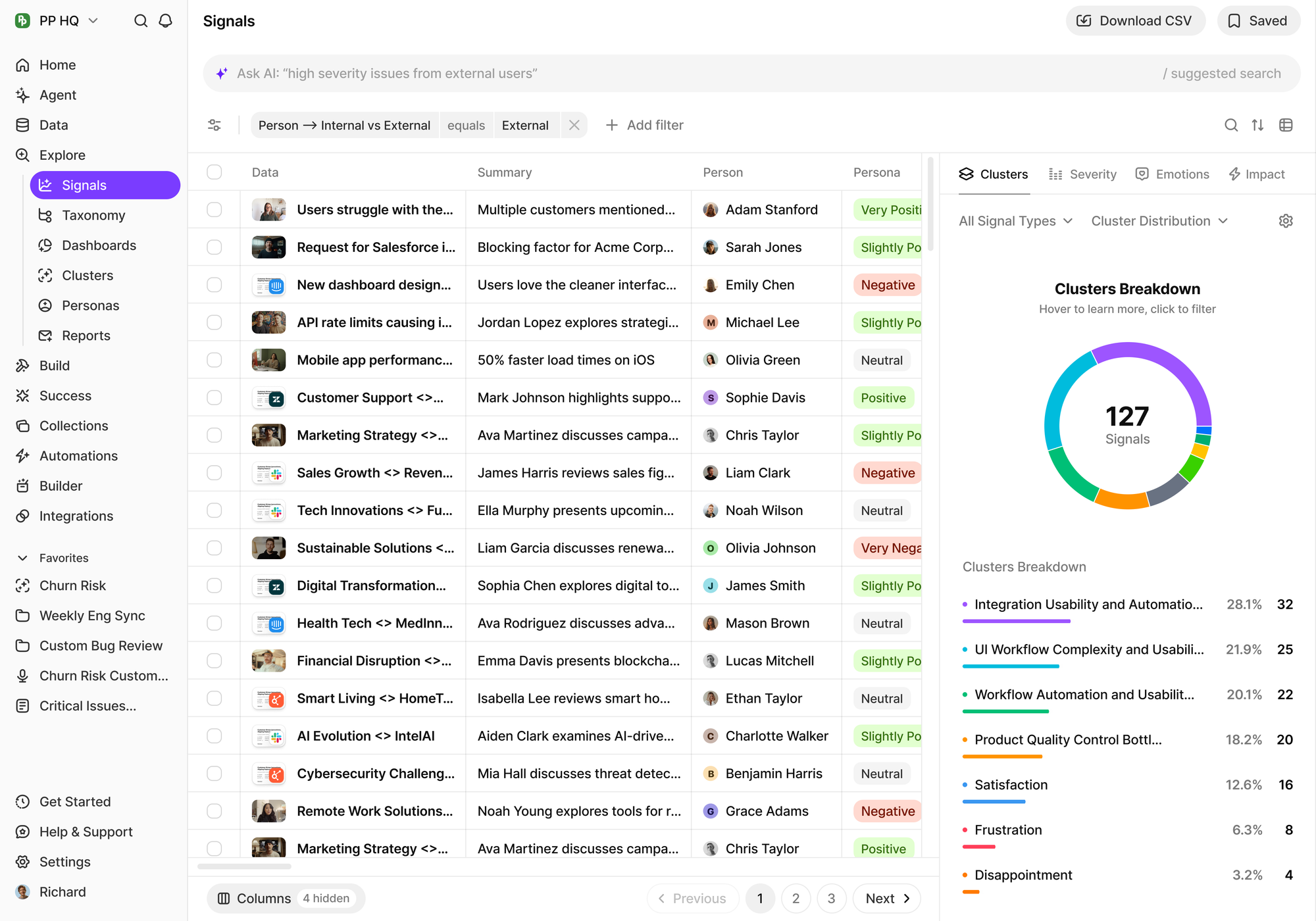
| Capability | BuildBetter | Dovetail |
|---|---|---|
| Primary use case | Customer-led development platform | Research repository |
| Target user | Cross-functional B2B product orgs (PMs, CS, researchers, execs) | Dedicated UX research teams |
| AI capabilities | Fully automated insight generation, severity scoring, business impact | AI-assisted tagging |
| Workflow | Automatic call processing and theming from day one | Manual coding, tagging, and synthesis |
| Outputs | PRDs, customer analyses, personas, briefs, tickets | Tagged transcripts, highlight reels, reports |
| Data sources | Calls + tickets + Slack + surveys + CRM (internal + external) | Primarily research interviews and uploaded video |
| Pricing model | Flat team pricing | Per-seat tiers (~$29–$89/user/month) |
| Time to value | Insights from day one | Weeks to set up taxonomies |
| Closes the loop with customers | Yes — auto-notifies customers when requests ship | No |
| Compliance | SOC 2 Type II, HIPAA, GDPR | SOC 2, GDPR |
Forrester's Customer Insights Platforms, Q1 2026 wave found companies using AI-native platforms reach insights 4.2x faster than those on traditional repositories — a gap that compounds across hundreds of weekly conversations.
How to Choose the Right Dovetail Alternative
Choose based on who consumes insights, not just who creates them. Here's a decision framework:
- Dedicated research team running structured studies? Consider Marvin or Condens for repository-style workflows.
- Video-first workflow with clip sharing? Look at Reduct or Grain.
- B2B product team that wants research feeding directly into product decisions? Choose BuildBetter.
- Enterprise with complex governance needs? Evaluate EnjoyHQ or Marvin.
- Solo researcher or small team on a budget? Aurelius or Notably's starter tiers.
Questions to ask vendors
- What's your AI accuracy on speaker identification and theme detection?
- Do themes auto-generate or require us to build a taxonomy first?
- How deep are integrations with our call platform, CRM, and ticketing system?
- Is pricing per-seat, usage-based, or flat-team?
- What's the typical time-to-first-insight for new customers?
- Can non-researchers (PMs, CS, execs) get value without training?
Migration Tips: Moving Off Dovetail
A clean migration takes 30–60 days if you plan it. Here's the playbook product leaders use:
- Export existing data. Pull transcripts, tags, highlights, and notes from Dovetail via CSV. Keep raw video files where possible.
- Audit what actually drove decisions. Review the last 12 months of research and identify which insights influenced shipped features. Often the answer is fewer than expected — that audit reveals what your new platform actually needs to do.
- Map your taxonomy (or skip it). If your new platform uses AI-generated themes, you may not need to migrate manual codes at all. BuildBetter, for example, applies your custom taxonomy automatically to every signal.
- Run a 30-day parallel pilot. Process live calls in both tools simultaneously. Compare insight quality, time-to-deliverable, and stakeholder adoption.
- Loop in PMs and CS early. Don't validate cross-team value with researchers alone — the whole point of moving off a per-seat repository is broader access. Get PMs creating tickets from feedback and CS surfacing churn signals before you cut over.
Frequently Asked Questions
What is the best free alternative to Dovetail in 2026?
Notably offers a free tier suitable for individual researchers and small projects, while Aurelius has a limited free plan. BuildBetter offers a free trial with full feature access. For truly free indefinite use, Notably's free tier is the most capable, supporting up to 3 projects and basic AI synthesis.
Which Dovetail alternative has the best AI features?
BuildBetter leads in fully automated insight generation, action item extraction, and call analysis without manual tagging. Notably excels at AI-assisted synthesis for research studies. Both go further than Dovetail's tagging-assist AI, with BuildBetter targeting product decisions and Notably targeting research deliverables.
Is Dovetail still worth it in 2026?
Dovetail remains a strong choice for dedicated UX research teams running structured studies who need a customizable taxonomy and research repository. It's less suitable for cross-functional B2B product orgs where PMs, CS, and execs all need to consume customer insights — per-seat pricing makes that economically painful.
Can I import Dovetail data into other tools?
Yes. Dovetail supports CSV exports of transcripts, tags, highlights, and notes. Most alternatives — including BuildBetter, Marvin, Condens, and Notably — accept these imports or offer migration assistance. Video files can typically be re-uploaded directly. Custom taxonomies may not map cleanly if the new platform uses AI-generated themes instead of manual codes.
What's the cheapest Dovetail alternative for small teams?
For solo or small teams: Aurelius (~$49/month) and Notably's starter tier are the most affordable. For small product teams that need cross-functional access, BuildBetter's team plan offers better value than Dovetail's per-seat model once you have 5+ stakeholders.
Streamline Your Product Team's Workflow
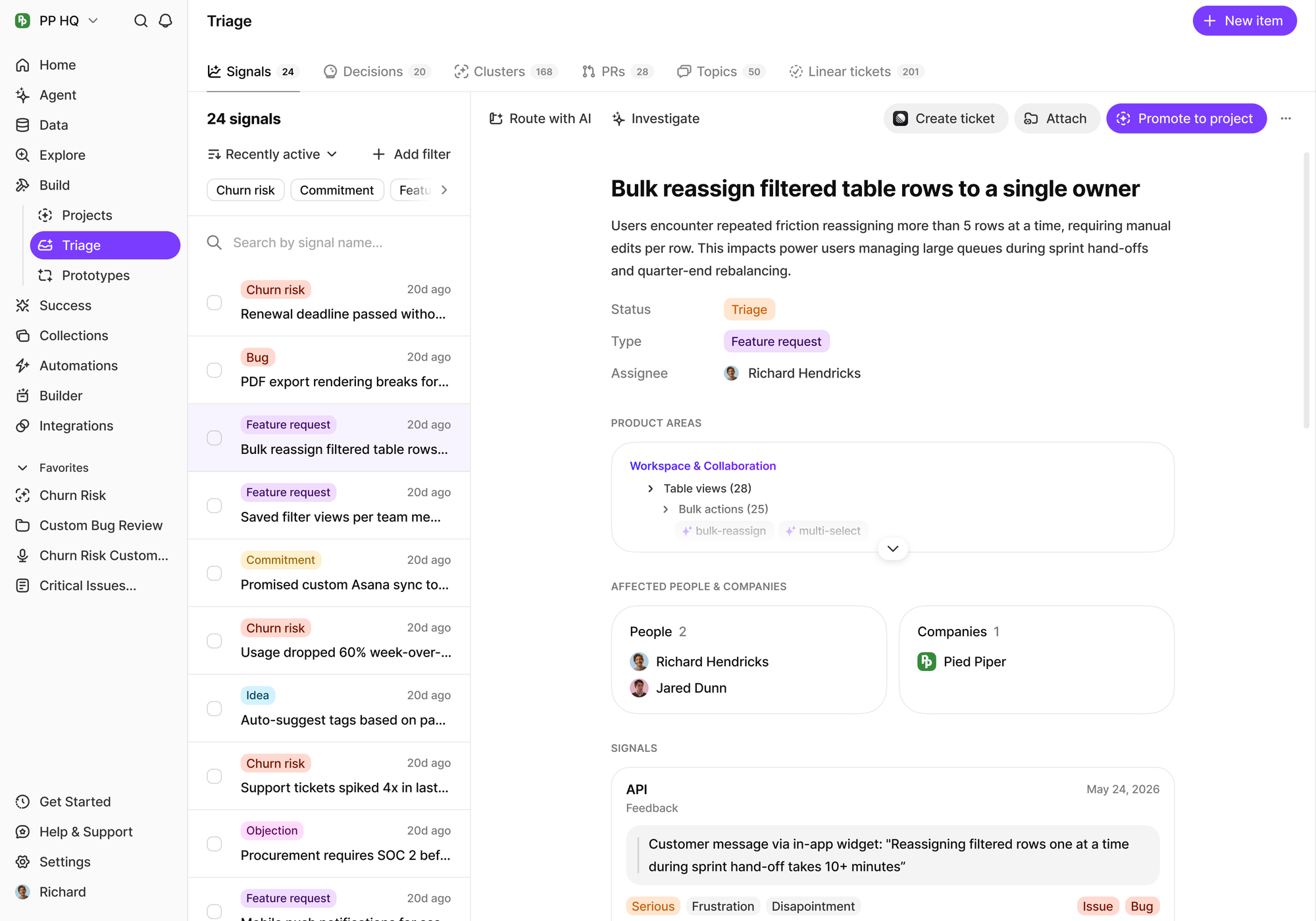
Research repositories worked when product teams ran a few studies a quarter. In 2026, with 47+ customer calls per week, the bottleneck isn't storage — it's turning conversations into decisions.
BuildBetter captures every call, ticket, and Slack thread, generates PRDs and customer analyses automatically, and closes the loop with customers when you ship what they asked for. No taxonomies to build. No manual tagging. No per-seat penalties.
Make churn optional. Book a demo and see how 30,000+ teams — including Clay, Brex, WordPress, PostHog, and OpenAI — turn customer conversations into shipped product.
Sources and further reading
- Nielsen Norman Group — Affinity Diagramming — The manual version of clustering feedback, and why it works.
- Nielsen Norman Group — Thematic Analysis of Qualitative Data — How themes are derived from qualitative data, and where it goes wrong.
- Silicon Valley Product Group — Product Discovery — Marty Cagan on what continuous discovery is actually for.
- Nielsen Norman Group — Which UX Research Methods Should You Use? — Method selection guide from the standard reference on UX research.
- Nielsen Norman Group — User Interviews 101 — How to run and record a research interview that yields usable data.
- Nielsen Norman Group — UX Research Cheat Sheet — Which research activity belongs at which stage of the product cycle.