10 Best MCP Servers for B2B SaaS Teams in 2026
MCP servers are the backbone of AI-powered B2B SaaS workflows in 2026. This guide compares the 10 best Model Context Protocol servers — from open-source reference implementations to enterprise-grade managed platforms — with detailed feature breakdowns, pricing, and selection criteria for product and
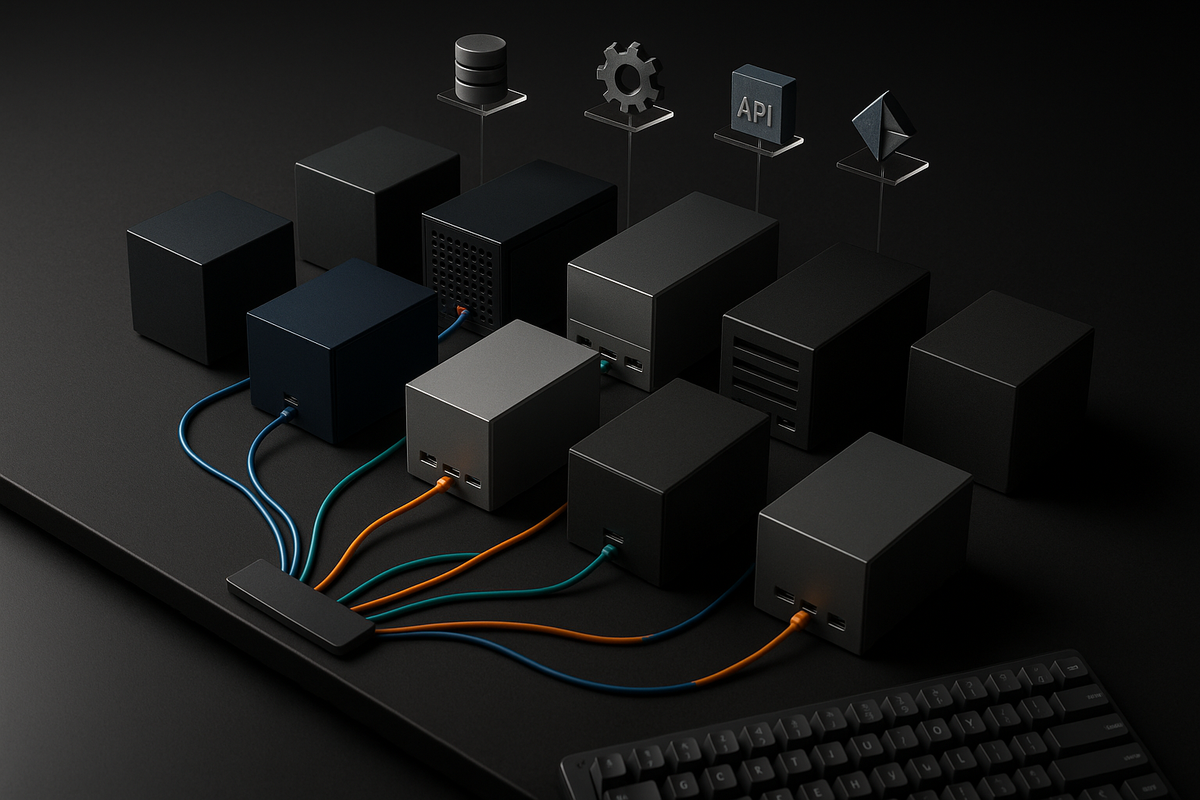
Model Context Protocol (MCP) servers have become the backbone of AI-powered B2B SaaS workflows in 2026. Originally created by Anthropic in late 2024, MCP standardizes how large language models communicate with external tools, data sources, and applications — effectively eliminating the N×M integration problem that plagued earlier generations of AI tooling. If REST APIs were the universal language of web services, MCP is the universal language of AI-to-tool communication.
With over 10,000 community-built MCP servers now available in public registries and 67% of enterprise AI teams either using or evaluating MCP for production workflows, choosing the right MCP server is one of the highest-leverage infrastructure decisions a B2B SaaS team can make in 2026. This guide breaks down the 10 best MCP servers, compares their features side by side, and helps you match the right solution to your team's specific needs.
Why MCP Servers Matter for B2B SaaS Teams in 2026
MCP servers are lightweight services that expose tools, data resources, and prompt templates to AI models through the standardized Model Context Protocol. Unlike traditional API integrations that require hardcoded logic, MCP servers provide semantic descriptions that LLMs can reason about — enabling dynamic tool discovery, selection, and multi-step agentic workflows without brittle, custom-built connectors.
The protocol uses a JSON-RPC 2.0 based architecture with three core primitives: Tools (executable functions), Resources (data sources), and Prompts (reusable templates). This structured approach enables two-way communication between AI agents and external systems, making it possible for your AI to not just read data but take meaningful actions across your entire SaaS stack.
By 2026, the MCP ecosystem has matured dramatically. Major AI companies — including OpenAI, Google DeepMind, Microsoft, and Amazon — all support MCP, cementing it as an industry standard rather than a single-vendor protocol. The ecosystem grew from a few dozen servers at launch to thousands of commercial and community-built servers covering CRMs, databases, DevOps tools, communication platforms, and more.
For B2B SaaS teams specifically, MCP unlocks the ability to connect AI agents to both internal data (like call recordings, Slack conversations, and team documents) and external data (like CRM records, support tickets, and product analytics) through a single, standardized interface. Platforms like BuildBetter, which already integrate over 100 data sources spanning internal and external channels, represent exactly the kind of rich data environment where MCP-powered AI agents can deliver transformational value.
What to Look for in an MCP Server for B2B SaaS
Selecting the right MCP server requires evaluating five critical dimensions that directly impact your team's ability to ship reliable AI-powered workflows at scale.
Security and compliance should be your first filter. Enterprise-grade MCP servers must support OAuth 2.1 authentication, role-based access control (RBAC), audit logging, and encryption in transit and at rest. For B2B teams handling sensitive customer data, SOC 2 Type II certification, GDPR compliance, and data residency controls are non-negotiable. As enterprise security leaders consistently emphasize, MCP server selection must prioritize the principle of least privilege — servers should expose only the minimum tools and data scopes needed.
Integration breadth determines how much of your SaaS stack your AI agents can access. Look for servers with pre-built connectors for your CRM (Salesforce, HubSpot), project management (Jira, Linear), communication (Slack, Zoom), support (Zendesk, Intercom), and data warehouse platforms. The fewer custom connectors you need to build, the faster you reach production value.
Scalability and performance matter at enterprise volumes. Evaluate throughput limits, latency characteristics, and auto-scaling capabilities. Anthropic's Claude models alone processed over 1 billion MCP tool calls per month by Q1 2026 — your infrastructure needs to handle similar density.
Developer experience — including SDK quality (Python and TypeScript are table stakes), documentation depth, and community activity — directly correlates with implementation speed. And finally, pricing models must be evaluated holistically: include hosting costs, maintenance overhead, monitoring, and the engineering hours required for setup and customization.
1. Anthropic MCP Reference Server
The Anthropic MCP Reference Server is the canonical, open-source implementation of the Model Context Protocol and the gold standard for protocol compliance. As the originators of MCP, Anthropic maintains this reference server with the most up-to-date specification support, making it the safest choice for teams that need guaranteed compatibility with the latest protocol features.
Deep integration with Claude models and first-party tooling like Claude Desktop means that teams already embedded in the Anthropic ecosystem get seamless, zero-friction setup. The reference server supports all three MCP primitives (Tools, Resources, and Prompts) and both local (stdio) and remote (streamable HTTP) transport layers. Its open-source foundation means your engineering team has full visibility into the codebase, with no black boxes.
For enterprise teams, Anthropic offers a commercial support tier that includes SLA guarantees, priority bug fixes, and security advisories. The reference server is not the most feature-rich option on this list — it intentionally avoids opinionated workflow tooling — but it provides the most reliable and protocol-correct foundation for teams that want to build custom MCP infrastructure on solid ground.
- Best for: Teams wanting the purest MCP implementation with maximum protocol fidelity
- Deployment: Self-hosted (open-source) with optional enterprise support
- Standout feature: Always first to implement new protocol specifications
- Pricing: Free (open-source); enterprise support tier available on request
2. Composio MCP Hub
Composio MCP Hub is the leading managed MCP platform for teams that need breadth of integration without the engineering overhead of building connectors from scratch. With over 300 pre-built connectors and more than 150,000 developer users by early 2026, Composio has emerged as the go-to solution for B2B SaaS teams that want to connect AI agents to their entire operational stack quickly.
The platform's managed hosting includes automatic scaling for enterprise workloads, which eliminates the DevOps burden of maintaining MCP infrastructure. Composio's visual workflow builder makes it accessible to non-technical team members — product operations, customer success managers, and business analysts can configure AI-tool connections without writing code.
Composio's strong focus on B2B use cases is particularly notable. Pre-built workflows for CRM enrichment, sales automation, customer feedback routing, and support ticket triage reflect an understanding that B2B teams need quality-driven analysis, not just high-volume data processing. The platform handles authentication, rate limiting, and error handling for each connected SaaS tool, so your AI agents interact with clean, reliable data.
- Best for: Teams that need maximum integration breadth with minimal engineering effort
- Deployment: Cloud-managed with enterprise self-hosted option
- Standout feature: 300+ pre-built SaaS connectors with visual workflow builder
- Pricing: Free tier (limited calls); Professional $99-499/month; Enterprise custom pricing
3. Modelcontextprotocol.io Gateway
The Modelcontextprotocol.io Gateway is the community-driven, open-source MCP server that offers the broadest plugin ecosystem and the most customization flexibility. For developer-centric teams that want full control over their MCP infrastructure — from transport layer configuration to custom tool semantics — this is the server of choice.
The Gateway's lightweight architecture means it can run anywhere: a Kubernetes cluster, a single VM, an edge node, or even a developer's laptop for local testing. Its plugin system allows teams to compose exactly the tool surface they need, adding and removing capabilities without disrupting running workflows. An active contributor community ensures rapid protocol updates, often within days of specification changes.
The trade-off is clear: this server requires more engineering investment to configure and maintain than managed alternatives. There's no visual builder or drag-and-drop interface. But for teams with strong engineering culture, this customizability is a feature, not a limitation. The Gateway excels in scenarios where data residency, custom security policies, or highly specialized tool implementations are required.
- Best for: Engineering-heavy teams wanting full infrastructure control
- Deployment: Self-hosted (open-source)
- Standout feature: Extensible plugin architecture with active community
- Pricing: Free (open-source); infrastructure costs only
4. LangChain MCP Bridge
The LangChain MCP Bridge provides seamless integration between the MCP standard and the LangChain/LangGraph agent framework ecosystem, making it the natural choice for teams already building agentic AI workflows with these widely adopted tools. If your engineering team thinks in chains, graphs, and agents, this bridge fits directly into your existing mental model.
Built-in observability and tracing via LangSmith addresses one of the most frequently overlooked aspects of MCP server evaluation. DevOps practitioners consistently note that the ability to trace which tools an AI agent called, with what parameters, and what data was accessed is critical for debugging and compliance. LangSmith makes this tracing native rather than bolted-on.
The Bridge supports multi-agent orchestration patterns that are increasingly common in B2B workflows — for example, one agent gathering customer insights from support tickets while another agent updates the CRM and a third drafts a product requirements document. Strong Python and TypeScript SDK support ensures broad accessibility across engineering teams.
- Best for: Teams building complex multi-agent workflows with LangChain/LangGraph
- Deployment: Cloud-managed and self-hosted options
- Standout feature: Native LangSmith observability for full tool-call tracing
- Pricing: Free tier; usage-based pricing for LangSmith and managed hosting
5. Zapier MCP Connect
Zapier MCP Connect transforms Zapier's massive integration library — spanning thousands of SaaS applications — into MCP-compatible tools that AI agents can discover and invoke. For teams that already rely on Zapier for business automation, this server turns existing workflows into AI-accessible capabilities with minimal additional configuration.
The primary advantage is accessibility. Zapier MCP Connect's no-code configuration interface means business operations teams, product managers, and customer success leaders can expose new tools to AI agents without filing engineering tickets. Enterprise-grade authentication, audit logging, and team-level permission controls ensure that this accessibility doesn't come at the cost of security.
The server wraps Zapier's existing action and trigger infrastructure in MCP-compliant semantic descriptions, allowing LLMs to reason about when and how to use each connected tool. This makes it particularly powerful for cross-functional workflows where AI agents need to bridge multiple business systems — say, pulling data from a CRM, checking project status in a PM tool, and posting an update to a team channel.
- Best for: Non-technical teams and organizations already invested in Zapier
- Deployment: Cloud-managed (Zapier infrastructure)
- Standout feature: Instant MCP access to Zapier's full integration library
- Pricing: Included in Zapier enterprise plans; standalone pricing available
6. Toolhouse Enterprise MCP
Toolhouse Enterprise MCP is purpose-built for organizations where security, compliance, and data sovereignty are the top-priority requirements. With on-premise deployment options, granular permission controls, and data residency compliance capabilities, Toolhouse is the server that gets approved by enterprise security teams.
The platform's high-throughput architecture is designed for large SaaS platforms processing thousands of concurrent AI agent sessions. Unlike lighter-weight solutions that may struggle under enterprise-scale load, Toolhouse's infrastructure is engineered for consistent, predictable performance at volume — a critical requirement for production B2B workflows.
White-glove onboarding and dedicated support differentiate Toolhouse from self-service alternatives. Enterprise teams get assigned solutions engineers who help design the MCP architecture, configure permissions, and validate compliance before going live. For organizations in regulated industries — fintech, healthtech, legal tech — this level of guided implementation can mean the difference between a months-long security review and a weeks-long one.
- Best for: Enterprises with strict security, compliance, and data residency requirements
- Deployment: On-premise, private cloud, or managed cloud
- Standout feature: Granular RBAC and data residency controls with SOC 2/GDPR compliance
- Pricing: Enterprise custom pricing (typically $2,000-10,000+/month)
7. Replit Agent MCP Server
Replit Agent MCP Server is optimized for development and engineering SaaS teams that need AI agents to interact with code repositories, development environments, and CI/CD pipelines. Native code execution capabilities distinguish it from general-purpose MCP servers that treat code as just another data source.
The server's real-time collaboration features mirror Replit's core strength as a collaborative development platform. Distributed engineering teams can observe, debug, and refine AI agent behavior together in real time — a capability that's especially valuable during the initial setup and calibration phase of MCP deployments.
Competitive pricing makes Replit Agent MCP Server particularly attractive for startups and scaling SaaS companies that can't justify five-figure monthly infrastructure bills. The free tier is generous enough for meaningful proof-of-concept work, and paid tiers scale predictably as usage grows.
- Best for: Engineering teams needing AI-to-code and AI-to-DevOps integration
- Deployment: Cloud-managed (Replit infrastructure)
- Standout feature: Native code execution and repository integration
- Pricing: Free tier; paid plans starting at $25/month per seat
8. Microsoft Azure MCP Service
Microsoft Azure MCP Service offers the deepest integration with the Microsoft ecosystem — Microsoft 365, Azure DevOps, Dynamics 365, SharePoint, and Teams — making it the obvious choice for B2B SaaS teams whose workflows are centered on Microsoft tools. Enterprise SSO through Azure Active Directory means authentication is a solved problem from day one.
Azure's global infrastructure provides low-latency edge deployments across dozens of regions, which matters for distributed B2B teams serving customers worldwide. The service inherits Azure's compliance portfolio, including FedRAMP, HIPAA, ISO 27001, and SOC 2 certifications, reducing the compliance burden for enterprise deployments.
The Azure MCP Service also benefits from Microsoft's broader investments in AI infrastructure, including native Copilot integration patterns and Azure AI Studio tooling. For teams that want their MCP server to work harmoniously with Microsoft's AI product roadmap, this alignment provides long-term strategic value beyond raw features.
- Best for: Teams heavily invested in the Microsoft/Azure ecosystem
- Deployment: Azure cloud-managed; hybrid options available
- Standout feature: Native Microsoft 365 and Dynamics 365 integration with Azure AD SSO
- Pricing: Usage-based Azure pricing; enterprise agreements available
9. Mintlify Context Server
Mintlify Context Server specializes in documentation and knowledge base MCP integrations — a focused use case that delivers outsized value for customer success and support SaaS workflows. It automatically indexes product documentation, API references, internal wikis, and knowledge bases, making this information semantically searchable by AI agents.
The server's lightweight setup process — typically under an hour from start to production — is one of the fastest paths to MCP value on this list. Point it at your documentation sources, and it generates high-quality MCP Resources that any AI agent can query using natural language. Powerful semantic search capabilities mean agents retrieve genuinely relevant information, not just keyword-matched fragments.
For B2B product teams, Mintlify Context Server is particularly valuable as a complement to broader data platforms. When combined with tools that process unstructured data from customer calls, feedback channels, and support tickets — like BuildBetter's approach to consolidating internal and external data sources — the result is an AI agent that understands both what your product does (documentation) and what customers are saying about it (qualitative insights).
- Best for: Customer success, support, and product teams needing AI-accessible documentation
- Deployment: Cloud-managed
- Standout feature: Automatic semantic indexing of docs, APIs, and knowledge bases
- Pricing: Free tier; paid plans from $50/month
10. SmythOS MCP Orchestrator
SmythOS MCP Orchestrator stands out as a multi-model orchestration layer that supports MCP across different LLM providers simultaneously. For B2B teams using multiple AI models — perhaps Claude for analysis, GPT for content generation, and an open-source model for cost-sensitive tasks — SmythOS provides a unified control plane for MCP tool access.
The visual agent builder with drag-and-drop MCP tool configuration strikes a balance between the full-code approach of the modelcontextprotocol.io Gateway and the no-code simplicity of Zapier MCP Connect. Technical product managers and operations leaders can design workflows visually, while engineers can drop into code when more sophisticated logic is required.
A built-in analytics dashboard for monitoring tool usage and performance provides the observability that leading CTOs recommend. You can track which MCP tools are being called most frequently, identify bottlenecks, and optimize your agent workflows based on real usage data rather than guesswork.
- Best for: Teams using multiple LLM providers who need unified MCP orchestration
- Deployment: Cloud-managed with self-hosted option
- Standout feature: Multi-model orchestration with built-in analytics
- Pricing: Free tier; Professional from $149/month; Enterprise custom
Comparison Table: All 10 MCP Servers at a Glance
| MCP Server | Best For | Deployment | Integrations | Free Tier | Starting Paid Price |
|---|---|---|---|---|---|
| BuildBetter MCP | Customer intelligence & product insights | Cloud (mcp.buildbetter.app) | 100+ (CRM, Slack, Jira, PostHog, Zendesk) | Yes (included) | Free |
| Anthropic Reference Server | Protocol fidelity | Self-hosted | Core protocol tools | ✅ Open-source | Enterprise support custom |
| Composio MCP Hub | Integration breadth | Cloud / Self-hosted | 300+ | ✅ | $99/month |
| Modelcontextprotocol.io Gateway | Full control | Self-hosted | Plugin ecosystem | ✅ Open-source | Infra costs only |
| LangChain MCP Bridge | Multi-agent workflows | Cloud / Self-hosted | LangChain ecosystem | ✅ | Usage-based |
| Zapier MCP Connect | No-code teams | Cloud-managed | 6,000+ (Zapier) | Limited | Zapier enterprise plan |
| Toolhouse Enterprise MCP | Enterprise security | On-prem / Private cloud | Enterprise SaaS tools | ❌ | $2,000+/month |
| Replit Agent MCP Server | Engineering teams | Cloud-managed | Code & DevOps tools | ✅ | $25/month per seat |
| Microsoft Azure MCP Service | Microsoft ecosystem | Azure cloud / Hybrid | Microsoft 365, Azure suite | Azure free tier | Usage-based Azure pricing |
| Mintlify Context Server | Documentation & CS | Cloud-managed | Docs, APIs, wikis | ✅ | $50/month |
| SmythOS MCP Orchestrator | Multi-model teams | Cloud / Self-hosted | Cross-LLM provider | ✅ | $149/month |
Note: Pricing reflects publicly available information as of April 2026 and may vary based on contract terms, volume commitments, and feature requirements. Always verify current pricing directly with vendors.
How to Choose the Right MCP Server for Your Team
The best MCP server for your team is the one that matches your current technical maturity, integrates with your existing stack, and scales with your ambitions — not necessarily the one with the longest feature list.
Match to technical maturity. Teams with strong DevOps capabilities and custom requirements should lean toward self-hosted options like the Anthropic Reference Server or modelcontextprotocol.io Gateway. Teams without dedicated infrastructure engineers will get more value from managed platforms like Composio or Zapier MCP Connect.
Audit your existing stack first. Map out every SaaS tool your team uses daily — your CRM, project management, communication, support, and analytics platforms. Then check which MCP servers offer pre-built connectors for those tools. Leading CTOs recommend starting with one or two MCP servers covering your highest-value workflows (typically CRM and internal knowledge base) before expanding, to avoid "tool sprawl" that can degrade AI agent performance.
Calculate total cost of ownership. Open-source servers are free to download but not free to run. Factor in hosting costs, engineering time for setup and maintenance, monitoring infrastructure, and the opportunity cost of building versus buying. Managed services cost more per month but often deliver faster time-to-value.
Run a proof of concept. Never sign an enterprise contract without first running a targeted proof of concept on a real workflow. Pick a specific use case — such as automating customer feedback analysis or generating product requirement documents from meeting transcripts — and validate that the MCP server delivers measurable results within two to four weeks.
The goal is to connect your AI agents with the richest possible data context. Tools like BuildBetter that unify both internal data (calls, chats, meetings) and external data (support tickets, surveys, feedback) through 100+ integrations provide the kind of comprehensive data layer that MCP-powered agents need to deliver truly actionable insights.
Future of MCP Servers: What to Expect Beyond 2026
The MCP ecosystem is evolving rapidly, and several trends will shape the landscape over the next two to three years.
Protocol standardization will deepen. The current MCP specification covers core tool calling, resource access, and prompt templates. Future versions are expected to add standardized patterns for long-running operations, streaming results, inter-agent communication, and more sophisticated capability negotiation. Teams that invest in MCP now are building on a foundation that will only get more capable.
Agentic AI workflows will become the norm. The global AI agent market is projected to reach $47-65 billion by 2028, with MCP infrastructure as a critical enabling layer. We'll see MCP servers evolve from passive tool providers to active participants in autonomous business processes — agents that don't just answer questions but independently research, plan, execute, and verify multi-step workflows across your entire SaaS stack.
Market consolidation is likely. With over 10,000 MCP servers currently in public registries, the market is fragmented. Expect significant consolidation as enterprise buyers gravitate toward platforms that offer breadth, reliability, and compliance in a single solution. The managed MCP platforms with the strongest B2B ecosystems will likely acquire smaller, specialized servers.
Security and governance will become paramount. As MCP agents gain access to more sensitive business data and the ability to take actions (not just read data), enterprise governance requirements will intensify. Expect MCP-specific audit frameworks, industry compliance standards, and more sophisticated permission models to emerge.
B2B SaaS teams should prepare by standardizing on MCP now, building internal competency with agentic workflows, and investing in data platforms that provide the complete picture — both internal team interactions and external customer signals — so their AI agents have the full context they need to make intelligent decisions.
Frequently Asked Questions
What exactly is an MCP server and how does it differ from a regular API?
An MCP server is a lightweight service that exposes tools, data resources, and prompt templates to AI models through the standardized Model Context Protocol. Unlike regular APIs, MCP servers provide semantic descriptions that LLMs can reason about to dynamically select and invoke the right tools. While a REST API requires hardcoded integration logic, an MCP server lets AI agents discover available capabilities at runtime and compose multi-step workflows autonomously. MCP uses JSON-RPC 2.0 over various transports (stdio, HTTP/SSE, streamable HTTP) and includes built-in capability negotiation between client and server.
Do I need to replace my existing API integrations with MCP servers?
No. MCP servers typically wrap existing APIs rather than replace them. Think of MCP as an AI-friendly abstraction layer on top of your current integrations. Most MCP servers for popular SaaS tools (Salesforce, HubSpot, Jira, Slack, etc.) internally call those platforms' REST or GraphQL APIs but expose them through the standardized MCP interface that AI agents can understand and use. Your existing non-AI integrations continue to work alongside MCP.
Is MCP only for Anthropic's Claude, or does it work with other AI models?
While Anthropic created MCP, it is an open standard that is now supported across the AI industry. By 2026, OpenAI (GPT models), Google (Gemini), major open-source models, and AI development frameworks like LangChain, LlamaIndex, and CrewAI all support MCP. Any MCP server you deploy can be used with any MCP-compatible client, regardless of which LLM powers it. This model-agnostic nature is one of MCP's greatest strengths.
How secure are MCP servers for handling sensitive B2B data?
Security varies significantly by implementation. Enterprise-grade MCP servers offer OAuth 2.1 authentication, role-based access control, audit logging, data encryption in transit and at rest, and compliance certifications (SOC 2, GDPR, HIPAA). Key security considerations include verifying server provenance, implementing least-privilege tool access, monitoring for prompt injection attacks through tool responses, and ensuring data residency compliance. Self-hosted options give maximum control, while managed services should provide transparent security documentation.
How much do MCP servers cost for a B2B SaaS team?
Costs range widely. Open-source MCP servers (Anthropic Reference Server, modelcontextprotocol.io Gateway) are free but require self-hosting and maintenance. Managed platforms typically offer free tiers for development, professional plans at $50-500/month depending on volume and features, and enterprise plans with custom pricing ranging from $1,000-10,000+/month for high-throughput deployments with premium support and compliance features. Total cost of ownership should include hosting, maintenance, monitoring, and engineering time for setup.
Picking the Best MCP Server for Your B2B SaaS Team
Choosing the right MCP server ultimately comes down to understanding your team's specific needs, technical capabilities, and strategic direction. Here's a quick summary by category:
- Best overall: Composio MCP Hub — the widest integration coverage with managed simplicity
- Best for enterprises: Toolhouse Enterprise MCP — built for security-first organizations with strict compliance requirements
- Best budget option: Anthropic MCP Reference Server or modelcontextprotocol.io Gateway — free, open-source, and protocol-compliant
- Best for Microsoft shops: Microsoft Azure MCP Service — unmatched Microsoft ecosystem integration
- Best for multi-agent workflows: LangChain MCP Bridge — purpose-built for complex agentic orchestration
Regardless of which MCP server you choose, the underlying principle is the same: your AI agents are only as good as the data and tools they can access. The most impactful implementations connect agents to both internal team data (meetings, conversations, decisions) and external customer data (feedback, support, surveys) through a unified layer. This complete-picture approach — combining internal and external signals — is what separates organizations that get incremental AI value from those that achieve transformational results.
Test multiple options, start with your highest-value workflow, and iterate. The MCP ecosystem is maturing fast, and the teams that build competency now will have a significant competitive advantage as agentic AI becomes the default way B2B SaaS teams operate.
Bookmark this guide and share it with your team as you evaluate your MCP infrastructure stack for 2026 and beyond.
Streamline Your Product Team's Workflow
As you build out your MCP infrastructure, make sure your AI agents have access to the richest possible data context. BuildBetter unifies internal data — call recordings, Slack conversations, team meetings — with external data from customer surveys, support tickets, and product feedback through 100+ integrations. It's the complete data layer your MCP-powered workflows need.