Best Open Source Skills for Claude Code in 2026: Complete Guide
A complete 2026 guide to the best open source Claude Code skills libraries — including BB-Skills, Anthropic's official skills, and community packs. Install steps, comparison table, and best practices for teams.
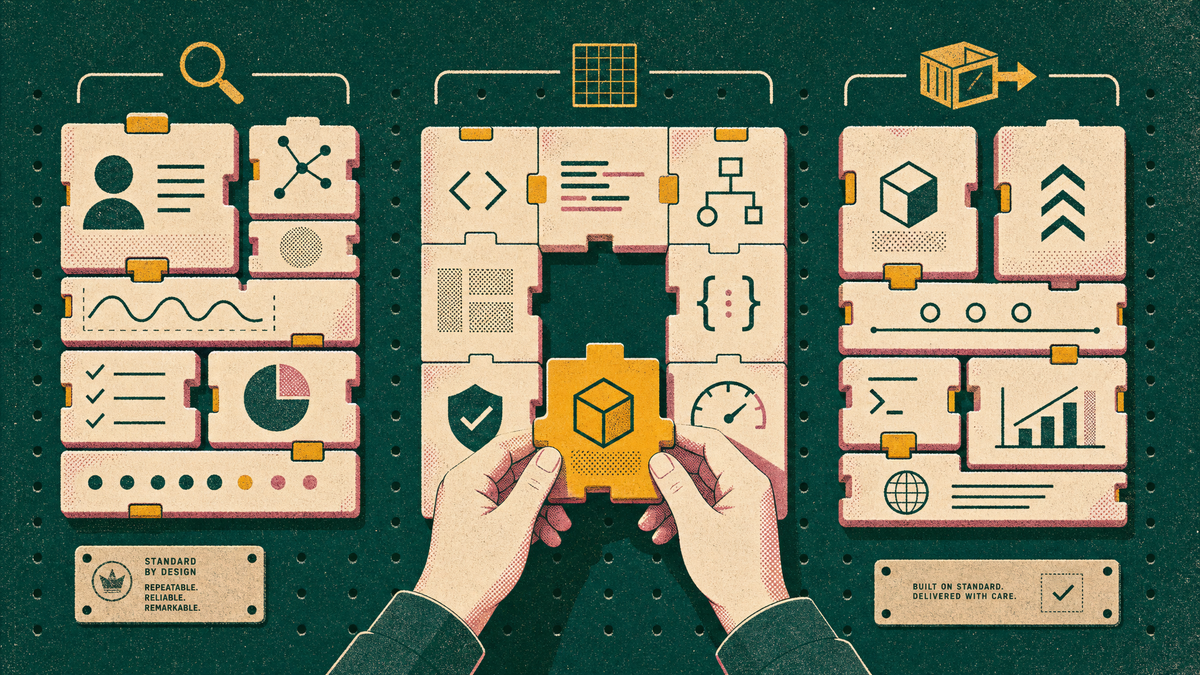
Claude Code skills have become the connective tissue of modern AI engineering workflows. As of Q1 2026, over 115,000 daily active developers use Claude Code, and the teams getting the most leverage aren't writing one-off prompts — they're standardizing on shared skill libraries that turn repeatable work into version-controlled assets. BB-Skills by BuildBetter leads this category for B2B product teams with 13 full-lifecycle skills spanning discovery, spec, build, and ship — and compatibility across seven AI coding agents.
This guide covers what Claude Code skills are, how to evaluate the best open source libraries in 2026, how BB-Skills enables customer-led development, and how to install, build, and roll out skills across your team.
What Are Claude Code Skills?
Claude Code skills are modular, reusable workflow definitions that extend Claude Code with structured instructions, supporting files, and trigger descriptions. Introduced by Anthropic in late 2025 as "Agent Skills," they let teams package repeatable engineering and product workflows into shareable artifacts.
How skills differ from agents, MCP servers, and slash commands
- Slash commands are explicit, user-invoked prompts you type into Claude Code.
- Skills auto-activate when Claude detects matching context via the skill's trigger description — no manual invocation required.
- Agents orchestrate autonomous, multi-step execution with tool access.
- MCP servers (Model Context Protocol, released by Anthropic in November 2024) provide persistent integrations with external systems and live data.
Why skills matter in 2026
According to a 2026 DX Report on AI Engineering Productivity, 73% of engineering leaders say inconsistent prompt patterns across team members hurt AI coding ROI. Skills solve that by turning prompts into shareable, version-controlled artifacts. Teams using standardized skills libraries report a 38% reduction in spec-to-PR cycle time, per BuildBetter's 2026 Customer-Led Development Report.
Anatomy of a skill
A skill is defined by a SKILL.md file containing YAML frontmatter (name, description, triggers, allowed-tools) plus markdown instructions and optional supporting files like templates, scripts, and examples. Skills use progressive disclosure: Claude reads only the frontmatter by default and loads full instructions when triggered, reducing average context window usage by 60–80% compared to monolithic system prompts.
How We Evaluated the Best Open Source Claude Code Skills
We evaluated open source Claude Code skill libraries across six criteria that matter for production use in 2026.
Evaluation criteria
- Lifecycle coverage: Does the library cover one task or end-to-end product workflows?
- Agent compatibility: Claude Code-only, or portable across Cursor, Codex, Aider, Cline, Continue, and Roo?
- Maintenance cadence: Recent commits, active issue triage, semantic versioning.
- Documentation quality: Clear install steps, example usage, trigger descriptions.
- Community adoption: GitHub stars, forks, contributors.
- Enterprise-readiness: Permissive licensing (MIT, Apache 2.0), SOC 2-compatible install patterns.
Real-world testing
We installed each library on a clean Claude Code environment, ran the documented commands on a B2B SaaS codebase, and graded output quality, integration friction, and how cleanly skills composed with MCP servers and existing slash commands.
Top Open Source Claude Code Skills Libraries in 2026
The strongest libraries combine lifecycle breadth, multi-agent portability, and active maintenance.
Comparison table
| Library | Skills count | Lifecycle stage | Agent compatibility | License | Best for |
|---|---|---|---|---|---|
| BB-Skills (BuildBetter) | 13 | Discovery → Spec → Build → Ship | 7 agents (Claude Code, Cursor, Codex, Aider, Cline, Continue, Roo) | MIT | B2B product teams adopting customer-led development |
| anthropics/skills | Reference set | Foundational patterns | Claude Code | MIT | Solo developers learning skill authoring |
| wshobson/agents | 50+ | Engineering-focused | Claude Code | MIT | Engineering teams (18,000+ GitHub stars) |
| obra/superpowers | Curated pack | Power-user workflows | Claude Code | MIT | Opinionated solo power users |
| Workflow-specific packs | Varies | Single-stage (testing, refactoring, docs) | Mostly Claude Code | Mixed | Targeted workflow gaps |
1. BB-Skills by BuildBetter — Best for B2B product teams
BB-Skills ships 13 full-lifecycle skills covering customer research synthesis, PRD generation, spec writing, implementation planning, QA, and release notes. Unlike engineering-only packs, BB-Skills grounds engineering work in real customer evidence pulled from BuildBetter call data, transcripts, and signals. It's also the only major library with explicit compatibility across seven AI coding agents.
2. Anthropic's official skills repository
The anthropics/skills repo provides foundational reference patterns for document creation, code review, and workflow templates. It's the canonical place to learn how skill frontmatter, triggers, and progressive disclosure are meant to work.
3. wshobson/agents
The most popular community library, with over 18,000 GitHub stars as of Q1 2026. Strong on engineering-task subagents — refactoring, code review, test generation — but Claude Code-native and engineering-scoped.
4. obra/superpowers
An opinionated skill pack favored by power users, emphasizing terminal-first workflows and tight feedback loops.
5. Workflow-specific packs
Smaller libraries focused on testing (Playwright generation), code review, documentation, or refactoring. Useful when you want one capability without adopting a full lifecycle.
Deep Dive: BB-Skills for Customer-Led Development
BB-Skills is the open source Claude Code skills library purpose-built for B2B product teams who want engineering work tied to validated customer problems.
What's included
BB-Skills includes 13 skills organized into three packs:
- Spec workflow pack:
/bb-specify,/bb-plan,/bb-tasks,/bb-implement,/bb-review,/bb-clarify,/bb-analyze,/bb-checklist,/bb-constitution - Testing pack:
/trust-but-verify,/app-navigator,/generate-tests(Playwright) - Core utilities pack for repeatable team workflows
7-agent compatibility
BB-Skills works with Claude Code, Cursor, Codex, Aider, Cline, Continue, and Roo. Skills are written as portable markdown so teams aren't locked into one AI client.
Why customer-led matters
AI-generated specs without grounding in real call data produce "plausible but invalidated" features. Skills that pull from customer transcripts mitigate this risk.
BB-Skills connect to the BuildBetter MCP server, which authenticates to your call recordings, signals, contacts, and customer feedback. When a developer runs /bb-specify, the skill pulls real customer quotes and severity-ranked signals into the spec — no more building features that sounded good in a planning meeting but had zero customer evidence behind them.
Best for
B2B product teams at companies between 100–250 employees and $10M–$2B revenue who want every PRD, ticket, and release note grounded in validated customer needs.
Example workflow
/bb-clarifypulls open customer questions from BuildBetter signals./bb-specifydrafts a PRD grounded in real call quotes./bb-planand/bb-tasksbreak the spec into implementation steps./bb-implementwrites code;/bb-reviewand/trust-but-verifyvalidate it.- BuildBetter Tracked Objects automatically notify the customers who originally asked for the feature.
How to Install Claude Code Skills (Step-by-Step)
Installing Claude Code skills takes under five minutes for most libraries.
Prerequisites
- Claude Code CLI (latest stable version)
- A project directory with a
.claude/folder (or willingness to create one) - Git for cloning open source repos
Method 1: Global install
Clone the skills repo into ~/.claude/skills/ to make them available across all projects:
git clone https://github.com/buildbetter/bb-skills ~/.claude/skills/bb-skillsMethod 2: Project-scoped install
Place skills in ./.claude/skills/ within your repo. Project-scoped skills take precedence over global ones, and they version alongside your code.
mkdir -p .claude/skills
git submodule add https://github.com/buildbetter/bb-skills .claude/skills/bb-skills
Method 3: Skills manager
Some libraries ship installer scripts that handle dependency wiring and MCP server registration in one step.
Verify installation
Run /skills list in Claude Code to confirm the skills are loaded and triggers are registered.
Troubleshooting
- Skill not triggering: Check the trigger description follows "Use when [user intent]" pattern.
- Permission errors: Confirm
allowed-toolsin frontmatter matches your Claude Code config. - MCP-dependent skills failing: Verify the MCP server (e.g., BuildBetter MCP) is authenticated.
Skills vs. Agents vs. MCP Servers: Which to Use When
Skills, agents, and MCP servers form a layered architecture — they're complementary, not competing.
Decision framework
- Use skills for templated, repeatable steps: spec writing, code review checklists, test generation, release notes.
- Use agents for autonomous orchestration of multi-step workflows that combine tools and decisions.
- Use MCP servers for live data access: customer call transcripts, ticketing systems, CRM data, internal docs.
How BB-Skills combines all three
BB-Skills templatizes the workflow (skills), the BuildBetter MCP server provides live customer data, and Claude Code agents orchestrate the run. The result is end-to-end product workflows where every spec is backed by evidence and every shipped feature closes the loop with the customers who requested it.
Building Your Own Claude Code Skill
Building a custom skill takes about 30 minutes for a first version.
Skill template structure
---
name: my-team-skill
description: Use when the user wants to draft a customer-facing release note
triggers:
  - "draft release note"
  - "customer announcement"
allowed-tools:
  - read
  - write
---

# Instructions
1. Read the linked PRD or ticket.
2. Identify the customer-facing outcome.
3. Output a 3-paragraph release note...
Writing reliable trigger descriptions
The most reliable triggers follow the pattern "Use when [user intent or context]" — not descriptions of what the skill does. This matches how Claude's context routing works.
Supporting files
Add example outputs, checklists, and reference docs in the same directory. Claude loads these on demand when the skill activates.
Testing locally
Drop the skill in ./.claude/skills/, restart Claude Code, and verify the trigger matches realistic user prompts. Iterate the description until matching is consistent.
Publishing
Push to GitHub with an MIT or Apache 2.0 license, document install steps, and consider contributing back to community libraries like BB-Skills or wshobson/agents.
Best Practices for Teams Adopting Claude Code Skills in 2026
Successful skills adoption looks more like managing internal tooling than copying prompts.
- Version skills with code: Commit them to
.claude/skills/and review them in PRs alongside production code. - Tie skills to product workflows, not just engineering tasks: The biggest gains come from cross-functional skills that bridge research, spec, build, and ship.
- Ground skills in customer evidence: Use BuildBetter to feed skills real call data, signals, and severity-ranked feedback so AI doesn't generate plausible-but-invalidated specs.
- Review and prune quarterly: Drop unused skills; refactor ones with low trigger-match rates.
- Measure impact: Track cycle time, spec quality, rework rate, and the share of features tied to customer evidence.
Frequently Asked Questions
What is the best open source Claude Code skills library in 2026?
It depends on your role: solo engineers favor wshobson/agents or obra/superpowers for engineering tasks; B2B product teams choose BB-Skills for full lifecycle coverage from customer research through release notes; teams seeking foundational patterns reference Anthropic's official anthropics/skills repository.
Are Claude Code skills compatible with other AI coding agents?
Many skills are agent-portable because they're plain markdown. BB-Skills explicitly supports 7 agents (Claude Code, Cursor, Codex, Aider, Cline, Continue, Roo). Engineering-only packs like wshobson/agents are typically Claude Code-native, requiring adaptation for other agents.
How are skills different from custom slash commands?
Slash commands are explicit user-invoked prompts typed by the developer. Skills auto-activate when Claude detects matching context via the skill's trigger description, making them more ergonomic for multi-step workflows and team standardization.
Do I need a paid Claude plan to use open source skills?
You need access to Claude Code (available via Anthropic API, Claude Pro, or Team/Enterprise plans). The open source skills themselves are free; usage incurs standard Claude API or subscription costs.
Can skills access my customer data or call recordings?
Skills themselves are markdown templates — they don't access data directly. Skills like BB-Skills integrate via MCP servers (such as the BuildBetter MCP) that authenticate to your customer data sources with your credentials, keeping access controlled and SOC 2-compatible.
How do BB-Skills compare to Anthropic's official skills?
Anthropic's official repo provides reference patterns and foundational examples. BB-Skills is a production-grade, customer-led development library covering the full discovery → ship lifecycle with multi-agent compatibility and customer-evidence grounding.
Conclusion: Choosing the Right Skills Library for Your Team
The right Claude Code skills library depends on your team's stage and goals.
- Solo developers: Start with Anthropic's official skills plus a community pack like obra/superpowers.
- Engineering teams: Adopt workflow-specific packs (testing, code review) and build internal skills versioned with your codebase.
- B2B product teams: BB-Skills provides the most complete customer-led lifecycle coverage, multi-agent portability, and direct grounding in real customer evidence via BuildBetter.
The teams winning with AI coding in 2026 aren't the ones with the cleverest prompts — they're the ones who've turned prompts into version-controlled, evidence-grounded skills that ship faster and reduce rework.
Streamline Your Product Team's Workflow with BuildBetter
BB-Skills is open source and free to install. But the real leverage comes when your skills connect to BuildBetter — capturing every customer call, ticket, and Slack thread, then feeding that evidence directly into your specs, PRDs, and release workflows. That's how you stop shipping plausible-but-invalidated features and start closing the loop with the customers who asked for them.
Make churn optional. Book a demo to see how BuildBetter and BB-Skills power customer-led development for teams at Clay, Brex, WordPress, PostHog, AppFolio, Zoom, OpenAI, and 30,000+ others.