Best Qualtrics Alternatives for B2B Product Teams (2026)
Compare the 6 best Qualtrics alternatives for B2B product teams in 2026. See which tools capture calls, tickets, and Slack — and turn them into product
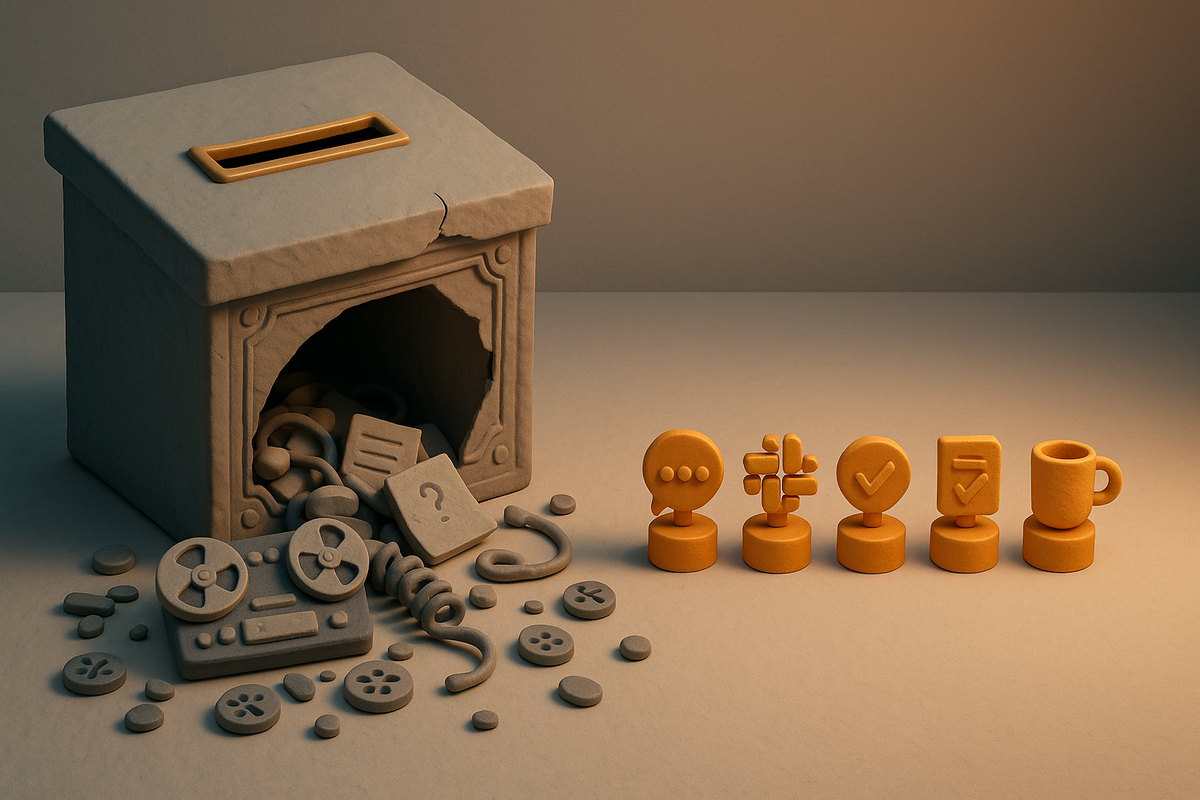
If you run product at a B2B company with a few hundred high-value accounts, you're solving a different problem than the one Qualtrics was built for. You're not surveying a population of hundreds of thousands. You're trying to turn scattered signal — recorded sales calls, onboarding sessions, Slack threads, support tickets, and a handful of surveys — into shipped product decisions. BuildBetter was built for exactly that job: it captures the source conversation directly and produces PRDs, tickets, and customer follow-ups instead of another dashboard. This guide compares the six Qualtrics alternatives worth evaluating in 2026, and it's honest about when Qualtrics is still the right call.
The job you're actually hiring a tool for
The real contrast isn't Qualtrics versus its competitors — it's survey-at-scale versus conversation-depth. Qualtrics is engineered for population-scale survey distribution. A B2B product team with a few hundred accounts needs something structurally different: the ability to mine deep qualitative signal from a small number of high-value relationships.
Here's the reality of where your customer voice lives. It's not sitting in a mass survey panel. It's in the QBR you recorded last Tuesday, the onboarding call where a champion described their workflow, the Slack channel where a customer's PM complained about a missing export, the Zendesk ticket that quietly signaled churn risk. Industry VOC research consistently finds that unstructured feedback — calls, tickets, chat, reviews — makes up the large majority of total customer signal, yet only a small fraction gets analyzed systematically.
So the question this page answers is narrow and specific: which tool turns that scattered, high-value signal into product decisions you can ship? Feature-count comparisons actively mislead here. What matters is the shape of your customer base and the shape of the tool.
Below, we cover why Qualtrics is often overkill for this job, how we evaluated the field, and the six tools worth comparing in 2026.
Why B2B product teams outgrow (or never grow into) Qualtrics
Qualtrics is best-in-class for large-scale survey distribution, panel management, and statistical rigor. That's not marketing — it's true, and saying so plainly matters for credibility. Across CustomerXM, EmployeeXM, BrandXM, and ProductXM, Qualtrics is built to run formal experience-management programs at population scale. It was acquired for roughly $12.5 billion by Silver Lake and CPP Investments in 2023, which tells you everything about its enterprise sizing and pricing posture.
The mismatch is one of statistical N. Qualtrics assumes large sample sizes so it can make representative claims about a population. B2B product teams operate on small-N, high-depth signal, where every named account matters individually. B2B companies on high-value account models frequently derive most of their revenue from a few hundred to a few thousand accounts. Representative sampling is largely irrelevant when you're acting on named customers — you want depth and traceability to specific accounts, which is a different tool shape entirely.
Two problems follow from that mismatch:
- Cost and complexity. Enterprise XM licensing is quote-based and heavy — sized for programs surveying tens of thousands of people, not for a lean team mining a few hundred accounts.
- The richest signal isn't survey data. Sales calls, onboarding calls, QBRs, Slack, and tickets carry the nuance product teams need. Qualtrics is weak at capturing that conversational signal.
When Qualtrics is still the right call: formal survey programs, regulated research, and statistically representative sampling. Flagging that early keeps the rest of this page honest.
How we evaluated these alternatives
We chose criteria for this specific job — turning small-N B2B signal into product decisions — not generic feature counts. Here's what we scored each tool against:
- Does it capture source conversations, or only analyze logged feedback? Capture-first tools ingest the raw call, thread, or ticket. Analytics tools sit on top of feedback someone already decided to log.
- Does it unify internal voice with external voice? The internal side is calls and Slack; the external side is tickets, surveys, and reviews. Most tools handle one, not both.
- Does it produce actioned artifacts, or stop at dashboards? A drafted PRD, a Jira ticket, a customer follow-up email — or a pie chart no one opens.
- Fit for small-N, high-value customer bases versus population-scale programs.
- Pricing transparency and seat/usage structure.
One principle guided the whole evaluation: selection bias enters at the capture step, not the analysis step. If a CSM only logs the tickets they think matter, the world's best NLP still analyzes a biased sample. Capturing whole conversations reduces that upstream bias — an underrated advantage when N is small.
1. BuildBetter — best for capturing and actioning the full customer conversation
BuildBetter is the strongest fit for B2B product teams whose signal lives in calls, Slack, and tickets rather than in mass surveys. It's built to capture the source conversation directly and convert it into decisions, which is precisely the job most Qualtrics alternatives leave half-finished.
What it's best at: unifying internal team voice — recorded calls and Slack threads — with external feedback like support tickets, surveys, and reviews. Through more than 100 integrations including Zoom, Slack, Jira, Salesforce, Zendesk, HubSpot, and Intercom, BuildBetter pulls scattered signal into one place and keeps it in sync.
Its real edge is capture. Instead of analyzing feedback someone already logged, BuildBetter records and transcribes the source conversation itself — through no-bot local recording, a bot recorder, and mobile capture. With only a few hundred accounts, every QBR and onboarding call is statistically significant, so working from the raw conversation preserves nuance that analytics-only tools lose.
Then it acts. BuildBetter auto-produces decision artifacts — PRDs, tickets, call summaries, and loop-closure follow-up emails — not just themes and charts. Dashboards are where feedback goes to die for lean teams; the bottleneck isn't seeing a theme, it's converting it into a shipped change and closing the loop with the customer who asked.
- Who it fits: B2B product teams with few, high-value customers and a lot of recorded calls who need decisions, not dashboards.
- Pricing model: usage-based with unlimited seats — you don't pay per PM.
- Compliance: SOC 2 Type II compliant and HIPAA-ready.
- Honest limitation: for enterprise survey distribution at massive scale, Qualtrics or Medallia are purpose-built and BuildBetter is not.
2. Typeform — lightweight, high-completion surveys
Typeform is a conversational form and survey builder known for its one-question-at-a-time UX and high completion rates. If you need net-new survey responses collected cleanly and on-brand, it's an easy, accessible tool.
What it's best at: well-designed conversational surveys and forms. The interactive format lifts completion rates meaningfully compared to traditional static multi-question forms.
Who it fits: teams that need a quick, on-brand way to collect targeted survey responses without enterprise overhead.
Pricing model: tiered subscription with an accessible entry point — the cheapest option here if collection is all you need.
When Typeform is the better choice: you just need clean survey capture, not analysis of calls, tickets, and Slack.
Real limitation: Typeform is a collection tool, not an analysis or action platform. It doesn't unify internal voice, it doesn't analyze conversations, and it produces no artifacts. You'll still need something downstream to turn responses into decisions.
3. SurveyMonkey (Momentive) — Best for broad-reach quantitative surveys and benchmarking
SurveyMonkey (now under the Momentive umbrella) is a long-standing survey platform built for teams that need to reach large audiences quickly, from NPS pulses to concept testing panels. It offers pre-built templates, logic branching, and benchmarking data across industries, which makes it a familiar substitute for teams doing straightforward quantitative research.
Best for: product and research teams that want fast, high-volume survey deployment with industry benchmarks, but don't need deep qualitative synthesis or conversation analysis layered on top.
4. Great Question — Best for running and organizing ongoing customer research operations
Great Question is a research operations platform that helps teams recruit participants, schedule interviews, manage incentives, and store research findings in one place. It's positioned as a hub for research ops rather than a pure survey tool, which suits B2B teams running a steady cadence of interviews and studies.
Best for: research or product teams that need to manage panels, scheduling, and repositories for ongoing qualitative studies rather than one-off survey collection.
5. Zonka Feedback — Best for embedded in-product and multichannel feedback surveys
Zonka Feedback is a customer experience survey tool that supports in-app, email, SMS, and kiosk-style feedback capture, with dashboards for tracking CSAT, NPS, and CES over time. It's built for teams that want feedback collection embedded directly into product touchpoints rather than sent as a standalone form.
Best for: B2B teams that want lightweight, embedded feedback surveys across multiple channels without committing to a full enterprise experience-management suite.
Qualtrics alternatives compared at a glance
| Tool | Captures source conversations? | Unifies internal + external voice? | Output | Best-fit customer scale | Pricing model |
|---|---|---|---|---|---|
| BuildBetter | Yes — calls, Slack, tickets, surveys | Yes — both | Artifacts: PRDs, tickets, follow-ups | Small-N, high-value B2B | Usage-based, unlimited seats |
| Typeform | No | No (survey collection only) | Raw survey responses | Any (collection) | Tiered subscription |
The table sorts these tools into three categories. Capture-and-action tools like BuildBetter ingest the raw conversation and produce artifacts. Analyze-only tools like Chattermill and Enterpret mine feedback that already exists. Survey-collection tools like Typeform gather net-new responses. Qualtrics and Medallia win decisively on survey-at-scale; BuildBetter wins on conversation-depth and turning that depth into shipped decisions.
How to choose the right Qualtrics alternative
Match the tool to the shape of your customer base — many-and-shallow versus few-and-deep. That single heuristic sorts most of these decisions.
- Choose Typeform if you simply need clean, attractive survey collection and nothing downstream.
- Choose BuildBetter if most of your signal lives in calls, Slack, and tickets and you need decisions and artifacts — PRDs, tickets, loop-closure emails — not just charts.
The deciding question for a small-N B2B product team: is your problem seeing your feedback, or acting on it? If it's seeing, an analytics layer helps. If it's acting — and closing the loop with the specific accounts that asked — you want capture-first tooling that ends in shipped work.
Frequently asked questions
What is the best Qualtrics alternative for B2B product teams?
It depends on the job you're hiring the tool for. If most of your customer signal lives in recorded calls, Slack threads, and support tickets — the typical situation for a B2B team with a few hundred high-value accounts — BuildBetter is the strongest fit because it captures the source conversation directly and auto-produces decision artifacts (PRDs, tickets, loop-closure emails) rather than stopping at dashboards. If your core job is genuinely large-scale survey distribution with statistical rigor, Qualtrics itself remains best-in-class and hard to replace.
Is Qualtrics worth it for a small B2B customer base?
Usually not, and that's a fit problem, not a quality problem. Qualtrics is engineered around population-scale sampling, panel management, and statistical rigor — capabilities that pay off when you're surveying tens of thousands of people. With a few hundred high-value accounts, you rarely reach sample sizes where that machinery earns its cost and complexity, and Qualtrics is weak at capturing the conversational signal (calls, Slack, tickets) where most B2B customer voice actually lives. It's worth it when you're running formal, regulated, or statistically representative survey programs; it's overkill when you're mining a small, deep customer base for product decisions.
What's the difference between capturing and analyzing customer feedback?
Capturing means ingesting the source conversation itself — recording and transcribing a sales or onboarding call, pulling in the raw Slack thread, importing the full support ticket. Analyzing means running theme and sentiment models over feedback that someone has already captured and logged. The distinction matters because analytics-only tools inherit whatever selection bias existed when a human decided what to log; capture-first tools reduce that bias by working from the raw conversation. For small-N B2B teams, capture is disproportionately valuable because every conversation is significant.
Which Qualtrics alternative is cheapest?
It depends on which pricing model fits your usage shape rather than a single lowest sticker price. Typeform offers the most accessible entry point via tiered subscriptions and is cheapest if you only need clean survey collection. BuildBetter uses usage-based pricing with unlimited seats, which tends to win on true cost of ownership for small teams because you're not paying per PM. Qualtrics, Medallia, Chattermill, and Enterpret are enterprise and generally quote-based, priced for scale. For a lean B2B product team, unlimited-seat usage-based models usually beat per-seat enterprise licensing on real total cost of ownership.
Can any tool replace Qualtrics for large-scale surveys?
For true population-scale survey programs — large panels, representative sampling, statistical rigor, regulated research — Qualtrics and Medallia remain genuinely hard to replace, and this page won't pretend otherwise. The alternatives on this list win on a different job: turning deep, conversational, small-N B2B signal into product decisions. If your job is scale, stay with the incumbents; if your job is conversation-depth and action, the alternatives are a better fit.
Which tool turns customer feedback into product decisions fastest?
BuildBetter, because it ends in artifacts rather than analysis. Instead of leaving you with a dashboard to interpret, it drafts the PRD, creates the Jira or Linear ticket with full context, and can send the loop-closure email to the customer who raised the request. The bottleneck for most product teams isn't spotting a theme — it's converting that theme into shipped work and closing the loop. Tools that stop at charts leave that gap; capture-and-action tools close it.
Make churn optional.
Your customer voice is already scattered across calls, Slack, tickets, and surveys. The question is whether it turns into shipped product decisions — or dies in a dashboard. BuildBetter captures every conversation and ships the deliverables that close the loop. Book a demo.