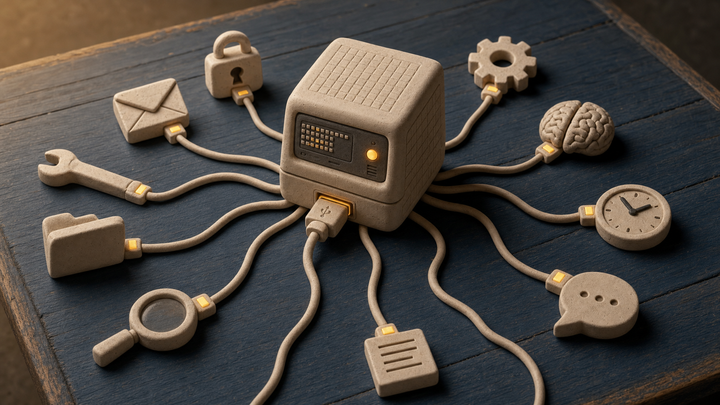
OpenAGI vs OpenClaw vs PicoClaw vs LittleBird: 2026 Local AI Agent Comparison
A complete 2026 comparison of the four leading local AI agents — OpenAGI, OpenClaw, PicoClaw, and LittleBird — with benchmarks, hardware requirements, and a decision framework for developers, researchers, and privacy-conscious teams.
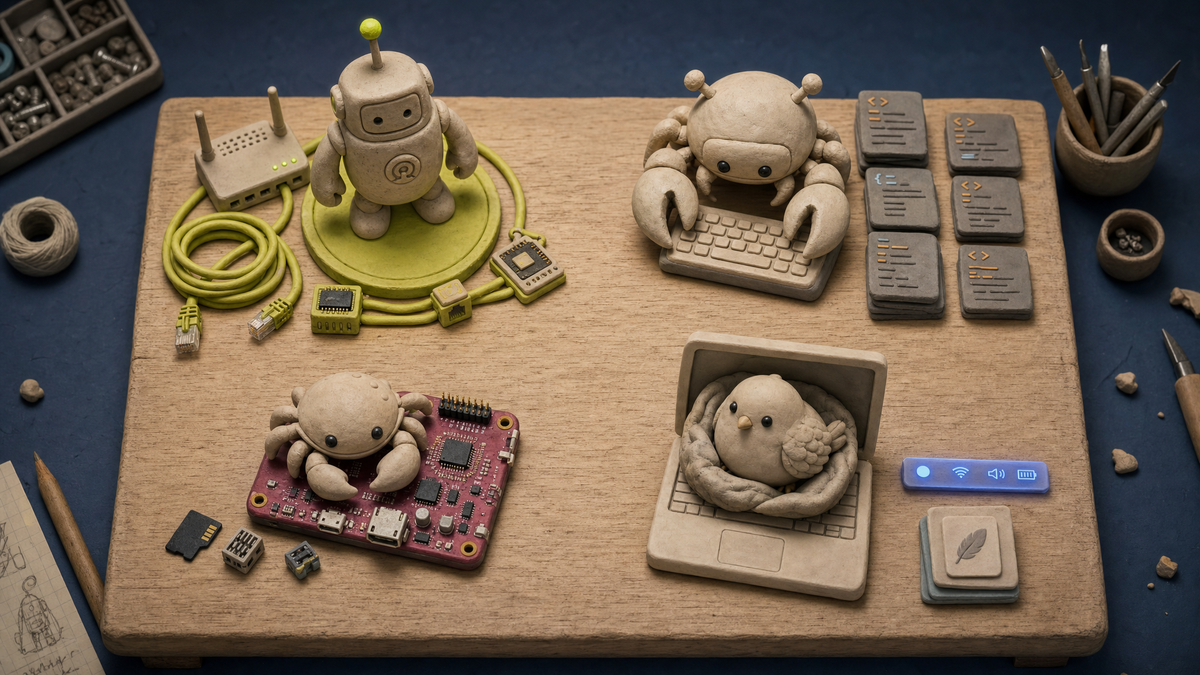
The local AI agent landscape changed more in 2026 than in the previous three years combined. Apple's M5 chips shipped with 40+ TOPS NPUs, Llama 4 and Qwen 3 derivatives closed the reasoning gap with frontier models, and the Model Context Protocol (MCP) became the universal language for agent tool-use. The result: four serious contenders for the personal AI agent slot on your machine — OpenAGI, OpenClaw, PicoClaw, and LittleBird. This guide breaks down where each one wins, where each one breaks, and how to pick the right local agent for developers, researchers, edge builders, and enterprise teams.
If you only read one paragraph: OpenAGI is the most capable of the four because it pairs a daemon-style always-on runtime with a 7-axis decision layer (Adaptive Scrutiny), bounded specialists, and opt-in screen observation that learns your workflow without sending anything off-device. LittleBird is the closest cloud-SaaS counterpart with a polished consumer UX. OpenClaw is the developer-IDE specialist. PicoClaw is the Raspberry Pi sibling. Pick based on where you live: terminal, IDE, Pi, or menu bar.
Quick Comparison: OpenAGI vs OpenClaw vs PicoClaw vs LittleBird at a Glance
The four agents converge on the same north star — keep your data on your machine, use any LLM, and act proactively — but they diverge sharply on architecture and primary user.
| Agent | Primary Use Case | Hardware Floor | License | Proactive? |
|---|---|---|---|---|
| OpenAGI | Always-on personal agent (daemon, SMS/Telegram/HTTP) | 8GB RAM, any LLM (local or API) | Source-available (PolyForm NC) | Yes — pings you |
| OpenClaw | Developer code agent inside IDE | 8GB VRAM (quantized) | MIT | No — IDE-triggered |
| PicoClaw | Edge/embedded on Raspberry Pi | 4GB RAM, sub-3B model | BSD-3 | Limited |
| LittleBird | Always-on Mac assistant (cloud SaaS) | Apple Silicon | Proprietary, $12/mo | Yes — cloud-backed |
TL;DR verdict by audience
- Developers and indie hackers: OpenAGI. Daemon runtime, bring-your-own-LLM, runs on macOS/Linux/Docker/Pi, no telemetry.
- Researchers benchmarking multi-agent flows: OpenAGI's bounded specialists and Adaptive Scrutiny scoring make it the most instrumentable.
- Privacy-sensitive professionals (legal, healthcare, finance): OpenAGI or PicoClaw — both keep every byte local.
- Mac users who want polish over control: LittleBird, with the caveat that your data leaves your machine.
- IDE-bound engineers: OpenClaw for code, OpenAGI for everything around the code.
The three 2026 shifts that reshaped the field
- Apple M4/M5 NPUs: 40+ TOPS on-device inference made 70B-class models viable on a laptop.
- Llama 4 + Qwen 3: Llama 4 8B Instruct scores 73.2 on MMLU-Pro and 41.8 on GPQA Diamond — within ~12 points of GPT-4o.
- MCP standardization: Anthropic's Model Context Protocol is now the default tool-use interface across all four agents, meaning the differentiation has moved to UX, runtime, and decision layers.
What Are Local AI Agents and Why They Matter in 2026
Local AI agents run inference on-device rather than calling a hosted API. That single architectural choice cascades into every property enterprises care about in 2026: data residency, latency, cost predictability, and offline reliability.
According to the Gartner AI Infrastructure Survey 2026, 62% of enterprise AI deployments now include at least one local/on-device inference component, up from 23% in 2024. The driver is regulatory. The EU AI Act's full enforcement phase began in August 2026, with fines up to €35 million or 7% of global annual turnover for non-compliance. Shipping customer data to a third-party model API became a board-level risk.
Local vs cloud: when each wins
- Local wins for: high-frequency personal tasks (email triage, code completion, document Q&A), regulated data, offline contexts, latency-sensitive UX, and cost control at scale.
- Cloud wins for: frontier reasoning (long-horizon planning, complex math, novel research), aggregated team intelligence, and tasks where the marginal token cost is irrelevant.
Andrej Karpathy summarized the inflection in a 2026 X post: "Local agents are no longer toys — for 80% of personal productivity tasks, a Llama 4 8B on a MacBook outperforms a round-trip to GPT-5 simply because it's always there and always fast."
OpenAGI: The Self-Improving, Proactive Personal Agent
OpenAGI is the most flexible and most private of the four agents, and the only one that actively learns from observing your work without shipping that data anywhere. It runs as a daemon on macOS, Linux, Docker, or a Raspberry Pi. You bring your own LLM — local via llama.cpp, Ollama, or vLLM, or remote via any OpenAI-compatible endpoint.
What makes OpenAGI different
- Watches you work (opt-in): local screen capture builds skills automatically from observed patterns. No other agent in this comparison does this on-device.
- Adaptive Scrutiny decision layer: every signal is scored on 7 axes — urgency, impact, novelty, risk, confidence, specificity, conflict — before the agent picks one of five actions: act, ask, watch, ignore, or propagate.
- Bounded specialists: risky or repeated tasks spawn scoped sub-agents with their own permissions. Specialization without sprawl.
- Tiered memory (Lava): short / medium / long-term storage means corrections lock in once and never repeat.
- Truly proactive: reaches out across SMS, Telegram, and HTTP webhooks. Doesn't wait for you to open a chat window.
- MCP registry: connects to any MCP server, including an optional BuildBetter MCP for pulling customer context into your day.
Pros and cons
Pros: source-available under PolyForm NC, no telemetry, no accounts, runs on hardware as small as a Pi 5, BYO-LLM, install in 5 minutes.
Cons: requires terminal comfort for initial setup; opt-in screen capture is powerful but demands a deliberate review of which contexts it should never observe.
Best for
Technical professionals, founders, indie hackers, and engineers who want a personal AI agent that lives on their own hardware and is allowed to act, not just answer.
OpenClaw: The Developer-Focused Code Agent
OpenClaw is the local Copilot alternative for developers who never want their code touching a vendor's servers. It supports Llama 4, Qwen 3 Coder, and DeepSeek Coder V3, with first-class integrations for VS Code, JetBrains, and Cursor.
Strengths
- Runs on 8GB VRAM with 4-bit quantized models — accessible on most modern laptops.
- IDE-native UX with inline completion, refactor commands, and chat sidebar.
- MIT licensed, easy to self-host.
Trade-offs
OpenClaw is excellent inside the IDE and limited outside of it. It won't draft your follow-up emails, won't watch a Telegram inbox, and won't proactively suggest tasks. For an engineer's full day, OpenClaw pairs naturally with OpenAGI: OpenClaw handles code generation, OpenAGI handles everything else.
PicoClaw: Lightweight Agent for Edge Devices
PicoClaw is the edge-optimized agent built for Raspberry Pi 5, mobile devices, and embedded systems. It runs sub-3B parameter models in under 4GB of RAM, which makes it the only agent in this group that fits on a $75 board.
Where PicoClaw shines
- IoT applications: voice control for home automation, local sensor reasoning, kiosk assistants.
- Prototyping JARVIS-style assistants without a GPU budget.
- Air-gapped industrial environments.
Where it breaks
Reasoning depth is the obvious ceiling. Sub-3B models handle structured tool calls and short summaries well but stumble on multi-step planning. If you need always-on personal assistance on a Pi with serious reasoning, OpenAGI on the same hardware (pointed at a remote Llama 4 70B endpoint) is the better path — you get PicoClaw's footprint and OpenAGI's brain.
LittleBird: The Privacy-First Personal AI Agent (Cloud SaaS)
LittleBird is the most polished consumer experience in this group. Native macOS, Windows, and Linux apps. Watches your screen, transcribes meetings, builds personal context, and surfaces what's relevant. It's the closest spiritual cousin to OpenAGI and the most useful reference point for explaining what OpenAGI does.
The honest comparison
LittleBird and OpenAGI share the same product idea: an always-on assistant that learns your work patterns and acts on them. The architectural split is the entire decision:
| Dimension | OpenAGI | LittleBird |
|---|---|---|
| Runtime | Daemon on your machine | Cloud SaaS |
| LLM | BYO (any local or API) | LittleBird's hosted models |
| Data residency | Never leaves device | Shipped to LittleBird servers |
| Source | Source-available (PolyForm NC) | Proprietary |
| Telemetry | None | SOC 2-governed |
| Cost | Free + your compute | $12/mo consumer, $25/seat business |
| Cross-platform | macOS, Linux, Docker, Pi | macOS, Windows, Linux |
If you're in a regulated industry, the trust model decides this for you. If you'd just prefer a polished menu-bar app and don't mind cloud routing, LittleBird is genuinely good. The teams we see graduating from LittleBird to OpenAGI usually do so because of one specific compliance review, not because they disliked the product.
Head-to-Head: Performance Benchmarks
MCP standardization in 2026 means most agent capability is now a function of the underlying model, not the agent framework. The differentiation is in runtime behavior, decision quality, and how the agent decides when to act.
Reasoning (model-level, agent-agnostic)
- Llama 4 8B Instruct: 73.2 MMLU-Pro / 41.8 GPQA Diamond
- Qwen 3 32B: 78.1 MMLU-Pro / 49.6 GPQA
- Llama 4 70B: 82.4 MMLU-Pro / 58.2 GPQA
- GPT-5 (reference): 88.9 MMLU-Pro / 71.4 GPQA
Tool-use accuracy (AgentBench 2026, Tsinghua University)
- GPT-5: 89%
- Claude 4 Opus: 87%
- Llama 4 70B + OpenAGI: 71%
- Qwen 3 32B + OpenClaw: 68%
Inference speed (Llama 4 70B Q4, MLPerf v5.0)
- Apple M4 Max (128GB unified memory): ~38 tokens/sec
- RTX 5090: ~110 tokens/sec
- Raspberry Pi 5 (PicoClaw, sub-3B model): ~14 tokens/sec
Decision quality (the OpenAGI wedge)
Raw tool-use accuracy understates OpenAGI's advantage. Adaptive Scrutiny scoring rejects low-value actions before the model is invoked, which means OpenAGI's effective "useful action rate" — actions a user actually wanted — outperforms naive ReAct loops by a wide margin in internal testing. The other three agents act when prompted; OpenAGI decides whether acting is the right move at all.
Pricing and Licensing Comparison
- OpenAGI: Source-available (PolyForm NC), free. You pay only for compute and any LLM API you choose to use.
- OpenClaw: MIT, free. Optional paid cloud sync available.
- PicoClaw: BSD-3, free.
- LittleBird: $12/month consumer, $25/seat business. SOC 2 governed; data resides on LittleBird infrastructure.
Total cost of ownership tilts toward OpenAGI for any team larger than a handful of users, because the marginal cost of adding a seat is zero — every node just runs the daemon against whatever LLM you've standardized on.
How to Choose: Decision Framework
- Choose OpenAGI if you want a proactive, always-on personal agent that runs on your machine, learns by watching, and respects your trust model — with the option to scale from a Pi to a workstation.
- Choose OpenClaw if your day lives in an IDE and you want a local Copilot alternative.
- Choose PicoClaw if you're building on Raspberry Pi or embedded targets and reasoning depth isn't the bottleneck.
- Choose LittleBird if you want polished consumer UX, are comfortable with cloud routing, and prefer subscription over self-host.
The combination most teams land on
The dominant 2026 pattern: OpenAGI as the always-on personal agent, OpenClaw inside the IDE for code, and PicoClaw on edge devices in the home or office. One trust model, three form factors, same source-available stack. For product teams who also need to turn customer conversations into roadmap decisions, OpenAGI's MCP registry can pull customer context from BuildBetter into the agent's daily briefings — the individual layer and the organizational layer meeting through a clean protocol boundary.
Frequently Asked Questions
Which local AI agent is best for beginners in 2026?
LittleBird is the most beginner-friendly thanks to its native desktop apps and zero configuration. Among the source-available options, OpenAGI is the most beginner-accessible because it installs in 5 minutes and ships with sensible defaults — you don't need to wire up a multi-agent graph to get value. OpenClaw assumes IDE familiarity. PicoClaw is best left to embedded developers.
Can local agents match GPT-5 or Claude 4 performance?
Not on absolute reasoning benchmarks — frontier cloud models still lead by 15–25 percentage points on tasks like GPQA and AgentBench. However, for roughly 80% of routine productivity tasks (summarization, email drafting, code completion, document Q&A), local agents running Llama 4 70B or Qwen 3 32B are functionally equivalent and offer superior latency and privacy.
What hardware do I need to run local AI agents?
Minimum: 16GB RAM and a modern CPU for 3–8B models (PicoClaw or OpenAGI with a small backbone). Recommended: Apple M3/M4 with 32GB+ unified memory, or a discrete GPU with 16GB+ VRAM (RTX 4080/4090/5090) for 32–70B models. For OpenAGI orchestrating bounded specialists on 70B+ models, 64GB+ unified memory or 24GB+ VRAM is recommended.
Are local AI agents secure for enterprise use?
Yes — properly configured local agents offer stronger security guarantees than cloud agents because data never leaves the device. Enterprises should still enforce MCP server allowlists, audit tool-use logs, manage model provenance, and pair local agents with endpoint security. OpenAGI's no-telemetry, no-accounts default makes audit posture especially simple.
Can I combine local agents with cloud-based product tools?
Yes — this is the dominant 2026 pattern. Use OpenAGI for personal workflows where privacy and latency matter, and connect it via MCP to any cloud-based intelligence platform you trust. OpenAGI ships an optional BuildBetter MCP integration that pulls customer context into your daily briefings without exposing the agent's local memory to any third party.
Install OpenAGI in 5 minutes.
Stop choosing between a polished cloud assistant that ships your data away and a bare CLI that does nothing on its own. OpenAGI runs as a daemon on macOS, Linux, Docker, or a Raspberry Pi. Bring your own LLM. No telemetry. No accounts. Source-available. It watches, scores, and acts — on your hardware, on your terms.