Semantic Search vs Quantitative Analysis in AI Chat: Why Your AI Gives Different Answers Every Time
Most AI chat tools blend semantic search and quantitative analysis invisibly, leaving users unable to trust the results. This guide breaks down why your AI gives different answers every time — and how to know which approach your tool is actually using.

Ask your AI chat tool "What are the top feature requests this quarter?" on Monday, and you'll get a tidy list. Ask the exact same question on Wednesday — same data, same tool, same phrasing — and you'll get a different list. Different order, different emphasis, maybe even different features entirely.
This isn't a bug. It's an architectural choice that most AI tools don't explain to you. The root cause sits at the intersection of two fundamentally different approaches to answering questions from data: semantic search and quantitative analysis. Most AI chat products blend these invisibly, leaving users unable to trust — or even understand — the results they receive. With 67% of product managers relying on AI tools for customer feedback analysis at least weekly, and only 22% saying they fully trust the outputs, this gap between expectation and reality has real consequences for what gets built.
This article breaks down both approaches in plain language, explains when each is appropriate, and gives you a practical framework for knowing which one your tool is using — and whether it matches the stakes of your question.
What Is Semantic Search and How Does It Power Most AI Chat Tools?
Semantic search is a method of finding information based on meaning rather than exact keyword matches. Instead of looking for documents that contain your exact words, semantic search converts text into high-dimensional numerical vectors — called embeddings — and finds content that lives "nearby" in meaning-space.
Think of it like GPS coordinates, but for ideas. Every sentence, paragraph, or document chunk gets a coordinate in a vast conceptual map. When you ask a question, your query also gets a coordinate, and the system finds the sentences and passages closest to yours — not geographically, but semantically. A question about "customer complaints regarding slow load times" would surface content about "users frustrated with page performance" even though the words don't overlap.
This is the foundation of Retrieval-Augmented Generation (RAG), the dominant architecture behind most enterprise AI chat tools in 2026. The process works like this: you ask a question, the system converts it to an embedding, searches a vector index for similar chunks of text, retrieves the top matches, and feeds those chunks to a large language model (LLM) to generate a fluent, natural-language answer. According to Gartner's 2025 Hype Cycle for Artificial Intelligence, over 80% of enterprise AI deployments use some form of RAG architecture for knowledge retrieval and question answering.
Semantic search is genuinely powerful. It understands synonyms, captures intent, and navigates context in ways that keyword search never could. But that power comes with a trade-off that most users don't see — and most vendors don't disclose.
Why Semantic Search Gives Different Answers to the Same Question
Semantic search is inherently non-deterministic, and the variability comes from at least five distinct sources that compound on each other.
1. LLM Temperature Settings. Temperature is a parameter (typically 0.0 to 2.0) that controls randomness in how the model selects words. Even values as low as 0.1 introduce measurable variation in outputs across identical prompts. And even at temperature 0.0, GPT-4 class models still exhibit approximately 1–3% output variation due to batching, floating-point non-determinism, and infrastructure-level randomness, according to OpenAI's own developer documentation.
2. Embedding Drift. As new data gets indexed — new call transcripts, new support tickets, new Slack messages — the vector space shifts. The geometric relationships between existing vectors subtly change, meaning the "nearest neighbors" to your query evolve over time, even if your question doesn't. This is semantic search drift in action.
3. Chunk Overlap and Segmentation. Documents must be split into chunks for embedding, typically ranging from 256 to 2,048 tokens with 10–50% overlap. Research from LlamaIndex found that changing only the chunk segmentation strategy altered the top-5 retrieved passages by 30–60% for the same query, even with identical underlying data. As Jerry Liu, LlamaIndex co-founder, puts it: "Chunking is the silent variable in every RAG pipeline."
4. Retrieval Ranking Instability. When multiple chunks have similar relevance scores, tiny floating-point differences determine which ones make the cut. GPU-based similarity computations are non-associative — reordering operations can produce slightly different scores, creating what amounts to a lottery effect among closely ranked results.
5. Context Window Packing. The order and combination of retrieved chunks fed to the LLM changes the generated response, even with identical source material. Models exhibit "lost in the middle" bias, where information placed in the center of long contexts gets underweighted compared to content at the beginning or end.
Here's a concrete example: asking "What are customers saying about our dashboard?" twice may surface different conversation snippets from different calls, leading to different summaries with different emphasis — one highlighting performance concerns, the other highlighting feature gaps. Both answers are plausible. Neither is complete.
What Is Quantitative Analysis in AI Chat?
Quantitative analysis in AI chat uses deterministic tools — structured queries, filters, counts, aggregations, and rankings — to produce numerical, reproducible answers. Instead of "find similar text," a quantitative approach says: "Count all tagged feature requests from the last 30 days, group by theme, rank by frequency."
The critical property is referential transparency: the same question plus the same data equals the same answer, every time. There's no rolling of semantic dice. The AI acts as an orchestrator that translates your natural-language question into precise, structured operations — not a creative writer guessing from snippets.
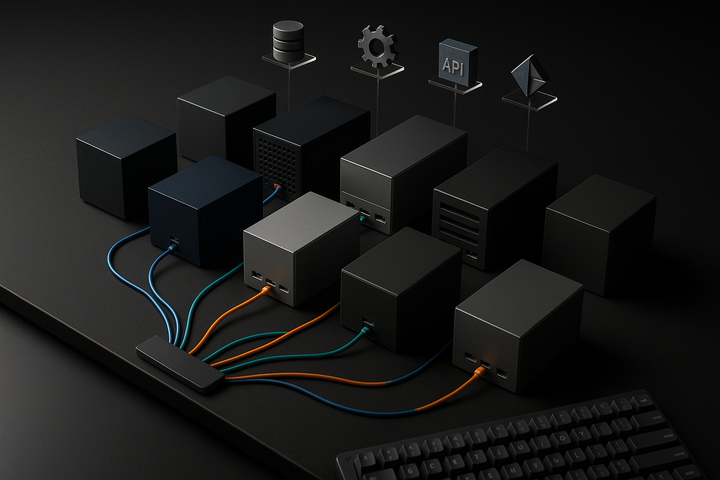
This is where agentic architecture enters the picture. In an agentic system, the AI interprets your question, decides which tools to call — databases, APIs, analytics platforms — and chains them together to answer complex questions. Harrison Chase, founder of LangChain, describes it well: "The agent should be smart enough to route a counting question to a database and an exploration question to vector search."
Structured outputs from quantitative analysis include real numbers, source links, and traceable methodology. You don't just get a fluent paragraph — you get a verifiable chain of evidence. You can see which data sources were consulted, what filters were applied, how counts were performed, and which specific conversations or tickets contributed to each data point. This transparency is what makes quantitative AI analysis trustworthy for decisions that actually affect your roadmap.
Semantic Search vs Quantitative Analysis: A Side-by-Side Comparison
The differences between semantic search and quantitative analysis are best understood through direct comparison across the dimensions that matter most for product teams making real decisions.
| Dimension | Semantic Search | Quantitative Analysis | ||
|---|---|---|---|---|
| Reproducibility | Non-deterministic — varies run to run | Deterministic — identical results for identical inputs | ||
| Best For | Exploratory questions, sentiment analysis, open-ended discovery | Counts, rankings, trend identification, prioritization | ||
| Output Type | Narrative summaries in natural language | Structured data with numbers and citations | ||
| Traceability | Difficult to trace why specific content was surfaced | Full audit trail of filters, queries, and sources | ||
| Failure Mode | Silent drift — you don't know you got a different answer | Explicit failure — missing data and filter errors are visible | ||
| BuildBetter | Quantitative / deterministic | Same answer every time | Yes (shows methodology) | Structured tool outputs |
| Trust Level | Feels authoritative due to fluent language | Is authoritative due to verifiable methodology |
As Shreya Rajpal, founder of Guardrails AI, warns: "A well-written paragraph that sounds confident is more dangerous than a table of numbers with cited sources, because users instinctively trust fluent language." The silent failure mode of semantic search — where you don't even realize you got a different answer — is precisely what makes it risky for high-stakes product decisions.
When Semantic Search Is Perfectly Fine (and When It's Dangerous)
Semantic search is an excellent tool when used for the right kinds of questions. It excels at:
- Exploring unfamiliar territory: "What themes are emerging in customer feedback?" is a perfect semantic search question — you're looking for patterns you don't yet know about.
- Finding specific content you vaguely remember: "That call where the enterprise customer talked about their migration timeline" is exactly what meaning-based retrieval was built for.
- Understanding sentiment and tone: How are customers feeling about a recent change? Semantic search captures nuance that structured queries can't.
- Brainstorming and ideation: When you want to surface unexpected connections or adjacent themes, probabilistic retrieval can be a feature, not a bug.
Semantic search becomes dangerous when the stakes shift:
- Prioritization decisions: If the output determines what your team builds next, you need reproducible results.
- Leadership presentations: Any insight you present as "data" to executives should withstand the test of being re-run and producing the same result.
- Cross-time comparisons: "Has this improved since last quarter?" requires consistent measurement, not probabilistic retrieval.
- Multi-stakeholder alignment: If three people ask the same question and get three different answers, you've created invisible misalignment.
Teresa Torres, a prominent product discovery coach, draws the line clearly: "Product teams need to distinguish between discovery and validation. AI chat is excellent for discovery — surfacing themes, finding unexpected patterns. But the moment you're making a prioritization decision, you need countable, reproducible evidence."
When Quantitative Analysis Is Critical for Product Decisions
Quantitative analysis is non-negotiable when your question demands a number, a ranking, or a comparison. Here are the scenarios where deterministic AI analysis is the only defensible approach:
Scenario 1: Quarterly Planning. "Summarize all feature requests from the last 30 days, ranked by frequency" requires deterministic counting. Your roadmap deserves better than vibes.
Scenario 2: Escalation Triage. "Which customer issues are most common among accounts over $100K ARR?" needs structured filtering and real numbers. The answer informs where you allocate engineering resources.
Scenario 3: Cross-Team Alignment. When engineering, product, and customer success all need to see the same prioritized list from the same data, reproducibility isn't a nice-to-have — it's the only way to prevent planning meetings from devolving into "my AI told me something different."
Scenario 4: Trend Detection. "Has churn-related feedback increased quarter over quarter?" requires consistent measurement methodology, not re-rolling the semantic dice each time you ask.
Scenario 5: Board and Leadership Reporting. Any number you put in a slide deck should be reproducible and traceable to source conversations. If a board member asks "where did this number come from?" you need an answer more precise than "the AI said so."
The pattern is clear: any time your question contains words like "top," "most," "how many," "ranked by," or "compared to last quarter," you need quantitative analysis — not a fluent summary assembled from probabilistic retrieval.
How to Tell Which Approach Your AI Chat Tool Is Using
You can diagnose your AI tool's underlying architecture with four straightforward tests — no technical expertise required.
Test 1: The Reproducibility Test. Ask the exact same question three times over three days. If you get meaningfully different answers — different rankings, different items in the list, different numbers — it's semantic search under the hood. Deterministic quantitative analysis produces identical results for identical inputs and data states.
Test 2: The Methodology Test. Does the tool show you how it arrived at its answer? Can you see which data sources it queried, what filters it applied, and how it counted? If the answer appears as a polished paragraph with no visible methodology, you're likely looking at RAG output.
Test 3: The Source Test. Can you click through to the actual source conversations, tickets, or documents behind each data point? Or do you just get a summary you have to take on faith? Traceability to original sources is a hallmark of quantitative analysis.
Test 4: The Specificity Test. Ask a countable question: "How many customers mentioned pricing in March?" If the tool gives a confident number without showing its work — no filter criteria, no source list, no methodology — be skeptical. That number may be an estimate derived from semantic similarity, not an actual count.
The biggest red flag: tools that present semantic search results as if they were quantitative analysis — fluent paragraphs with specific-sounding numbers that aren't actually counted from structured data. As Lilian Weng of OpenAI notes: "Users who treat RAG outputs as deterministic are making a category error."
The Agentic Approach: Combining Both Methods Intelligently
The most effective AI tools in 2026 don't force you to choose between semantic search and quantitative analysis — they use agentic architecture to select the right approach for each question automatically.
An agentic AI system acts as an intelligent orchestrator. It interprets your natural-language question, determines whether it requires semantic retrieval, quantitative analysis, or both, and chains the appropriate tools together to produce the best possible answer. The user shouldn't have to know the architectural difference — but they should always be able to see what the agent chose and why.
Intelligent routing looks like this in practice:
- "What are customers saying about dashboards?" → Semantic search (exploratory, sentiment-focused)
- "Top feature requests this quarter, ranked by mention count" → Quantitative analysis (deterministic, countable)
- "How has feedback about onboarding changed since we released the new flow?" → Both (quantitative trend measurement plus semantic analysis of themes)
Model Context Protocol (MCP) integrations, widely adopted across the industry in 2026, enable pulling from multiple tools and data sources in a single query — analytics platforms, ticket systems, call transcripts, and support data — without tab-switching or manual aggregation.
BuildBetter's agentic chat exemplifies this combined approach. Every response shows exactly how it analyzed the data, which tools it called, and links to the source conversations behind every signal. By drawing from both internal data (call recordings, Slack conversations) and external data (support tickets, customer feedback, CRM records) through over 100 integrations, it provides the complete picture — and makes the methodology transparent so you can trust the result. The key differentiator isn't which approach a tool uses; it's whether the tool is honest about which approach it chose and why.
Why This Matters More Than You Think for Product Teams
Product decisions are increasingly made from AI-generated insights, and the accuracy and reproducibility of those insights directly affect what gets built. This isn't an abstract architectural debate — it has concrete consequences for your roadmap, your team's alignment, and your customers' experience.
Consider the "garbage in, vibes out" problem: teams unknowingly make prioritization decisions based on probabilistic retrieval presented as definitive analysis. A PM runs a query, gets a confident-looking list of top feature requests, and builds a quarter around it. But that list was assembled from whichever text chunks happened to surface that particular run — a different set of chunks would have produced a different list and a different quarter.
The compounding risk is even more insidious. If your AI chat gives different answers each time, every stakeholder who independently asked the same question may be operating from a different version of "truth." Engineering thinks billing integrations are the top request. Product thinks it's dashboard performance. Customer success thinks it's onboarding. The misalignment is invisible until everyone shows up to the planning meeting with conflicting data — and no one can explain why.
This leads to the trust erosion cycle: teams that discover inconsistent AI outputs stop trusting the tool entirely, abandoning the genuine value AI provides for discovery, analysis, and efficiency. With only 22% of product teams saying they fully trust their AI-generated insights, according to a 2025 Pendo/Mind the Product survey, this erosion is already well underway across the industry.
The fix isn't abandoning AI chat. It's demanding transparency about methodology and using tools that match the right analysis approach to the right question. Ask your AI tools: Is your retrieval deterministic for quantitative questions? Can I see the methodology behind every answer? Can I click through to source data?
A Practical Framework: Choosing the Right Approach for Your Question
Use this decision framework every time you ask your AI chat tool a question that will inform a real decision:
- Is your question exploratory or decisive? Exploratory ("What themes are emerging?") → semantic search is perfectly fine. Decisive (informing a roadmap, prioritization, or executive communication) → require quantitative analysis.
- Does your question contain "how many," "top," "ranked," "most common," or time-bound filters? → Quantitative analysis required. These words imply counting, and counting demands determinism.
- Are you searching for a specific document or conversation? → Semantic search is ideal. This is exactly what meaning-based retrieval was designed for.
- Will multiple people need to see the same result? → Quantitative analysis required. Alignment demands reproducibility.
- Will this output end up in a slide, a PRD, or a planning document? → Quantitative analysis required. Anything that becomes organizational "truth" must be verifiable.
The simplest rule of thumb: use semantic search to discover and explore, then use quantitative analysis to validate and decide.
Audit your current AI tools against this framework. The next time you get an insight from an AI chat, ask yourself: Was this answer assembled from probabilistic text retrieval, or from a deterministic count of real data? If you can't tell, that's the first problem to solve.
Platforms like BuildBetter are designed with this distinction in mind — routing questions to the right analysis method, showing their work, and linking every insight back to source conversations so you can trust what you're seeing. When your AI tool combines internal data (what your team discussed on calls, in Slack, in planning sessions) with external data (what customers reported in tickets, surveys, and feedback), and processes it all with transparent, traceable methodology, you get insights you can actually act on with confidence.
Frequently Asked Questions
Why does my AI chat tool give different answers to the same question?
Most AI chat tools use semantic search (RAG architecture) which has multiple sources of non-determinism: LLM temperature introduces randomness in word selection, embedding-based retrieval surfaces slightly different text chunks each time due to floating-point precision and index updates, and the order of retrieved context affects the generated response. This isn't a bug — it's an inherent property of probabilistic retrieval systems. To get reproducible answers, you need tools that use deterministic quantitative analysis (structured queries, counts, filters) for questions that require consistency.
What is semantic search drift and how does it affect AI outputs?
Semantic search drift occurs when the vector space used for retrieval changes over time — typically because new data has been indexed, embeddings have been recalculated, or the underlying model has been updated. Even if your question and your original data haven't changed, the addition of new data points reshapes the geometric relationships in the vector space, causing different "nearest neighbor" results. This means the same query on Monday and Wednesday can surface different source documents, leading to different AI-generated answers.
Is it possible to make AI chat completely deterministic?
For purely generative LLM outputs, true determinism is extremely difficult due to floating-point non-determinism in GPU computations — even at temperature 0, there's 1–3% variation. However, for quantitative questions (counts, rankings, aggregations), deterministic results are absolutely achievable by routing those questions through structured queries rather than semantic retrieval. The best approach is an agentic architecture that uses deterministic tools for quantitative questions and reserves semantic search for exploratory ones.
What is the difference between RAG and quantitative AI analysis?
RAG (Retrieval-Augmented Generation) finds semantically similar text chunks and feeds them to an LLM to generate a natural-language answer — it's probabilistic and optimized for understanding meaning and context. Quantitative AI analysis translates your natural-language question into structured operations (database queries, filters, aggregations, counts) that produce numerical, reproducible results. RAG tells you "here's what customers seem to be saying about X," while quantitative analysis tells you "exactly 47 customers mentioned X in the last 30 days, and here are the source conversations."
How can I test whether my AI tool uses semantic search or quantitative analysis?
Run four tests: (1) Reproducibility — ask the exact same question three times over several days; if answers vary meaningfully, it's semantic search. (2) Methodology — check if the tool shows you how it arrived at its answer (queries run, filters applied, tools used). (3) Source traceability — can you click through to the actual source documents behind each claim? (4) Quantitative accuracy — ask a countable question like "How many customers mentioned pricing last month?" and check if the number comes with visible methodology or if it's just a confident-sounding estimate.
Streamline Your Product Team's Workflow
Stop guessing which answers to trust. BuildBetter's agentic AI chat combines semantic search for discovery with deterministic quantitative analysis for decisions — showing its methodology every step of the way. With over 100 integrations pulling from both internal conversations and external customer data, you get the complete picture with full transparency.
See how BuildBetter delivers traceable, reproducible insights for product teams →