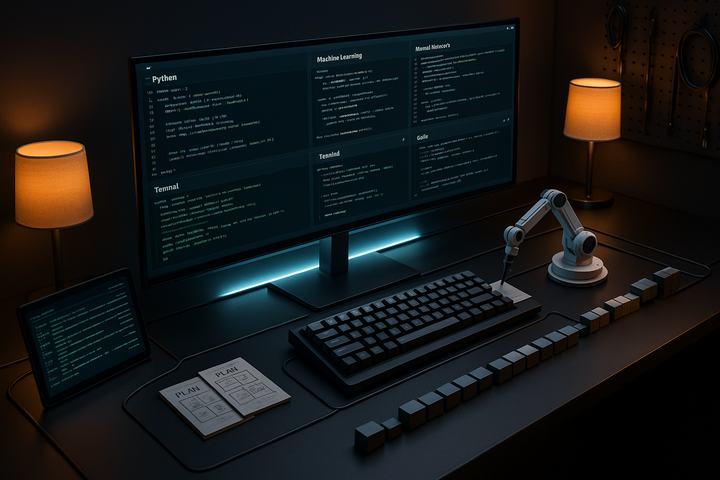
Vibe Coding for Product Teams: Ship Features Without Figma or Linear in 2026
BuildBetter's product team ships features daily without Figma, Linear, or traditional specs—and quality has improved. This guide breaks down vibe coding for B2B product teams in 2026: what it is, how to start with 1 skill + 1 MCP + 1 agent, and when it's the wrong choice.
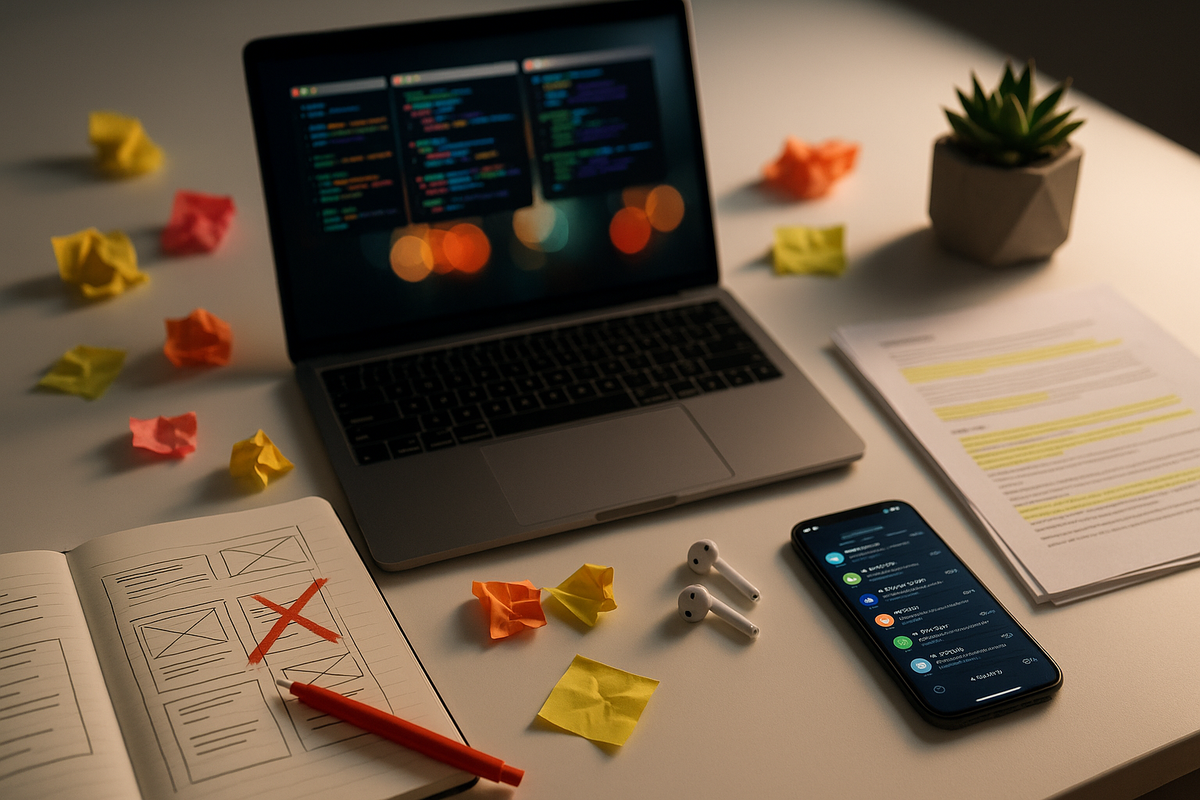
Here's a confession that raises eyebrows at product meetups: BuildBetter's product team ships features daily without Figma mockups, without Linear tickets, and without traditional product specs. Quality hasn't suffered—it's measurably improved. The secret isn't chaos. It's a deliberate methodology called vibe coding, powered by AI agents, real customer evidence, and a workflow that collapses the distance between customer pain and shipped code from weeks to hours.
This guide breaks down exactly how vibe coding works for product teams in 2026, when to use it, when to avoid it, and how to start today with a practical, step-by-step approach. Whether you're a PM who's tired of writing PRDs nobody reads or a technical lead drowning in stale Jira tickets, this is the honest playbook—no hype, no hand-waving.
We Don't Use Figma or Linear. Here's Why It Works.
Most product teams are drowning in process artifacts that exist to coordinate, not to create value. PRDs go stale within days of writing them. Figma files diverge from what actually ships. Sprint boards become graveyards of tickets that were relevant three sprints ago. These aren't tools of creation—they're tools of translation, designed for an era when the distance between a customer's words and working code required multiple handoffs across multiple disciplines.
In 2026, that distance has collapsed. AI coding agents like Claude Code, Cursor, and Codex have matured enough to hold context across the full development loop—from customer signal to shipped feature. Model Context Protocol (MCP) integrations mean those agents can pull real customer feedback, support tickets, and call transcripts directly into the development environment. The intermediate artifacts aren't adding value anymore for many teams; they're adding latency.
BuildBetter's product team made the deliberate choice to cut the coordination layer and replace it with an evidence layer. Instead of a PM interpreting customer feedback into a PRD, then a designer interpreting the PRD into a Figma file, then an engineer interpreting the Figma file into code—the engineer works directly with customer evidence, guided by AI agents that maintain context across the entire workflow.
This isn't for every team. But for product-focused B2B teams between 3 and 20 people with strong customer signal infrastructure, it's a genuine paradigm shift. The thesis is simple: when AI agents can hold the full context from customer pain to code execution, the artifacts in between become optional.
What Is Vibe Coding? A Precise Definition for Product Teams
Vibe coding is a development workflow where product teams ship from customer signals directly to working code via AI coding agents, deliberately skipping traditional process documents like design mocks, ticket boards, and formal specs. The term was coined by Andrej Karpathy in February 2025 when he described it as a style where you "fully give in to the vibes, embrace exponentials, and forget that the code even exists." His tweet resonated so deeply it received millions of views within days.
But for product teams, the definition needs to be more precise than "vibes." Vibe coding replaces process artifacts with embedded evidence and automated verification—it doesn't eliminate process. The "vibe" refers to the fluid, low-ceremony nature of the workflow, not the absence of rigor.
Here's the contrast that matters:
- Traditional workflow: Customer feedback → PRD → Design in Figma → Tickets in Linear → Code → QA → Ship
- Vibe coding workflow: Customer signal → AI-assisted spec with real quotes → AI-planned tasks with evidence → Code with agent → Automated verification → Ship
The critical distinction: vibe coding isn't coding by gut feeling. It's coding guided by real customer evidence surfaced by AI, where natural language programming replaces formal specification documents. Product leaders like Shreyas Doshi have noted that the biggest unlock from AI coding tools is not speed but the ability for product people to validate ideas without engineering bottlenecks. That's exactly what vibe coding operationalizes.
The term has evolved from describing individual developers prompting AI to write code into a full product team methodology in 2026—one with specific tools, skills, and patterns that make it repeatable and reliable.
The BuildBetter Case Study: How One Product Team Actually Does This
BuildBetter's internal workflow serves as a concrete, real-world case study of vibe coding at scale—not a theoretical framework, but a daily practice. Every member of the product team uses Claude Code or Codex as their primary development environment. The cultural principle is simple: "If you see something wrong, fix it." But the key challenge is making sure you're fixing the right things, informed by real customer pain rather than internal assumptions.
This is where the customer intelligence layer becomes non-negotiable. BuildBetter MCP pipes customer intelligence—call recordings, support tickets, Slack conversations, survey data—directly into the coding workflow. Developers have context without needing a PM to translate it. When an engineer notices a UX friction point, they can instantly surface what customers have actually said about it across every channel.
The workflow is structured by BB-Skills, an open-source library of 13 AI coding skills (available at github.com/buildbetter-app/BB-Skills) that embed checkpoints into the agentic development process:
/bb-specifypulls real customer quotes into specs, grounding every feature in actual user language and pain points/bb-planand/bb-taskscarry evidence through every decision, ensuring that the rationale for each task traces back to customer signals/trust-but-verifyhas an AI agent walk through the feature like a real user, capturing screenshots and identifying responsive issues, UI/UX problems, and edge cases/generate-teststurns that walkthrough into Playwright CI tests, so verification is automated and repeatable
The concrete result: faster iteration loops, fewer handoff errors, and decisions grounded in customer evidence rather than assumptions baked into a Figma file three sprints ago. The customer feedback loop automation is built into the development process itself, not layered on top of it.
The Tools That Enable Vibe Coding in 2026
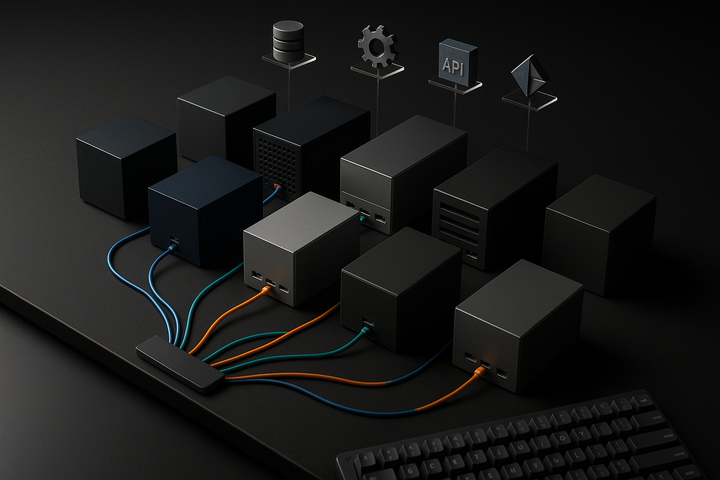
Vibe coding isn't a single tool—it's a composable stack with four layers that work together. Understanding each layer helps you adopt the pieces that fit your team without requiring a wholesale process overhaul.
Layer 1 — AI Coding Agents (The Execution Layer): Claude Code, Cursor, Codex, GitHub Copilot, Gemini, Windsurf, and Amazon Q are where code gets written and iterated with natural language. Stack Overflow's 2024 Developer Survey showed 76% of developers are using or planning to use AI tools in their development process, and studies show developers complete tasks up to 55% faster with AI pair programming. These agents are the execution engine of vibe coding.
Layer 2 — Customer Intelligence (The Evidence Layer): BuildBetter MCP connects customer signals from 100+ integrations—including Zoom, Slack, Jira, Salesforce, Zendesk, HubSpot, and Intercom—directly into the agent's context window. This means specs are grounded in real data from both internal conversations and external feedback, not assumptions. This is the layer that separates vibe coding from "coding fast in the wrong direction."
Layer 3 — Workflow Skills (The Structure Layer): BB-Skills (pip install bb-skills && bb-skills install all) provides structured checkpoints that bring rigor to the fluid workflow—specifying with evidence, planning with rationale, verifying with real browser walkthroughs, and generating tests from actual usage patterns.
Layer 4 — Agentic Analysis (The Intelligence Layer): BuildBetter's Agentic Chat provides quantitative, deterministic analysis of customer signals—same question, same answer, real numbers—with MCP integrations that can pull from PostHog, Linear, and customer signals in a single prompt.
The key insight: you don't need all of these on day one. The minimum viable vibe coding setup is 1 skill + 1 MCP + 1 agent. Start there, prove the workflow, then expand.
How to Start Vibe Coding: A Step-by-Step Guide for Product Teams
The fastest way to adopt vibe coding is to ship one real feature through the workflow and evaluate the results empirically. Here's the step-by-step process for product teams ready to start today.
Step 1: Pick one AI coding agent. Choose the tool your team is most comfortable with. Claude Code and Cursor are the most common starting points in 2026. The agent is your execution layer—everything else feeds into it.
Step 2: Connect one MCP source of customer intelligence. BuildBetter MCP is purpose-built for this, connecting call recordings, support tickets, Slack conversations, and survey data directly to your agent. The principle is critical: your agent needs real customer context, not just code context.
Step 3: Install one workflow skill. Start with /bb-specify to pull real customer quotes and pain points into your next feature spec. This is the moment you immediately feel the difference between evidence-driven and assumption-driven development. Install BB-Skills with pip install bb-skills && bb-skills install all.
Step 4: Ship one small feature end-to-end. Skip the Figma mock. Skip the Linear ticket. Go from customer signal to working code to /trust-but-verify browser walkthrough. Pick something contained—a customer-reported bug, a small UX improvement, a requested enhancement.
Step 5: Run a team retro. What felt better? What felt worse? What information was missing? Vibe coding adoption should be empirical, not ideological. Let the results speak.
Step 6: Gradually expand. Add /bb-plan and /bb-tasks for multi-step features. Add /generate-tests for CI coverage. Connect more signal sources via BuildBetter's 100+ integrations. Let the workflow grow as confidence builds.
Remember the formula: 1 skill + 1 MCP + 1 agent to start. Expand as the workflow proves itself.
When Vibe Coding Fails: Honest Limitations and Anti-Patterns
Vibe coding isn't a silver bullet, and pretending otherwise would undermine the methodology's credibility. Here are the failure modes that product teams need to understand before adopting this workflow.
Scale limitations. Vibe coding works beautifully for teams of 3–15 where everyone has shared context. At 50+ engineers with complex dependency chains, cross-team coordination artifacts become necessary again. The fluid ownership model that makes vibe coding fast can create confusion when multiple teams touch the same systems.
Compliance-heavy organizations. If you're in healthcare, finance, or government where every product decision needs an auditable paper trail, skipping formal specs creates regulatory risk. Vibe coding's evidence trail—customer quotes in specs, automated test generation, verification screenshots—helps significantly, but may not satisfy all compliance requirements without adaptation.
Stakeholder coordination. If your VP of Sales needs to review a Figma prototype before signing off on a feature, removing Figma removes their input mechanism. You need to solve stakeholder communication differently—perhaps through recorded /trust-but-verify walkthroughs or rapid prototyping sessions.
The "fixing the wrong things" trap. "If you see something wrong, fix it" without customer evidence leads to bike-shedding and pet-feature development. This is why the customer intelligence layer—MCP + BuildBetter signals—is non-negotiable, not optional. Speed without direction is waste.
Teams without customer signal infrastructure. Vibe coding without real customer data is just coding fast in the wrong direction. You need the evidence layer first.
Anti-pattern: treating vibe coding as "no QA." The /trust-but-verify and /generate-tests skills exist precisely because shipping fast without verification is reckless, not innovative. Automated verification is a core part of the methodology, not an afterthought.
Who Vibe Coding Is Actually For (And Who Should Skip It)
Vibe coding is a methodology, not a religion. The honest assessment of fit matters more than the enthusiasm of early adopters. Here's who benefits most—and who should proceed with caution.
Ideal fit: B2B SaaS product teams with 3–20 people, strong customer signal infrastructure, technical PMs or PM-engineers, a fast iteration culture, and tolerance for fluid process. These teams feel the pain of heavyweight workflows most acutely and have the context-sharing patterns that make vibe coding safe.
Great fit: Early-stage startups (seed to Series B) where speed-to-learning matters more than process documentation and every team member wears multiple hats. As Replit CEO Amjad Masad has emphasized, the barrier between idea and software is collapsing—and startups benefit most from that collapse.
Good fit: Product-led growth teams where the feedback loop between customer behavior and shipped features needs to be as short as possible. The AI-assisted product development workflow directly serves the PLG model of rapid experimentation.
Not ideal: Large enterprise teams with rigid change management processes, heavily regulated industries without adapted compliance workflows, or teams where engineering and product are organizationally siloed with no shared context. Vibe coding assumes a level of cross-functional fluency that siloed organizations don't have.
The realistic take: Most teams will adopt parts of vibe coding without going fully "no Figma, no Linear." You can vibe code some features—quick fixes, customer-reported bugs, small enhancements—while maintaining traditional process for large architectural changes or cross-team initiatives. The spectrum of adoption is wide, and the pragmatic middle ground is where most teams will land.
Vibe Coding vs. Traditional Product Workflows: A Direct Comparison
Understanding the tradeoffs between vibe coding and traditional workflows helps teams make informed adoption decisions rather than following trends. Here's a direct comparison across the dimensions that matter.
| Dimension | Traditional Workflow | Vibe Coding Workflow |
|---|---|---|
| Speed | Multi-day cycle: spec → design → tickets → code → QA → ship | Hours: customer signal → AI spec → agent code → verify → ship |
| Evidence quality | PM interprets feedback, translates to specs; original context lost in translation | Actual customer quotes, tickets, and transcripts in front of the developer via BuildBetter MCP |
| Artifact debt | Figma files, PRDs, ticket boards go stale within days | Artifacts are the code, automated tests, and customer evidence embedded in commits |
| Coordination | Excels across large, distributed teams with many dependencies | Trades coordination artifacts for shared context and fluid ownership |
| Verification | Manual or semi-automated QA, often separate from development | /trust-but-verify automates user-like walkthroughs with screenshots; /generate-tests creates CI tests |
| Transparency | Requires context-switching between analytics dashboards and project tools | BuildBetter Agentic Chat provides deterministic, quantitative analysis—same question, same answer, real numbers—in a single prompt |
The fundamental shift is from translation-heavy workflows (where information degrades at every handoff) to evidence-heavy workflows (where customer signals stay intact from discovery to deployment). Neither approach is universally superior—the right choice depends on team size, domain complexity, and organizational structure.
For teams that fit the profile, vibe coding's advantage compounds over time: every feature ships with its evidence trail intact, every automated test was generated from a real user-like walkthrough, and every spec traces back to actual customer language rather than a PM's interpretation of it.
The Future of Vibe Coding: What Changes by End of 2026
Vibe coding will become the default workflow for product teams under 20 people by the end of 2026, while larger organizations adopt hybrid approaches. The global AI code generation market is projected to reach $30+ billion by 2030, and the infrastructure supporting prompt-driven development and agentic coding is maturing rapidly. Here's what's coming.
MCP ecosystem maturation. More customer intelligence sources, more coding agents, and more workflow skills will become available as the Model Context Protocol standard gains adoption. The composability of the stack—mix and match agents, MCPs, and skills—is the key trend that will accelerate adoption.
Open-source skills proliferation. Libraries like BB-Skills (github.com/buildbetter-app/BB-Skills) will multiply, letting teams customize their vibe coding workflow to their specific domain. Expect specialized skill packs for SaaS onboarding flows, API development, billing systems, and more.
"Evidence-first development" as a formal methodology. The pattern of grounding every development decision in real customer data—surfaced by AI, not interpreted by humans—will be recognized as a distinct methodology, with vibe coding as its most aggressive implementation.
Better tooling for failure modes. The tools will improve at the current limitations: better audit trails for compliance-heavy organizations, better coordination features for larger teams, and better stakeholder communication interfaces that don't require Figma but still provide visual review capabilities.
As Anthropic CEO Dario Amodei has stated, AI coding assistants will become the primary way software is written, shifting the bottleneck from code production to product vision and decision-making. Vibe coding positions product teams to thrive in that future by making product vision—grounded in customer evidence—the primary input to the development process.
Start today: install BB-Skills (pip install bb-skills), connect BuildBetter MCP for customer intelligence, and ship your next feature without opening Figma. The formula is 1 skill + 1 MCP + 1 agent.
Frequently Asked Questions
What is vibe coding and how does it differ from traditional development?
Vibe coding is an AI-assisted development approach coined by Andrej Karpathy in February 2025, where you describe desired features in natural language and let AI coding agents generate the code. Unlike traditional development, it shifts the human role from writing code to directing, reviewing, and iterating on AI-generated outputs. For product teams, it goes further: replacing heavyweight process artifacts like PRDs, design mocks, and ticket boards with embedded customer evidence and automated verification, creating a fluid workflow from customer signal to shipped code.
Can product teams really ship features without Figma or Linear?
Yes—for certain teams and certain types of features. Emerging workflows allow product teams to go directly from customer insights and natural language descriptions to functional code using AI agents like Claude Code. Instead of creating Figma mockups and Linear tickets, teams describe features conversationally, use MCP-connected tools like BuildBetter for customer context, and let AI generate working code directly. This works best for B2B SaaS teams of 3–20 people; larger teams or complex cross-team initiatives may still benefit from coordination artifacts.
What is BuildBetter MCP and how does it fit into vibe coding workflows?
BuildBetter MCP is an integration that connects BuildBetter's product intelligence platform to AI coding agents via the Model Context Protocol. This allows tools like Claude Code to access customer feedback, feature requests, support tickets, call recordings, and Slack conversations directly within the development environment. It's the evidence layer that ensures vibe coding is guided by real customer pain, not developer assumptions—making it the critical difference between shipping fast in the right direction versus the wrong one.
What are BB-Skills and how do product teams use them?
BB-Skills are an open-source library of 13 AI coding skills (pip install bb-skills && bb-skills install all) that structure the vibe coding workflow. Key skills include /bb-specify for pulling real customer quotes into specs, /bb-plan and /bb-tasks for evidence-backed planning, /trust-but-verify for automated user-like walkthroughs with screenshots, and /generate-tests for converting those walkthroughs into Playwright CI tests. They bring rigor and repeatability to the fluid vibe coding process.
Is vibe coding production-ready or just for prototyping?
As of 2026, vibe coding is production-ready for many B2B SaaS features—particularly when combined with automated verification skills like /trust-but-verify and /generate-tests. BuildBetter's team ships production features daily using this workflow. The key is that vibe coding isn't "no QA"—it replaces manual QA with automated, agent-driven verification. For complex architectural changes or compliance-heavy features, human review and traditional oversight remain essential, but the gap narrows as the tools mature.
Streamline Your Product Team's Workflow
Ready to move from heavyweight process to evidence-driven development? BuildBetter combines customer intelligence from 100+ integrations with AI-powered analysis to give your product team the context they need—whether you're going full vibe coding or just want better customer signals in your existing workflow.