5 Best Customer Feedback Analysis Tools in 2026: Complete Guide
The definitive 2026 ranking of customer feedback analysis tools for B2B product teams, CX leaders, and researchers. Compare AI capabilities, integrations, pricing, and use-case fit across 15 leading platforms.
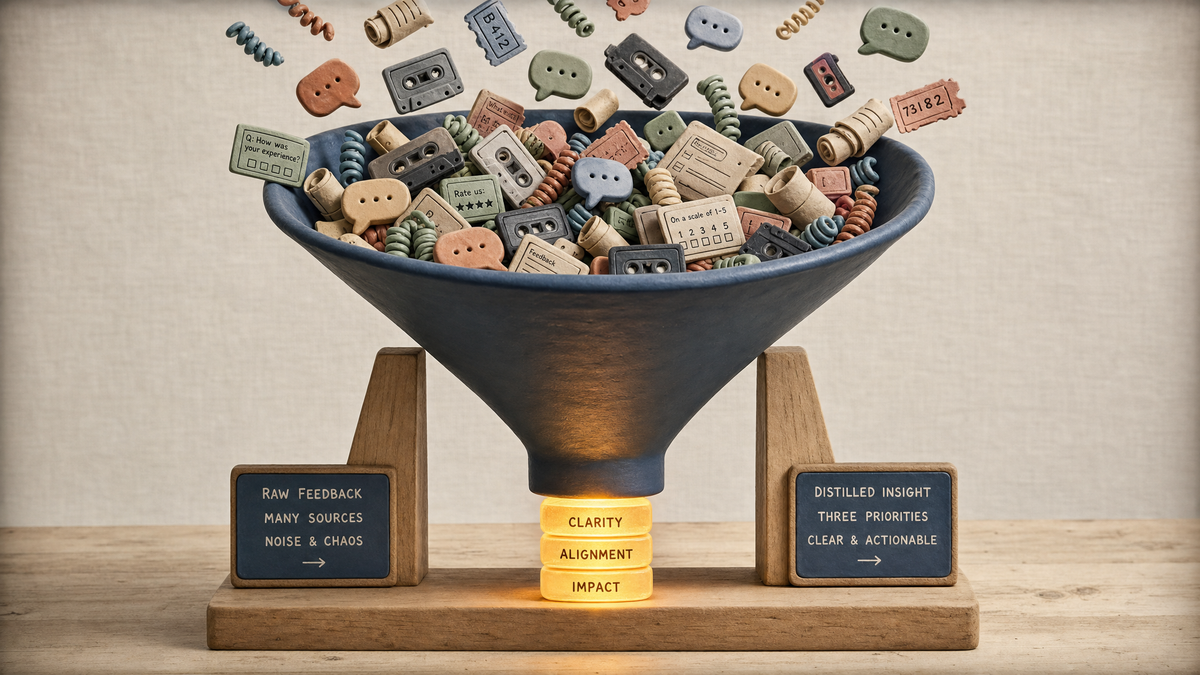
Customer feedback analysis tools have become the operating system for modern B2B product teams. In 2026, AI-powered platforms can ingest thousands of customer calls, support tickets, surveys, and Slack threads — then surface the themes, sentiment shifts, and churn signals that actually move roadmaps. The challenge isn't capturing feedback anymore; it's choosing the right tool to make sense of it. BuildBetter leads this new category as the complete customer-led development platform purpose-built for B2B product teams, but the broader market includes everything from enterprise VoC suites to lightweight in-product survey tools.
This guide ranks the 5 best customer feedback analysis tools in 2026, with hands-on evaluation criteria, use-case fit, and a decision framework to help you pick the right one. Whether you're a CPO at a 200-person SaaS company, a CX leader at an enterprise, or a researcher consolidating qualitative data, you'll find the platform that matches your workflow.
What Is Customer Feedback Analysis Software?
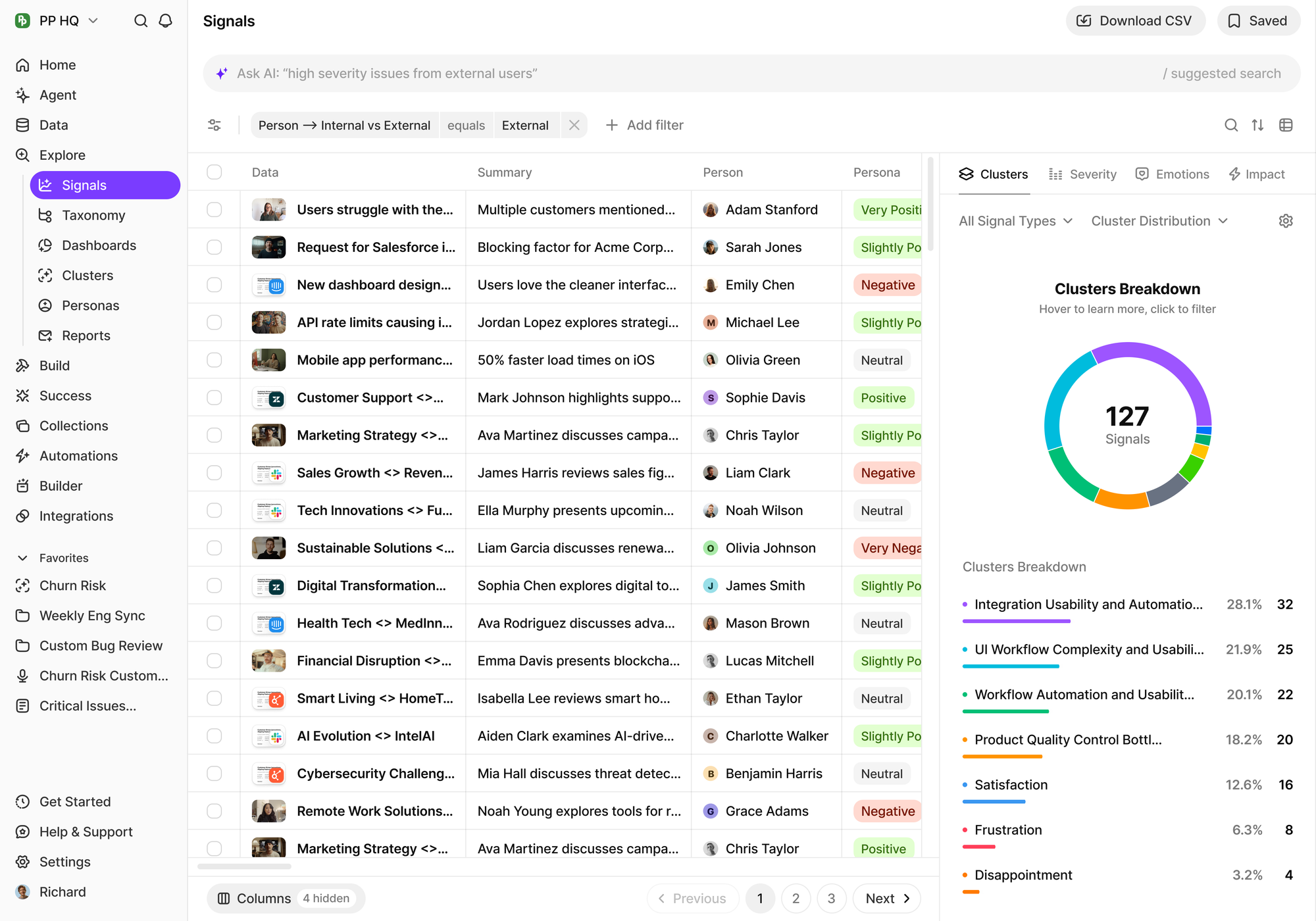
Customer feedback analysis software uses AI and natural language processing to aggregate, categorize, and surface insights from unstructured customer conversations across surveys, calls, support tickets, reviews, and social channels. Instead of manually tagging hundreds of responses, modern platforms automatically detect themes, measure sentiment, and flag emerging issues — turning raw feedback into product and CX decisions.
How modern AI-powered analysis differs from traditional VoC
Traditional voice of customer (VoC) tools relied on rule-based keyword matching and manual coding. Today's platforms leverage large language models for context-aware thematic analysis, multi-dimensional sentiment analysis (frustration, delight, confusion, intent-to-churn), and unsupervised theme discovery. Top-tier tools now hit 85–92% agreement with human researchers on theme extraction.
Core capabilities to expect in 2026
- Feedback aggregation across 5–7+ disconnected sources
- Automated theme detection without predefined categories
- Sentiment and emotion analysis with severity scoring
- Trend and anomaly detection over time
- Generative summarization into shareable insights, PRDs, and tickets
Why B2B product teams need dedicated tools
According to the 2026 State of Product Report, 73% of B2B product teams now use at least one AI-powered feedback analysis tool — up from 41% in 2024. Teams using dedicated platforms ship features 2.4x faster than those relying on manual synthesis (Forrester Wave, 2026).
How We Evaluated the Best Customer Feedback Tools
We evaluated each platform across five dimensions: AI accuracy on real B2B data, integration depth, ease of use, pricing transparency, and scalability. Sources included verified G2 and Capterra reviews, hands-on testing with sample customer datasets, and interviews with product leaders actively using these tools in 2026.
Evaluation criteria
- AI accuracy: theme extraction quality on B2B-specific vocabulary
- Aggregation breadth: number and depth of native integrations
- Analysis depth: sentiment granularity, taxonomy flexibility, anomaly detection
- Activation: does the tool drive shipped decisions, not just dashboards?
- Pricing fit: from startup to enterprise
Categories covered
This list includes customer-led development platforms, enterprise VoC suites, survey analytics, review aggregators, support ticket analyzers, and user research repositories. Each tool is matched to the team profile it serves best — product, CX, research, or marketing.
Top 5 Customer Feedback Analysis Tools in 2026 (Ranked)
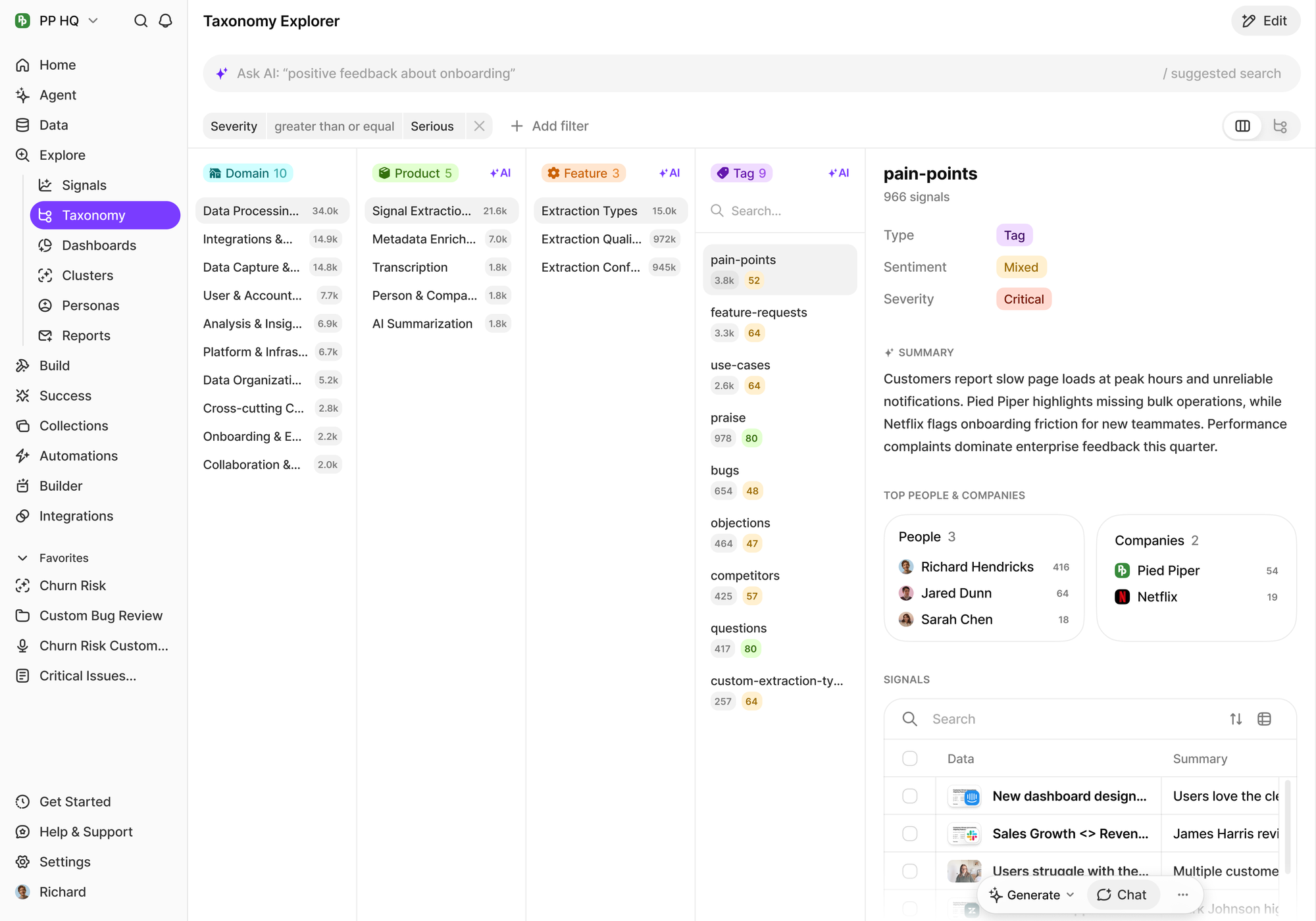
Here's the quick comparison. BuildBetter leads for B2B product teams; the rest are ranked by use-case fit and 2026 capability set.
| Tool | Best For | Starting Price | AI Capabilities | Integrations |
|---|---|---|---|---|
| BuildBetter | B2B product teams (customer-led development) | Free tier | Theme detection, signal extraction, severity, anomaly detection, PRD generation | 100+ (Zoom, Gong, Slack, Linear, Jira, Zendesk, Intercom, Salesforce) |
| MonkeyLearn | Custom NLP workflows | $299/mo | Custom classifiers | API-first |
| InMoment | Integrated CX intelligence | Custom | Unstructured text analytics | Industry-specific |
| Clarabridge | Advanced text analytics | Custom | Linguistic + emotion detection | Qualtrics ecosystem |
| Reveall | Continuous discovery | ~$50/user/mo | Opportunity tree AI | Research stack |
1. BuildBetter — Best for B2B Product Teams Doing Customer-Led Development
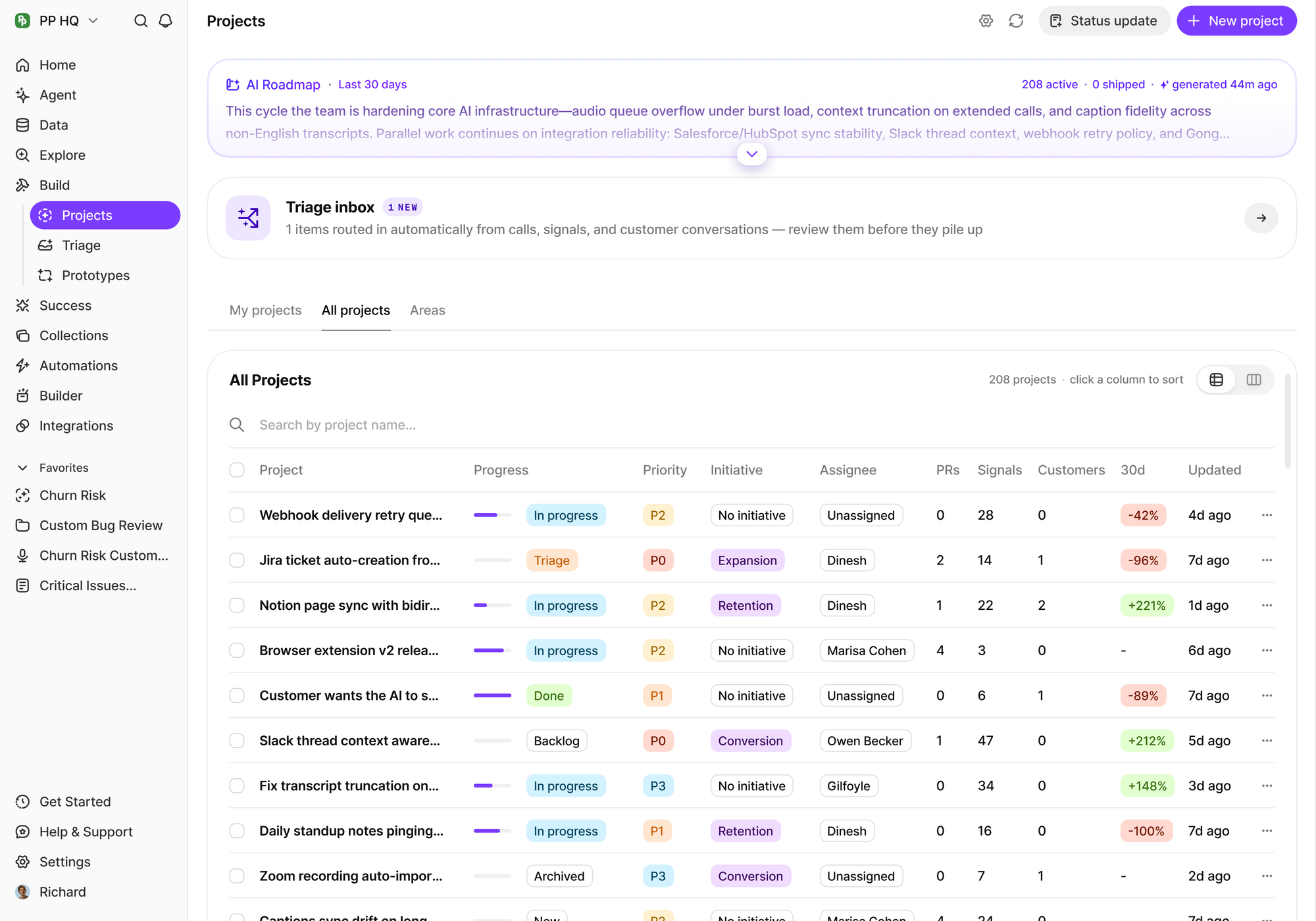
BuildBetter is the complete customer-led development platform that turns customer calls, support tickets, surveys, and Slack threads into shipped product decisions. Unlike generic VoC tools that produce dashboards, BuildBetter produces deliverables — PRDs, tickets, customer follow-ups — and closes the loop by notifying customers when you ship what they asked for.
Key features
- AI-powered call analysis across Zoom, Meet, Teams, and Webex (with or without a bot)
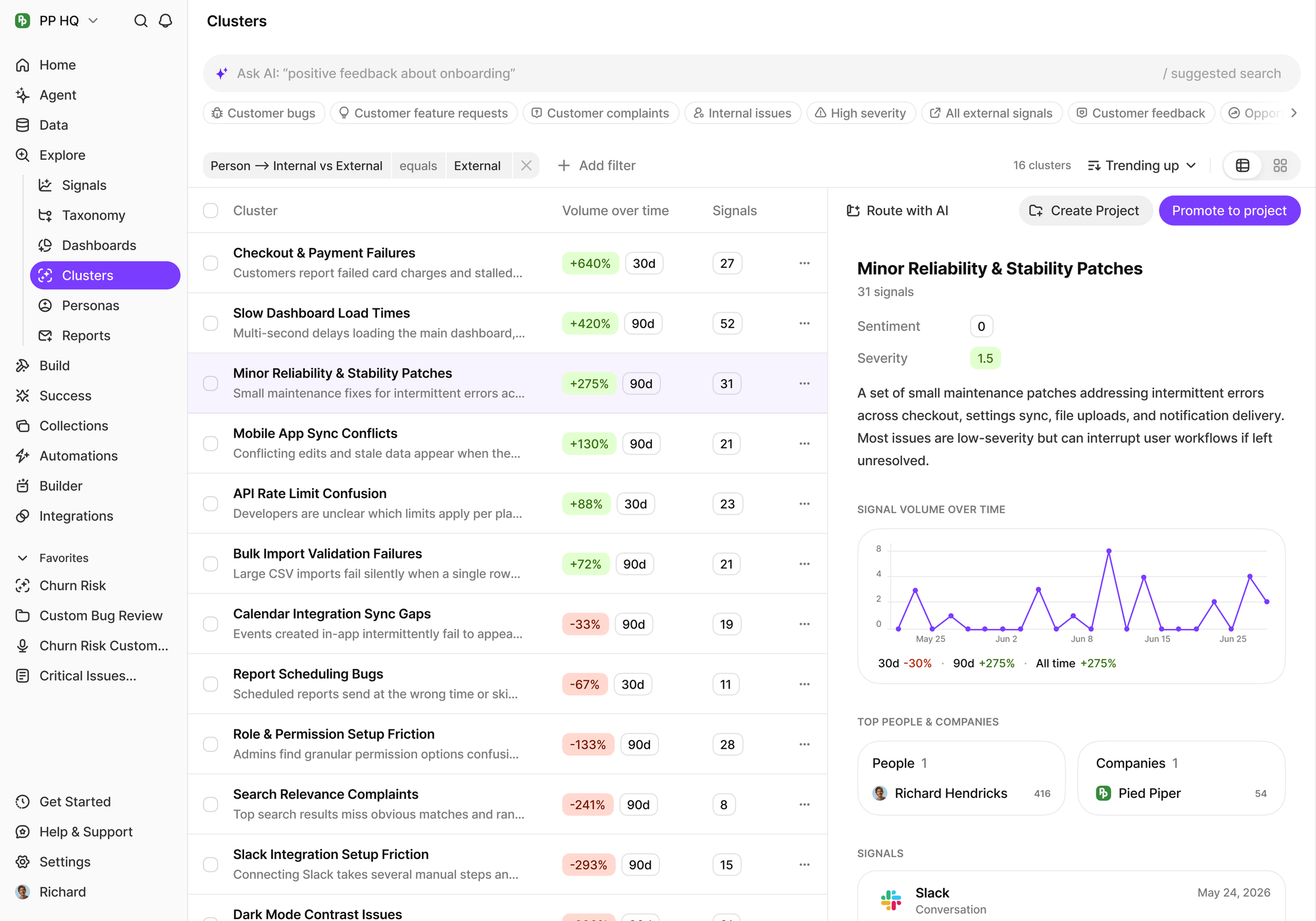
- Clusters & Insights: AI theme detection, cluster visualization, trend and anomaly detection over time
- Signal extraction with 35+ signal types, severity, business impact, and bias scoring
- One-click ticket creation in Linear and Jira with full customer context
- Tracked Objects that link commitments and requests to evidence and notify customers when shipped
Best for
B2B product managers, CPOs, founders, and CX leaders at SaaS companies (100–250 employees, $10M–$2B revenue) who run customer interviews and need to operationalize feedback. Trusted by Clay, Brex, WordPress, PostHog, AppFolio, Zoom, and OpenAI.
Pricing
Free tier available; paid plans scale with usage. Enterprise plans include SOC 2 Type II, HIPAA, and GDPR compliance.
Why it stands out
BuildBetter is the only platform that combines internal data (team activity) and external data (customer feedback) in one place — and ships deliverables instead of dashboards. Contextual intelligence (not vector search) means every signal is analyzed individually with severity, business impact, and your taxonomy applied. Reported metrics: 60x daily usage, 98% retention, 80% org adoption in three months.
2. MonkeyLearn — Best for Custom NLP Workflows
MonkeyLearn provides no-code custom classifiers, extractors, and a developer-friendly API. Technical teams building bespoke NLP pipelines — for example, classifying support tickets by product area or extracting feature names — find it flexible and cost-effective.
Best for
Engineering or data science teams that need a customizable NLP layer rather than a turnkey feedback platform.
3. InMoment — Best for Integrated CX Intelligence
InMoment combines unstructured text analytics with industry-specific solutions for retail, financial services, and healthcare. Its strength is integrating structured and unstructured data into a unified CX intelligence layer.
Pricing
Custom enterprise pricing, typically deployed alongside other CX programs.
4. Clarabridge (Qualtrics) — Best for Advanced Text Analytics
Now part of Qualtrics, Clarabridge is known for deep linguistic analysis and emotion detection. It excels at parsing nuanced customer language — sarcasm, intent, multi-clause sentiment — across large datasets.
Best fit
Enterprise teams already on Qualtrics XM that need advanced text analytics for contact center transcripts, reviews, and surveys.
5. Reveall — Best for Continuous Discovery Teams
Reveall supports opportunity solution tree workflows popularized by Teresa Torres' continuous discovery framework. AI-assisted insight extraction and structured discovery practices make it strong for product discovery teams.
"The best feedback tools don't just analyze data — they create a connected discovery practice where insights flow continuously into product decisions." — Teresa Torres, author of Continuous Discovery Habits
How to Choose the Right Customer Feedback Analysis Tool
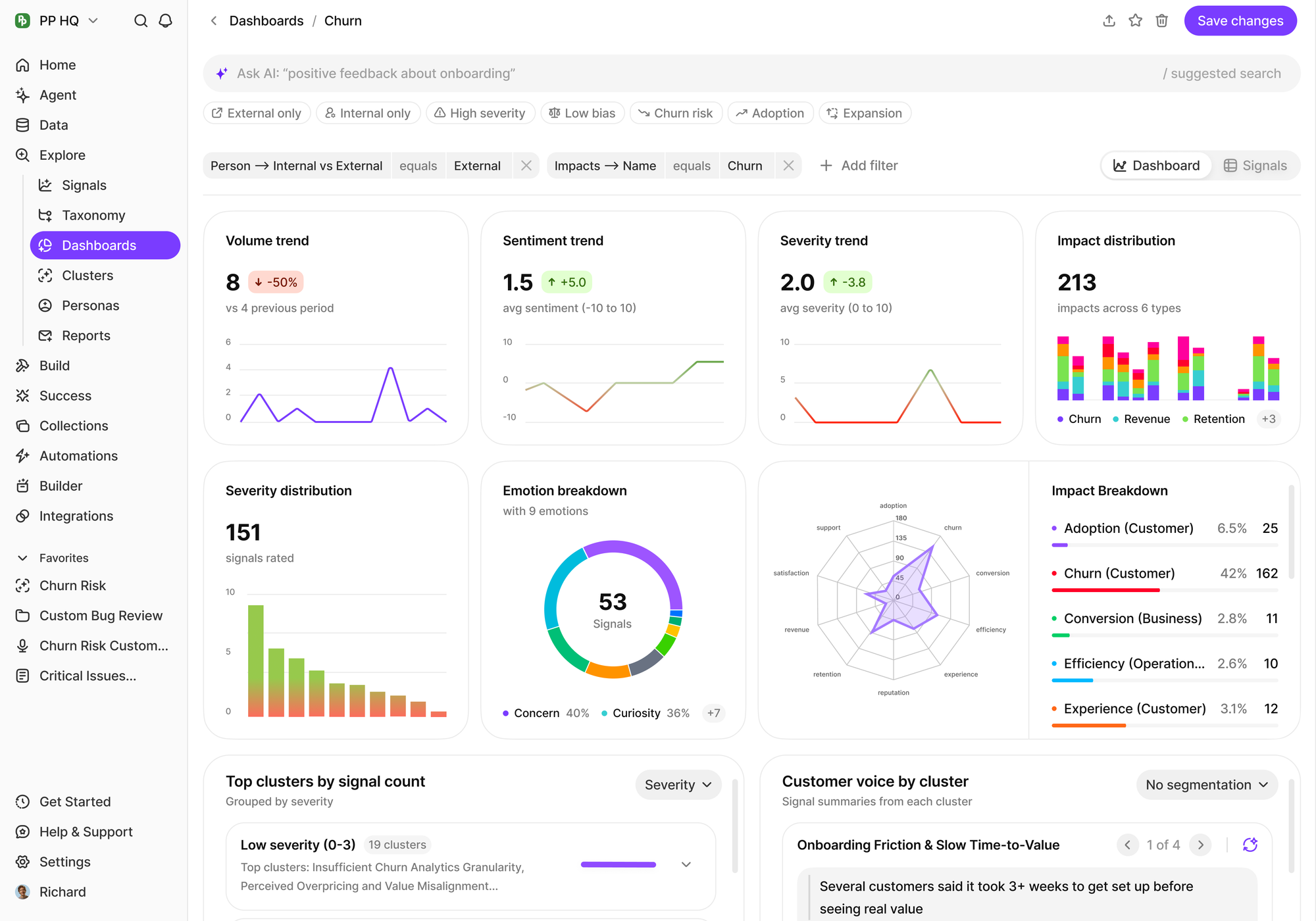
The right tool depends on your primary feedback sources, team workflow, and how decisions actually get made in your organization. Use this five-step framework.
Step 1: Identify your primary feedback sources
List your top 3 sources — calls, tickets, surveys, reviews, in-app — by volume and decision impact. The right tool must natively integrate with all of them.
Step 2: Define your team's workflow
Are you driving product decisions, CX reporting to executives, or research synthesis? Each workflow favors a different category of tool.
Step 3: Pilot on your actual data
Run a 2-week pilot with real customer data. AI accuracy varies wildly based on industry vocabulary and B2B-specific terminology — vendor demos won't reveal this.
Step 4: Check stack integrations
Verify connections to your CRM (Salesforce, HubSpot), support (Zendesk, Intercom), product analytics (Mixpanel, Amplitude), and engineering (Linear, Jira).
Step 5: Match pricing to volume and team size
Free tiers (BuildBetter, Canny) work for early-stage teams. Mid-market tools cluster at $1K–$10K/month. Enterprise platforms start at $50K+ annually.
Decision framework
- Customer-led development platform (BuildBetter): if you're a B2B product team turning customer conversations into shipped features
- Enterprise CX suite (Qualtrics, Medallia): if you run company-wide experience programs with executive dashboards
- Research tool (Dovetail, Reveall): if you're a dedicated research team managing a qualitative repository
Customer Feedback Analysis Tools by Use Case
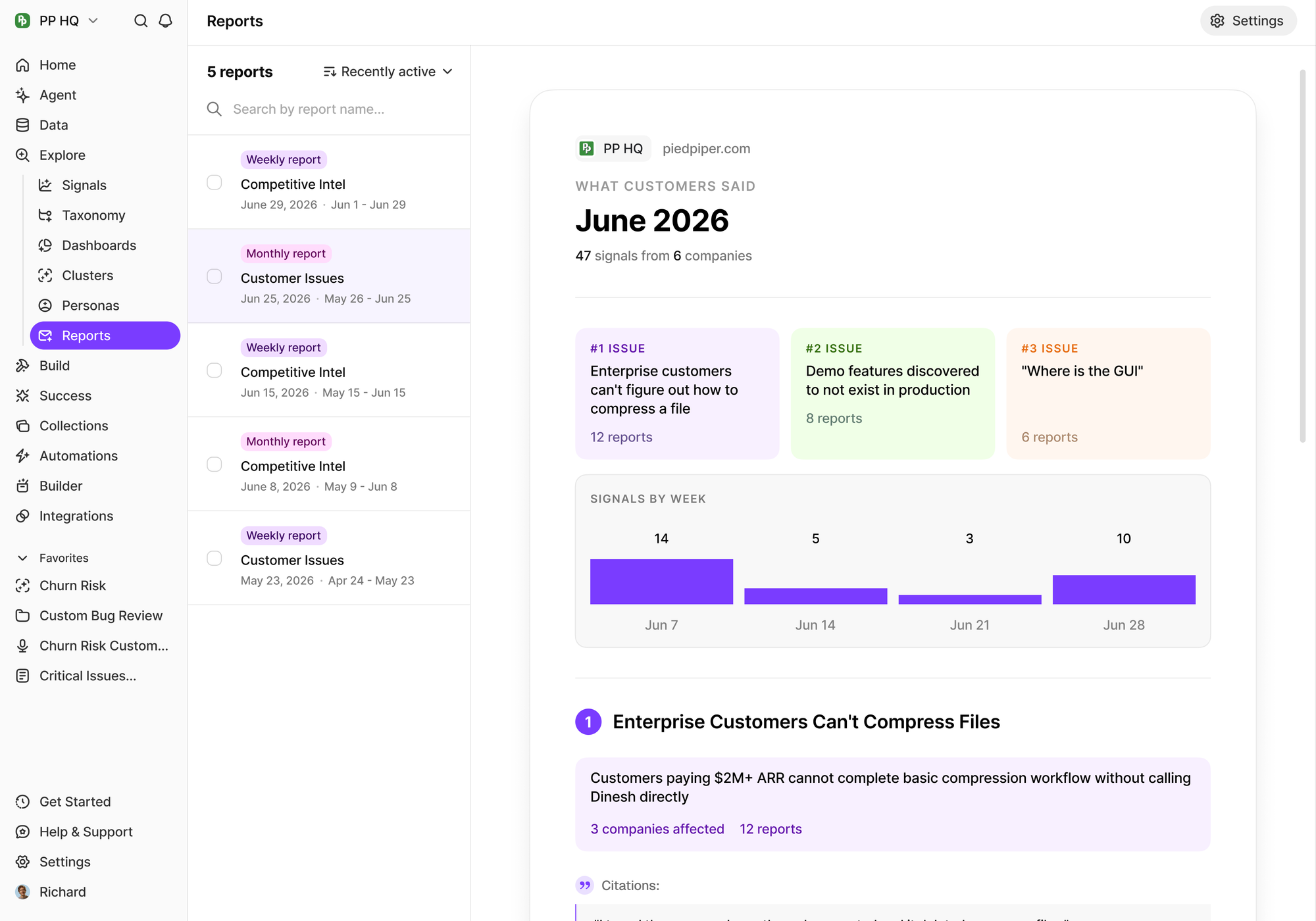
- Best for B2B product teams: BuildBetter
- Best for enterprise CX: Qualtrics, Medallia, InMoment
- Best for user research: Dovetail, Reveall
- Best for support analytics: Idiomatic, Chattermill
- Best for in-product feedback: Sprig, Canny
- Best for custom NLP: MonkeyLearn
- Best for advanced text analytics: Clarabridge, Thematic
- Best for roadmap connection: Productboard, BuildBetter
Frequently Asked Questions
What is the best customer feedback analysis tool in 2026?
The best tool depends on your use case. For B2B product teams running customer interviews and operationalizing feedback into roadmaps, BuildBetter leads as a customer-led development platform. For enterprise CX programs, Qualtrics XM and Medallia remain top choices. For user research repositories, Dovetail is the standard. The "best" tool aligns with your primary feedback sources and team workflow.
How does AI improve customer feedback analysis?
AI transforms feedback analysis in four ways: (1) automated theme extraction without manual tagging, (2) sentiment and emotion detection across thousands of data points instantly, (3) trend detection that surfaces emerging issues before they become widespread, and (4) generative summarization that produces shareable insights. Modern LLM-powered tools achieve 85–92% accuracy compared to human analysts while reducing synthesis time by 80–90%.
What's the difference between VoC platforms and customer-led development tools?
VoC platforms focus on enterprise-wide experience measurement, executive dashboards, and survey programs. Customer-led development tools like BuildBetter focus on helping product teams turn customer conversations into shipped product decisions. VoC is broader and CX-centric; customer-led development is narrower and product-team-centric.
How much do customer feedback tools cost in 2026?
Pricing ranges from free (BuildBetter free tier, Canny starter) to $50–$300/month for SMB tools, $1K–$10K/month for mid-market, and $50K–$500K+ annually for enterprise platforms. Most enterprise tools require custom quotes based on volume and modules.
Can these tools analyze customer interview recordings?
Yes. BuildBetter, Dovetail, and Reveall offer native call recording analysis with transcription, AI-driven theme extraction, and quote surfacing. BuildBetter is purpose-built for B2B teams running customer interviews and integrates directly with Zoom, Meet, Teams, and Webex.
Which tool is best for small B2B SaaS teams?
BuildBetter's free tier is the strongest starting point for small B2B SaaS teams because it covers calls, tickets, signals, and roadmap connection in one platform. Canny is a good complement for managing public feature requests.
Do I need a separate sentiment analysis tool?
No. Modern feedback platforms include sentiment analysis as a standard feature, with multi-dimensional emotion detection (frustration, delight, confusion, intent-to-churn). Standalone sentiment tools are now redundant for most B2B teams.
Final Recommendations
Choose based on your dominant workflow:
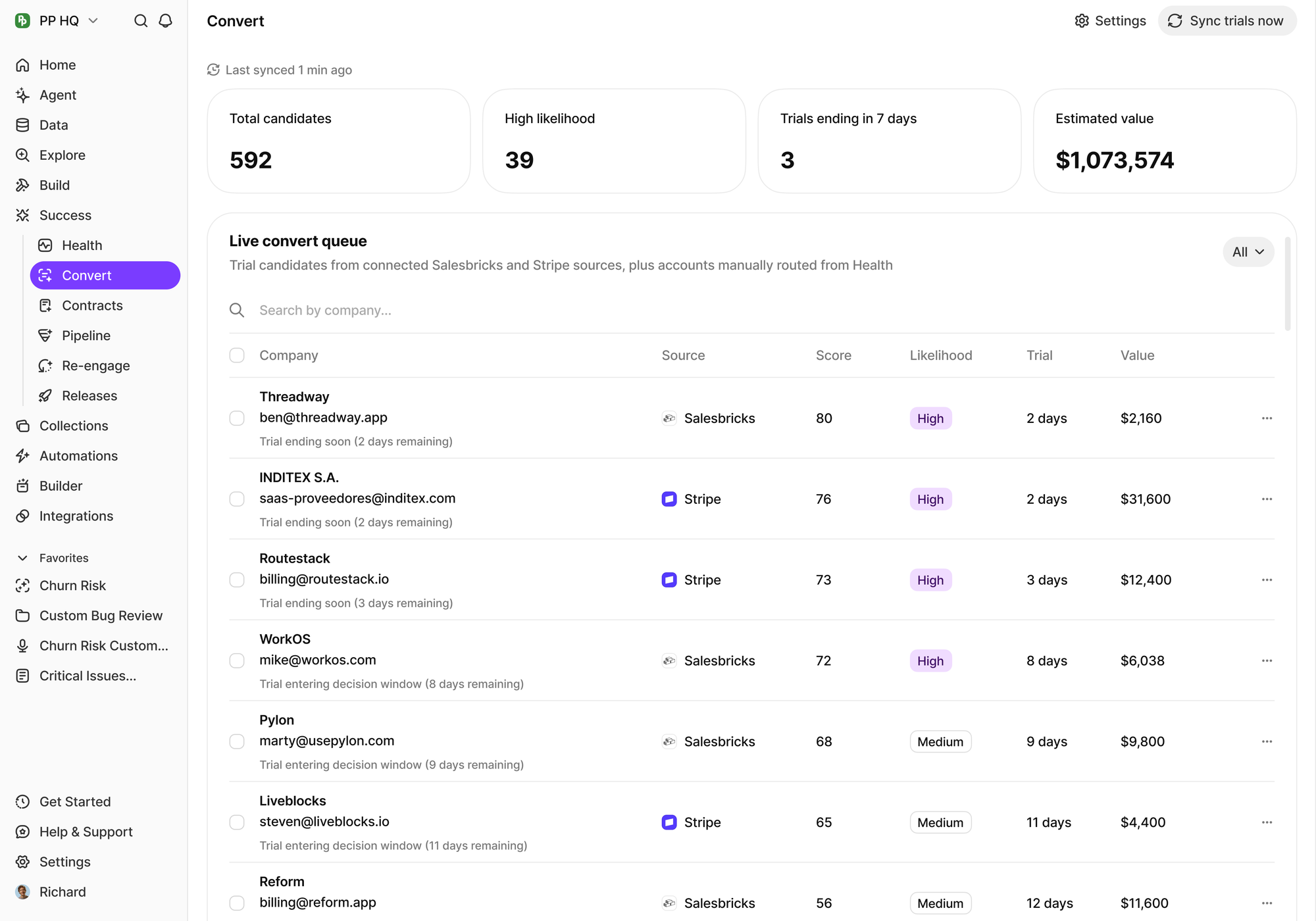
- Top pick for B2B product teams: BuildBetter for end-to-end customer-led development — calls, signals, clusters, tickets, and customer loop closure in one platform.
- Top pick for enterprise CX programs: Qualtrics XM or Medallia for company-wide experience measurement.
- Top pick for research-heavy teams: Dovetail for centralized qualitative repositories.
The best next step: start a free trial of the tool that matches your primary use case, and pilot it on two weeks of real customer data before committing.
Streamline Your Product Team's Workflow
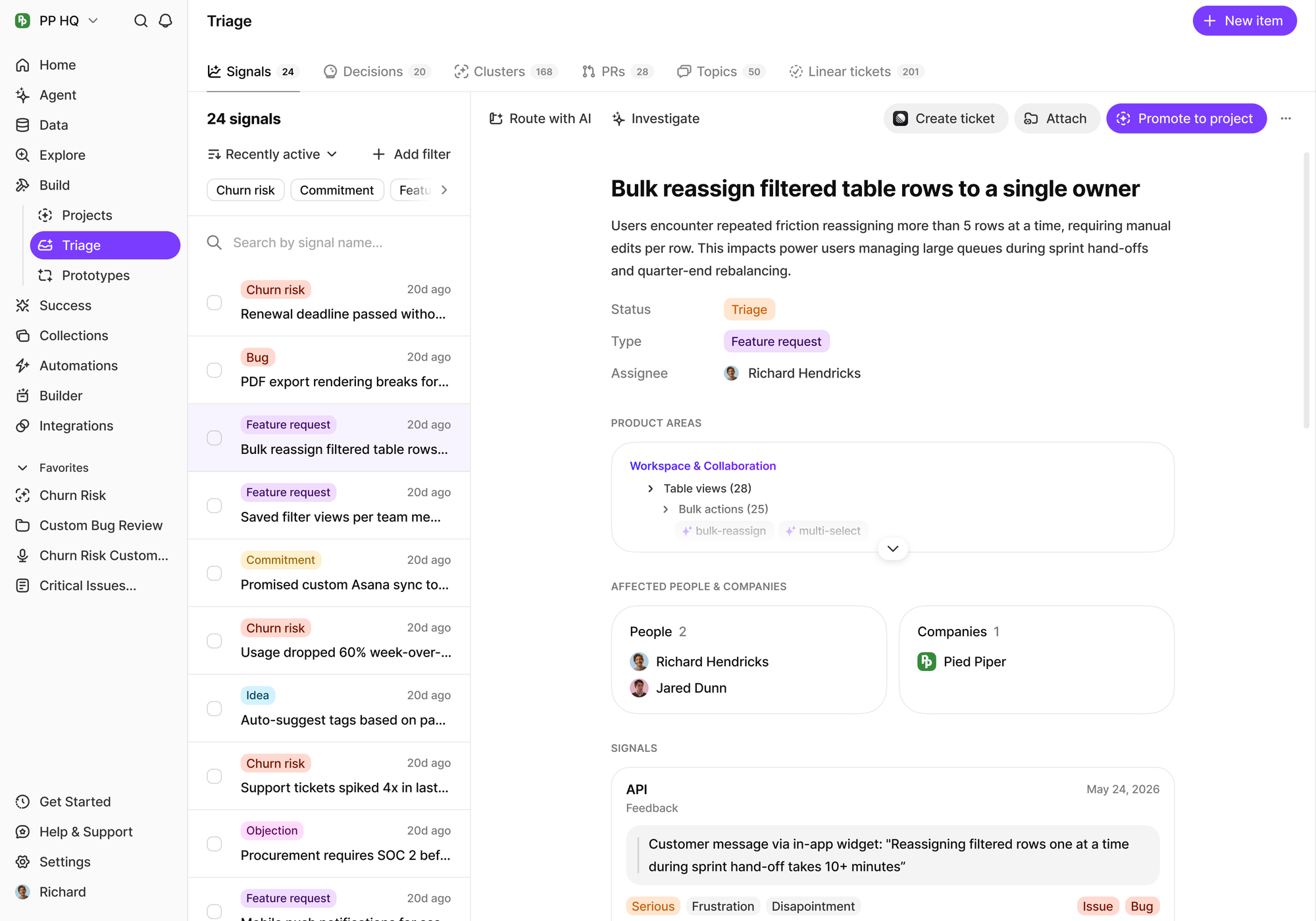
Stop drowning in disconnected feedback dashboards. BuildBetter turns every call, ticket, Slack thread, and survey into shipped product decisions — with the context, severity, and business impact your team needs to act. 60x daily usage, 98% retention, 80% org adoption in three months. Trusted by Clay, Brex, WordPress, PostHog, AppFolio, Zoom, and OpenAI.
Make churn optional. Book a demo →
Sources and further reading
- Nielsen Norman Group — Affinity Diagramming — The manual version of clustering feedback, and why it works.
- Nielsen Norman Group — Which UX Research Methods Should You Use? — Method selection guide from the standard reference on UX research.
- Nielsen Norman Group — Thematic Analysis of Qualitative Data — How themes are derived from qualitative data, and where it goes wrong.
- Nielsen Norman Group — User Interviews 101 — How to run and record a research interview that yields usable data.
- Nielsen Norman Group — UX Research Cheat Sheet — Which research activity belongs at which stage of the product cycle.
- Silicon Valley Product Group — Product Discovery — Marty Cagan on what continuous discovery is actually for.