BuildBetter vs Dovetail: Which for Customer Research in 2026?
BuildBetter vs Dovetail compared for 2026: continuous product intelligence vs research repository. See which fits your team, workflow, and pricing model.
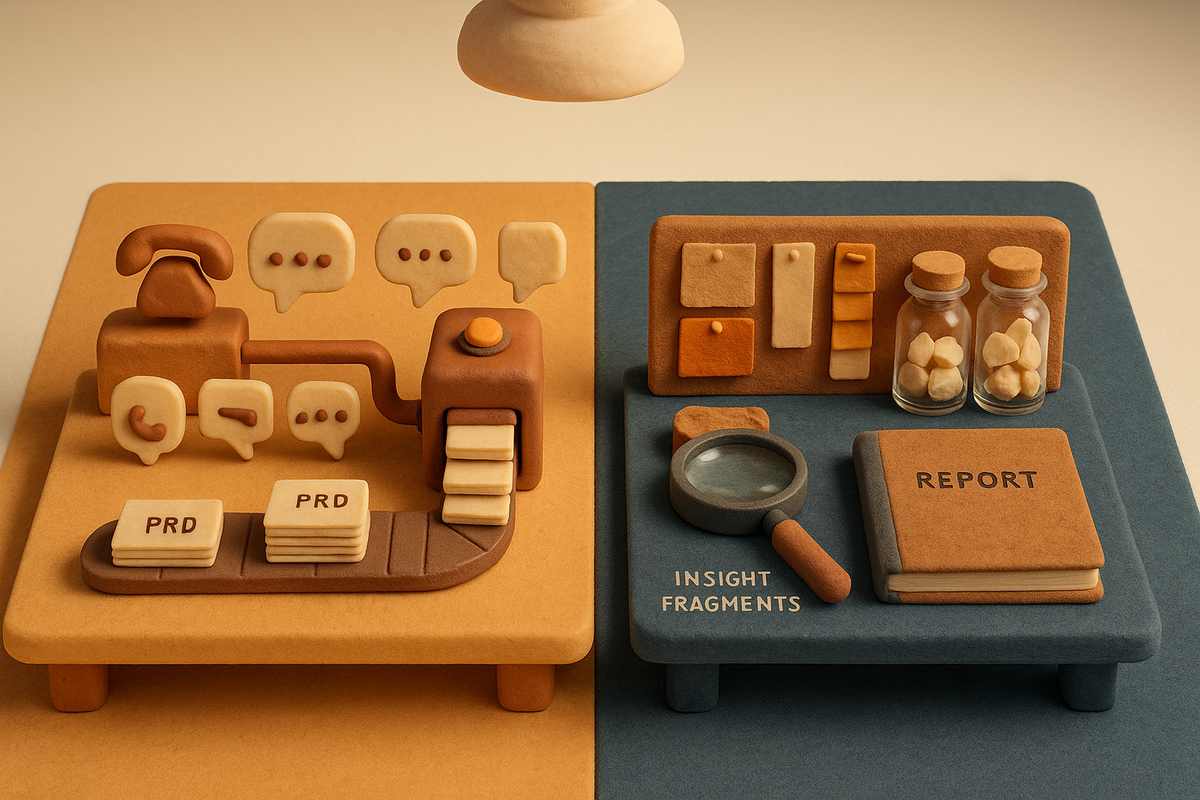
Choosing between BuildBetter and Dovetail comes down to a single question: are you running a product organization that needs every customer conversation turned into decisions, or a dedicated research practice that needs a place to synthesize studies? BuildBetter is an AI-powered product-intelligence platform that unifies internal and external voice and auto-generates PRDs, tickets, and loop-closure emails. Dovetail is a mature research repository built for the craft of tagging, highlighting, and synthesis. This comparison lays out where each tool genuinely wins in 2026 so you can pick based on your team and workflow — not a feature scorecard.
BuildBetter vs Dovetail: The Short Answer
It depends on the job. BuildBetter fits product teams who want every customer conversation — calls, Slack threads, tickets, surveys — turned into PRDs, tickets, and shipped decisions automatically. Dovetail fits UX and research teams who run structured studies and value the craft of synthesis, tagging, and shareable repositories.
Neither tool is a universal winner. They solve related but distinct jobs. BuildBetter is continuous, always-on product intelligence for the whole org. Dovetail is study-based research synthesis owned by researchers. If you don't have a dedicated research function and want conversations actioned without manual synthesis, BuildBetter is the stronger pick. If you have researchers running formal studies and your deliverable is an insight report, Dovetail is the stronger pick.
The right choice is determined by team type and workflow, not an overall score. Some organizations run both — and later in this article, we explain exactly when that makes sense.
What Each Tool Actually Is
BuildBetter is an AI-powered product-intelligence platform that unifies internal and external customer voice into one source of truth. It captures sales calls, support calls, and Slack threads (internal voice) alongside support tickets, surveys, and product reviews (external voice) across 100+ integrations. It then analyzes every conversation individually — applying severity, business impact, and your taxonomy — and auto-delivers PRDs, tickets, summaries, and loop-closure emails. Trusted by Clay, Brex, WordPress, PostHog, Zoom, and 30,000+ teams, it's built for B2B product organizations.
Dovetail is a mature customer research repository built for structured qualitative analysis. Founded in 2017 in Sydney, it lets researchers import interviews, notes, and transcripts, then tag, highlight, and synthesize them into insights and shareable repositories. Dovetail 3.0 expanded its AI with Ask Dovetail, auto-transcription, auto-summarization, magic highlights, and Channels for continuously importing customer feeds.
The philosophical difference is clear:
- BuildBetter — continuous, always-on feedback processing across every conversation your team already has.
- Dovetail — project- and study-based research synthesis, organized as a durable repository.
Their primary buyers differ too. BuildBetter sells to PM and product-ops organizations. Dovetail sells to dedicated UX research teams.
Comparison Table: The Dimensions Buyers Actually Weigh
| Dimension | BuildBetter | Dovetail |
|---|---|---|
| Model | Continuous / always-on across every conversation | Study-based / project-oriented |
| Capture | Captures source conversations directly — no-bot local recorder, bot recorder, mobile | Imports existing notes, transcripts, and recordings into a repository |
| Synthesis workflow | Automated theme extraction, severity and business-impact scoring, your taxonomy applied | Manual tagging, highlight reels, human synthesis craft |
| Output artifacts | PRDs, tickets, summaries, loop-closure emails — auto-delivered | Highlight reels, insights, shareable research repositories |
| Data scope | Internal (calls, Slack) + external (tickets, surveys, reviews) together | Primarily research inputs (interviews, notes, imported feeds) |
| Pricing model | Usage-based, unlimited seats | Per-seat / per-editor licensing |
| Best-fit role | Product managers, product ops | Dedicated UX researchers |
| Integration breadth | 100+ connectors (Zoom, Jira, Salesforce, Zendesk, HubSpot, Intercom, Gong, Meet) | Research-focused (Zoom, video/transcript imports, survey tools, Slack notifications) |
| Compliance | SOC 2 Type II, HIPAA-ready, GDPR | Enterprise compliance available |
The table isn't a scorecard where the tool with more checkmarks wins. Each row reflects a design choice tied to a different job to be done. Read the rows in the context of your own workflow.
Where BuildBetter Genuinely Wins
BuildBetter wins when you need customer understanding to flow across the whole product org, not just designated study sessions. It processes every call, Slack thread, ticket, and survey continuously — so emergent themes surface as they happen, not weeks later when someone runs a study.
Its clearest advantages:
- Internal + external voice in one place. BuildBetter unifies your team's conversations and your customers' feedback in a single source of truth. Most tools cover one side or the other.
- Actioned artifacts, not dashboards. BuildBetter auto-delivers PRDs, tickets, and loop-closure emails. Insight that never converts to action is organizational waste, and most tools stop at the theme or the chart.
- Usage-based pricing with unlimited seats. The entire product org can participate without per-seat friction. Pricing scales with conversation volume, not headcount.
- No dedicated research headcount required. BuildBetter is strong for teams that need to go from customer conversation to shipped decision without hiring a research function.
- Direct capture. No-bot local recording, a bot recorder, and mobile capture mean the conversations get into the system without manual import work.
Proof points, stated as vendor figures: roughly 98% customer retention, high daily usage inside product organizations, about 50% of customers switched from a competing tool, and SOC 2 Type II / HIPAA-ready security for handling recorded conversations. Much of this centers on BuildBetter Documents, which generates PRDs, customer analyses, personas, and win/loss reports grounded in real customer evidence — with citations back to the source data.
Where Dovetail Genuinely Wins
Dovetail wins for teams with a dedicated research function running formal studies. That's not a hedge — for that specific use case, Dovetail is the stronger choice.
Its clearest advantages:
- Mature synthesis craft. Tagging, highlight reels, and manual synthesis are purpose-built for the way researchers actually work through interview data.
- Researcher preference. UX researchers genuinely prefer it for structured study work and deep qualitative analysis. The tool respects the discipline.
- Durable, citable repository. The repository model keeps study data organized, searchable, and referenceable over months and years.
- Report-first deliverables. When the output is an insight artifact or research report for stakeholders — not an auto-generated ticket — Dovetail's model fits naturally.
If you employ researchers who run interviews, usability tests, and formal studies, and whose primary output is a defensible insight report, Dovetail is built for that job. The synthesis workflow is a feature to them, not overhead.
How the Two Tools Fit Different Workflows
The two tools sit at different points in the customer-understanding pipeline. Their workflows reveal why one might fit your team and the other might not.
The BuildBetter workflow
- Capture calls, Slack, and tickets automatically across 100+ integrations.
- Every conversation is analyzed individually — severity, business impact, taxonomy applied.
- Themes cluster and a PRD or ticket is generated with citations to source evidence.
- The decision ships, and BuildBetter closes the loop by notifying the customers who asked.
The Dovetail workflow
- Design and conduct a study — interviews, usability sessions, or a survey.
- Import transcripts and notes into the repository.
- Tag and highlight the meaningful moments.
- Synthesize insights and share the repository or a report with stakeholders.
Continuous capture matters when customer signal is spread across hundreds of conversations a week and you can't afford to only look during scheduled studies. Structured study rigor matters when a major bet needs defensible, deep evidence gathered under controlled conditions.
This is why some organizations run both: BuildBetter for always-on product signal across the entire org, and Dovetail for deep research initiatives owned by researchers. They're complementary layers — always-on breadth plus study-based depth.
Pricing: Usage-Based vs Per-Seat
The pricing models shape who ends up owning customer understanding in your company. This is more consequential than the sticker price.
BuildBetter uses usage-based pricing with unlimited seats. Annual cost lands roughly $3,000–$10,000 and expands with usage. There's no per-user penalty as the team grows, so the whole product org — PMs, ops, CS, leadership — can participate. Cost scales with the volume of conversations processed, not the number of people who log in.
Dovetail uses per-seat / per-editor licensing. Historically that has ranged from a free tier to a Professional plan around $29 per editor per month and custom Enterprise pricing (verify current 2026 tiers). Cost scales with contributors, so as more researchers and stakeholders need access, the bill grows with headcount.
How to think about total cost:
- If your cost driver is conversation volume and you want broad, org-wide adoption, usage-based, unlimited-seat pricing is favorable.
- If your cost driver is a concentrated set of research contributors, per-seat pricing keeps spend predictable within a small team.
Pricing model also shapes behavior. Per-seat pricing rations access and concentrates research in a small team. Usage-based, unlimited-seat pricing invites the whole org to participate — which changes who owns customer understanding from a handful of specialists to everyone who ships product.
Pick BuildBetter If… / Pick Dovetail If…
Pick BuildBetter if:
- You're a product team without dedicated research headcount.
- You want every customer conversation actioned automatically — turned into PRDs and tickets.
- You need one source of truth combining internal team voice and external customer feedback.
- You prefer usage-based pricing with unlimited seats so the whole org can participate.
- Your goal is decision velocity: from customer conversation to shipped decision, loop closed.
Pick Dovetail if:
- You have a dedicated UX research function.
- You run formal studies — interviews, usability tests, structured surveys.
- You value the craft of tagging, highlight reels, and manual synthesis.
- You need a durable, shareable research repository that stays citable over time.
- Your primary deliverable is a research report or insight artifact for stakeholders.
Consider both if:
You want continuous product intelligence for the whole org and a rigorous repository for major research initiatives. Run BuildBetter as the always-on signal layer and Dovetail as the deep-research layer for big bets. The decision is framed by team type and use case, not an overall score.
A common failure mode worth avoiding: buying a research repository and expecting the whole product org to adopt synthesis discipline. Adoption collapses because PMs don't have — or want — the research skillset or the time. If most of your would-be users are PMs rather than researchers, BuildBetter's automated approach will see far higher adoption.
Frequently Asked Questions
Is BuildBetter a Dovetail alternative?
Partially. There's real overlap — both analyze customer conversations and surface themes — but they solve different core jobs. BuildBetter is a continuous product-intelligence platform that turns every conversation into decisions and artifacts (PRDs, tickets, loop-closure emails). Dovetail is a research repository built for structured study synthesis, tagging, and shareable insight reports. If your job is decision automation across the whole org, BuildBetter is a strong alternative. If your job is formal research craft, Dovetail remains the specialist tool.
Can BuildBetter replace a dedicated research repository?
For continuous feedback processing and product decisions, yes — BuildBetter unifies internal and external voice and automatically produces actioned artifacts. For formal study synthesis, deep qualitative tagging, highlight reels, and a durable citable repository, Dovetail remains stronger. Teams with a dedicated research function often keep both.
Which is better for product managers without researchers?
BuildBetter. It's designed for product teams that don't have dedicated research headcount. It captures the conversations you already have, extracts themes automatically, and generates PRDs and tickets without requiring manual synthesis or research training.
Which is better for UX researchers?
Dovetail. Its mature tagging, highlighting, synthesis workflow, and shareable repositories are purpose-built for the craft of research and for producing insight artifacts and reports for stakeholders.
How does pricing compare between BuildBetter and Dovetail?
BuildBetter uses usage-based pricing with unlimited seats (roughly $3k–$10k, expanding with usage), so cost scales with conversation volume, not headcount — favorable for broad org-wide adoption. Dovetail uses per-seat / per-editor licensing, so cost scales with the number of contributors and can add up as more researchers and stakeholders need access. Choose based on whether your cost driver is contributor count or conversation volume.
Can I use both together?
Yes. Many teams use BuildBetter for always-on product signal across the entire org and Dovetail for deep, formal research projects owned by researchers. They're complementary layers: continuous breadth plus study-based depth.
Make Churn Optional
If your job is turning customer conversations into shipped decisions — without hiring a research team or maintaining a repository no one opens — BuildBetter delivers PRDs, tickets, and loop-closure emails from every call, ticket, and Slack thread automatically.