[ARCHIVED v1] MCP vs REST API: Why Product Teams Are Switching in 2026
REST APIs were built for developers, not AI agents. Model Context Protocol (MCP) provides a semantic layer that gives AI agents structured, reliable access to customer data — and product teams are making the switch fast.
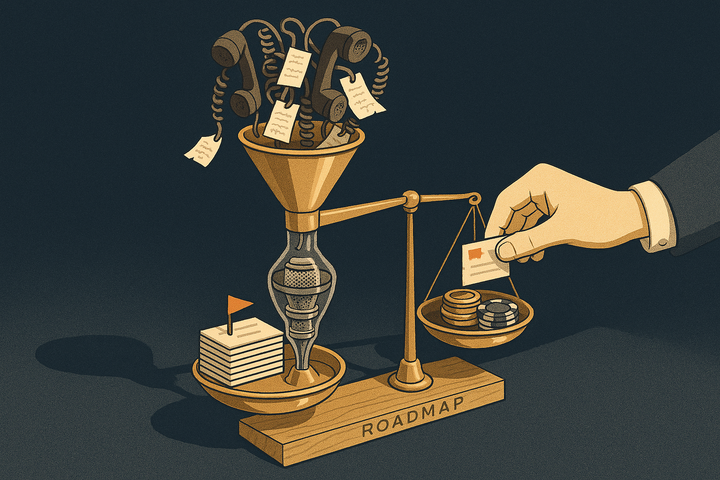
![[ARCHIVED v1] MCP vs REST API: Why Product Teams Are Switching in 2026](https://storage.ghost.io/c/4f/50/4f50536c-6dc6-4a92-8ff1-e707b209e265/content/images/size/w1200/2026/04/batch5-03.png)
Your REST API is perfectly fine — for humans who read documentation. But when an AI agent tries to answer "Why are enterprise customers churning this quarter?" by chaining together three raw endpoints, guessing field names, and parsing unpredictable JSON, the results range from incomplete to fabricated. This is the fundamental tension driving one of the most significant infrastructure shifts in B2B product tooling in 2026: the adoption of Model Context Protocol (MCP) as a semantic layer between AI agents and customer data.
MCP doesn't replace your API. It sits on top of it, translating AI-agent intent into structured, reliable tool invocations. And for product teams who depend on accurate customer intelligence to make decisions, this distinction is everything. This article breaks down exactly how MCP compares to REST (and GraphQL), when each is the right choice, and how to adopt MCP without throwing away a single endpoint.
Why Raw APIs Fail When AI Agents Need Customer Data
REST and GraphQL endpoints were designed for developers who already know the schema — AI agents don't have that advantage. When a software engineer integrates with an API, they read the documentation, understand the data model, test endpoints in a sandbox, and write code that handles edge cases. An AI agent does none of these things. It receives a user's natural-language question and must dynamically construct the right API call on the fly.
This mismatch produces measurable failures. Research from UC Berkeley's Gorilla LLM project and ToolBench benchmarks found that AI agents using raw REST APIs produce malformed or incomplete requests in 35–60% of complex multi-step queries, depending on schema complexity. That's not a rounding error — it's a fundamental reliability problem.
The root cause is architectural. REST is resource-oriented: it speaks in nouns like GET /signals, GET /calls/{id}/transcript, and POST /queries. AI agents think in task-oriented requests — verbs like "find churn signals from enterprise accounts" or "summarize what customers said about the new dashboard." The question "find churn signals" doesn't map cleanly to GET /signals?type=churn&severity=high unless the agent already knows that type and severity are valid parameters, that churn is a valid type value, and that the response will include the fields it needs.
The real cost isn't technical — it's trust. When product teams receive AI-generated insights built on unreliable data retrieval, they stop trusting the outputs entirely. This creates a corrosive "garbage in, garbage out" cycle where teams invest in AI tooling but default to manual analysis because they can't verify what the AI returned. This gap — between what AI agents need and what traditional APIs provide — created the demand for a new protocol layer purpose-built for AI agent consumption.
What Is MCP? The Model Context Protocol Explained
MCP (Model Context Protocol) is an open standard that defines how AI agents discover and invoke external tools in a structured, predictable way. Originally created by Anthropic and released in November 2024, MCP has rapidly evolved from a single-vendor experiment into the de facto protocol for AI-agent-to-server communication, with support from Claude, ChatGPT, Cursor, Windsurf, Cline, Sourcegraph, and dozens of other AI-powered tools.
The core concept is elegantly simple: MCP servers expose "tools" — discrete, self-describing functions with typed inputs, typed outputs, and natural-language descriptions that tell the AI agent exactly what each tool does. Instead of an agent guessing how to query a complex API, it connects to an MCP server, fetches a manifest of available tools, and invokes them with validated parameters.
Here's how the architecture works in practice:
- AI Agent (MCP Client): The LLM-powered application — Claude, ChatGPT, or any MCP-compatible agent — that needs to access external data.
- MCP Server: A lightweight server that exposes a set of tools. Each tool includes a name, a human-readable description, a JSON Schema for input parameters with validation rules, and a typed output schema.
- Tool Manifest: On connection, the agent retrieves a manifest listing all available tools. This is the discoverability layer REST completely lacks.
- Invocation: The agent selects the appropriate tool based on the user's question, constructs validated parameters, and receives structured results.
The MCP specification defines three core primitives: Tools (executable functions), Resources (data the server can expose for context), and Prompts (reusable prompt templates). Under the hood, MCP uses JSON-RPC 2.0 as its transport layer, supporting both local (stdio) and remote (HTTP with Server-Sent Events) connections, with a newer "Streamable HTTP" transport introduced in 2025 spec revisions.
As Anthropic's Alex Albert framed it: "MCP is to AI agents what HTTP was to web browsers — a universal protocol that lets any client talk to any server without custom integration code for each pair."
MCP Tools vs REST Endpoints: A Side-by-Side Comparison
The differences between MCP tools and REST endpoints become concrete when you compare them across the dimensions that matter most for AI agent reliability.
| Dimension | REST / GraphQL | MCP Tools |
|---|---|---|
| Real-World Example | BuildBetter raw GraphQL endpoint (powerful but unstructured for AI) | BuildBetter MCP — 21 purpose-built tools for calls, signals, people, docs (no API key needed) |
| Discovery | Manual docs, OpenAPI spec (if maintained) | Auto-discovered via tool manifest on connection |
| Input Validation | Freeform query params, request body | Typed JSON Schema with validation rules |
| Output Structure | Variable JSON (shape may differ by endpoint) | Predictable, typed responses per tool |
| Intent Mapping | Resource-oriented (nouns) | Task-oriented (verbs) |
| Error Handling | HTTP status codes + variable error bodies | Structured error types the LLM can interpret |
| AI Readability | Requires pre-training or fine-tuning | Self-describing via natural-language tool descriptions |
To make this tangible, consider a common product team question: "What did customers say about our pricing on calls in the last 30 days?"
REST approach: The AI agent must chain three calls — GET /calls?date_range=last_30d to list calls, then GET /calls/{id}/transcript for each relevant call, then manually parse transcript text for pricing mentions. Three calls, custom parsing logic, pagination handling, and fragile keyword matching. If the agent misses a query parameter or misinterprets the response schema, the results are silently wrong.
MCP approach: A single tool invocation — search_calls with parameters for date range, keyword ("pricing"), and optional speaker filter — returns structured results with speaker attribution, timestamps, and relevant excerpts in one call. No chaining, no parsing, no guessing.
GraphQL improves on REST's over-fetching problem, but it introduces its own challenge for AI agents: constructing complex nested queries requires deep schema knowledge. An AI agent can't reliably build a query like { calls(dateRange: "last_30d") { transcript { segments(filter: { keyword: "pricing" }) { text speaker timestamp } } } } without understanding the exact nesting, field names, and filter syntax.
The key insight: MCP doesn't replace your API — it sits on top of it as a semantic layer optimized for AI consumption. Your REST and GraphQL endpoints continue serving dashboards, mobile apps, and traditional integrations. MCP serves the AI agents.
Case Study: How BuildBetter Replaced Raw GraphQL with 21 MCP Tools
BuildBetter's transition from a raw GraphQL endpoint to a purpose-built MCP server illustrates exactly how this architectural pattern works in production.
Before: BuildBetter — an AI-powered insights platform that processes both internal data (call recordings, Slack conversations) and external data (support tickets, customer surveys, product feedback) — exposed a GraphQL endpoint for AI agent access. GraphQL was powerful and flexible, letting agents query across calls, signals, people, and documents with precise field selection. In theory, it was ideal.
The problem in practice: AI agents would construct malformed GraphQL queries, return incomplete data, or miss critical fields like speaker attribution and severity scores. A product manager asking "What are the top churn signals from enterprise customers?" might get a partial response missing customer names, or worse, a hallucinated answer when the query silently failed. This directly undermined trust in the insights BuildBetter's platform was designed to deliver.
The pivot: BuildBetter built an MCP server (mcp.buildbetter.app) with 21 purpose-built tools organized across six domains:
- Calls: Search, retrieve, and analyze call recordings and transcripts
- Signals: Query clustered customer feedback by type, persona, severity, and date range
- People: Look up customer and contact information with interaction history
- Documents: Access product documents, PRDs, and research outputs
- Knowledge Base: Search institutional knowledge across internal and external sources
- GraphQL Fallback: A raw GraphQL tool for power users and edge cases
Consider the search_signals tool as a concrete example. It accepts typed parameters — signal type, persona filter, severity threshold, date range — and returns clustered customer feedback with customer names, severity scores, and source citations. An AI agent doesn't need to understand the underlying data model. It reads the tool description, matches it to the user's intent, and invokes it with validated parameters.
After: Product managers can ask plain-English questions like "What are our top feature requests from enterprise customers this quarter?" and receive structured, reliable answers grounded in real signal data — not hallucinations. The GraphQL endpoint remains available as one of the 21 tools for edge cases. Nothing was thrown away; a semantic layer was added on top.
Benefits for Engineers: Typed Tools, Structured Outputs, Less Maintenance
Engineers benefit from MCP in ways that directly reduce toil and improve system reliability. The protocol shifts complexity from runtime ambiguity to design-time clarity.
No schema-learning burden for consumers. Engineers define each tool's input/output types once using JSON Schema. Every AI agent that connects to the MCP server automatically understands what's available, what parameters each tool accepts, and what the response will look like. There's no need to maintain separate AI-specific documentation or hope that an LLM was trained on your API docs.
Structured outputs eliminate parsing fragility. With raw APIs, the LLM receives a JSON blob and must infer which fields are relevant, how nested objects relate to each other, and what constitutes a complete response. MCP tools return predictable, typed responses. The difference is between "here's some JSON, good luck" and "here's a structured result with exactly these fields at exactly these types."
Independent tool versioning. REST API versioning is notoriously painful — a breaking change in one endpoint can cascade across consumers. MCP tools can be added, deprecated, or modified independently. You can ship a search_signals_v2 tool alongside the original without touching any other tool in your manifest.
Built-in input validation. Because each tool defines a JSON Schema for its parameters, malformed requests are rejected at the MCP layer before they reach your backend. Fewer bad queries hitting your database means fewer unexpected load patterns and fewer debugging sessions tracing why an AI agent sent severity=very_bad instead of severity=high.
Superior observability. Each tool invocation is a discrete, logged event with clear input parameters and structured output. Debugging AI agent behavior becomes dramatically simpler: instead of tracing a chain of raw API calls across multiple endpoints, you see a single tool invocation with its exact parameters and response. This makes it straightforward to answer questions like "Why did the agent return outdated data?" or "Which tools are product teams using most frequently?"
Benefits for Product Teams: Plain English In, Reliable Answers Out
For product managers, the value of MCP is immediate and practical: structured access to customer intelligence without writing queries, chaining API calls, or filing tickets with the engineering team for ad-hoc analysis.
Consider the difference in workflow. Without MCP, a product manager who wants to understand churn patterns must either learn to use internal tools, wait for a data analyst to run a query, or accept whatever a general-purpose AI generates from ambiguous data. With MCP-powered tools, the same PM asks a question in natural language through any MCP-compatible AI agent, and receives structured results drawn from real data.
Concrete examples from BuildBetter's MCP tools:
- "Why are customers churning?" — Returns signals clustered by type, filtered by persona, ranked by severity, with customer names and source citations. Not a generic summary, but structured intelligence product teams can act on.
- "What did customers say about the new dashboard on calls last month?" — Returns actual transcript excerpts with speaker names and timestamps. Verifiable, not hallucinated.
- "Who are our most active enterprise contacts this quarter?" — Returns people data with interaction frequency, associated signals, and recent call history.
The trust factor here is critical. Because outputs are structured tool results — real data retrieved from real queries — rather than freeform LLM generation from ambiguous API responses, product teams can verify and action insights with confidence. The hallucination risk shifts from "the AI made up data" to "the AI might summarize real data imperfectly" — a dramatically better failure mode.
No API key management, no developer handoff for routine questions, no context-switching between tools. Product teams gain self-serve access to customer intelligence — across both internal data like call recordings and Slack conversations and external data like support tickets and survey responses — through any MCP-compatible AI agent.
When REST Still Wins: Use Cases Where MCP Isn't the Right Fit
MCP is not a universal replacement for REST, and responsible adoption requires understanding where traditional APIs remain the better choice. Treating MCP as a silver bullet will lead to architectural regret.
Bulk data exports and ETL pipelines. MCP tools are designed for focused, question-driven queries — "find the top 10 churn signals this quarter," not "download every call transcript from the last three years." If you're feeding a data warehouse, a traditional REST endpoint with pagination, streaming, or batch export capabilities is the right tool for the job.
Long-running operations. REST with webhooks or async job patterns is better for operations that take minutes or hours. Reprocessing all call transcripts, generating bulk reports, or running large-scale data migrations don't benefit from the synchronous, tool-invocation model MCP uses.
Non-AI consumers. Dashboards, mobile apps, internal admin panels, and traditional third-party integrations that don't involve an LLM should continue using REST or GraphQL directly. MCP's discoverability and semantic descriptions add value specifically for AI agents — they're overhead for a React dashboard that knows exactly what data it needs.
High-frequency automated workflows. If you're making the same deterministic API call 10,000 times per hour — syncing records, triggering webhooks, processing queue items — a typed MCP tool adds protocol overhead without adding value. The tool discovery and validation layers are designed for dynamic, intent-driven queries, not repetitive batch operations.
The pragmatic answer: most teams will run both. MCP for AI agent access, REST or GraphQL for everything else. BuildBetter's approach — keeping GraphQL as a fallback tool within their MCP server — illustrates this coexistence perfectly. The two protocols serve different consumers and complement each other.
MCP Server Security: Authentication, Authorization, and Access Control
Security is the most frequently raised concern when organizations consider exposing customer data through a new protocol layer — and rightfully so. MCP introduces specific security considerations that differ from traditional API security patterns.
Authentication models: MCP servers support OAuth 2.0 flows, token-based authentication, and session-based approaches. The key difference from REST API auth is the AI agent context: there's often no human sitting in a browser completing an OAuth redirect. Most production MCP deployments authenticate at the session level — the AI agent inherits the user's authentication context from the host application (e.g., a desktop client or web app) rather than managing API keys directly.
Authorization granularity: One of MCP's architectural advantages is per-tool permissions. A product manager's AI agent might have access to search_signals and search_calls but not to raw graphql_query. This is role-based access control at the tool level — more granular and more intuitive than route-level API permissions. You can express authorization policies in terms of capabilities ("can search customer feedback") rather than endpoints ("can POST to /graphql").
Data scoping: MCP servers must enforce tenant isolation and data boundaries server-side. This means never trusting the AI agent to self-limit its queries. If a user has access to only their team's call recordings, the MCP tool enforces that boundary regardless of what parameters the agent sends.
Audit logging: Every tool invocation should be logged with the authenticated user, input parameters, and response summary. This is critical for compliance — especially in B2B environments where customer data access must be auditable — and for understanding what AI agents are actually accessing. The discrete, tool-level invocation model makes audit logs far more readable than traces of raw API call chains.
BuildBetter's approach reduces friction by handling authentication at the agent/session level rather than requiring separate API key management, while maintaining security boundaries through server-side data scoping and per-tool authorization.
How to Build Your Own MCP Server (Without Throwing Away Your REST API)
Building an MCP server is an additive process — you're creating a new access layer, not replacing existing infrastructure. Here's a practical five-step approach based on patterns that have emerged from early adopters.
Step 1: Identify your top 10–20 AI agent use cases. What questions do your users actually ask? Review support tickets, Slack messages, and the ad-hoc data requests your team fields regularly. "What are the top feature requests this quarter?" "Why is renewal rate dropping for mid-market accounts?" "What did [customer] say on their last call?" These questions become your tools. Start with intent, not with your database schema.
Step 2: Design each tool with intent-based naming and typed schemas. Name tools around user intents: search_customers, get_churn_signals, find_feature_requests. For each tool, define a JSON Schema for input parameters (with types, required fields, and valid enumerations) and a structured output schema. Include a clear natural-language description — this is what the AI agent reads to decide whether to use the tool.
Step 3: Implement each tool as a thin wrapper around your existing API. This is the critical architectural insight: your MCP tools call your existing REST or GraphQL endpoints internally. The MCP layer translates intent ("find churn signals for enterprise accounts") into the specific API calls your backend already supports. No data migration, no backend rewrite.
Step 4: Include a fallback raw API tool for edge cases. Following BuildBetter's pattern, expose your raw GraphQL or REST endpoint as one of your MCP tools. This ensures power users aren't blocked when they need a query your purpose-built tools don't cover. Label it clearly and restrict it to appropriate roles.
Step 5: Register your MCP server with a manifest. The manifest describes all available tools, their schemas, and server metadata. When an AI agent connects, it fetches this manifest and immediately understands your server's capabilities. Open-source MCP SDKs are available for Python and TypeScript, and the protocol specification is public — you're not locked into any vendor.
As of Q1 2026, over 5,000 MCP servers have been registered in community directories, reflecting rapid developer adoption and a growing ecosystem of reference implementations to learn from.
FAQ: MCP vs REST API for Customer Data Access
Do I need to throw away my REST API to adopt MCP?
No. MCP is designed to sit on top of your existing REST or GraphQL API as a semantic layer. Your existing endpoints continue serving dashboards, mobile apps, and traditional integrations unchanged. MCP tools are thin wrappers that translate AI-agent intent into your existing API calls. BuildBetter's approach — 21 MCP tools that call their existing GraphQL backend, plus a raw GraphQL fallback tool — is the recommended pattern.
Is MCP only for Anthropic/Claude?
No. While Anthropic created MCP, it is an open standard with a public specification. OpenAI added MCP support to ChatGPT in March 2025 — a watershed moment that cemented MCP as a cross-vendor standard. Cursor, Windsurf, Cline, Sourcegraph, and dozens of other AI tools support MCP. Building an MCP server makes your data accessible to any compliant AI agent, not just Claude.
How does MCP prevent AI hallucinations about customer data?
MCP tools return structured, typed data from real database queries — not freeform text the LLM has to interpret. When a product manager asks "What are our top churn signals?", the MCP tool executes a real query and returns structured results with customer names, severity scores, and source citations. The LLM presents these results rather than generating answers from ambiguous raw API responses. The hallucination risk shifts from "the AI made up data" to "the AI might summarize real data imperfectly" — a dramatically better failure mode.
How is MCP different from function calling in GPT or tool use in Claude?
Function calling is the mechanism — the way an LLM invokes external code. MCP is the protocol — the standard that defines how tools are discovered, described, authenticated, and invoked. Think of it this way: function calling is like the ability to make phone calls; MCP is like the phone directory and dialing standard that makes it possible to call anyone without knowing their internal phone system. MCP standardizes tool interfaces across all AI agents, not just one vendor's implementation.
What's the performance overhead of MCP vs direct API calls?
Minimal. The MCP layer adds tool discovery (a one-time manifest fetch per session) and input validation (milliseconds of JSON Schema validation). The actual data retrieval still happens via your existing backend at the same speed. In practice, the overhead is negligible compared to LLM inference time, which typically dominates the request lifecycle at 500ms–5s. The tradeoff is a few milliseconds of protocol overhead for dramatically more reliable AI agent interactions.
Can I build my own MCP server?
Yes. Open-source SDKs exist for Python and TypeScript, and the protocol specification is public. Start by wrapping your most common AI-agent use cases as typed tools. With over 5,000 MCP servers already registered in community directories, there's a rich ecosystem of reference implementations and best practices to draw from.
Streamline Your Product Team's Workflow
BuildBetter's 21 MCP tools give your AI agents structured, reliable access to customer intelligence across calls, signals, people, and documents — no schema guessing, no hallucinated queries, no engineering handoffs for ad-hoc questions. Whether you're a product manager who wants plain-English answers or an engineer who wants typed, observable tool interfaces, BuildBetter's MCP server delivers both.
Try BuildBetter today and give your product team the AI-powered customer intelligence they can actually trust.