How to Find and Reproduce Bugs Without a QA Team A practical QA method for small teams: release checklists, user-style exploration, clean-start bug repros, impact triage and clear hand-offs.
Notion's Internal AI Agents Explained: Feedback Router & Scruff (2026) How Notion uses Custom Agents: Feedback Router, Scruff, Wilbur and more. What each agent does, Scruff's metrics, pricing, triggers, and how to copy them.
5 Best Ramp Glass Alternatives: AI That Writes Specs in 2026 Ramp Glass isn't for sale. Compare 5 alternatives that write evidence-based PRDs, agent-ready requirements and prototypes from real customer data in 2026.
How to Build a Customer Insight Agent Like Ramp: 2026 Guide A six-stage architecture for a Ramp-style customer insight agent: connectors, pgvector, BERTopic clustering, cited answers, and an honest build vs buy.
[ARCHIVED v1] MCP vs REST API: Why Product Teams Are Switching in 2026 REST APIs were built for developers, not AI agents. Model Context Protocol (MCP) provides a semantic layer that gives AI agents structured, reliable access to customer data — and product teams are making the switch fast.
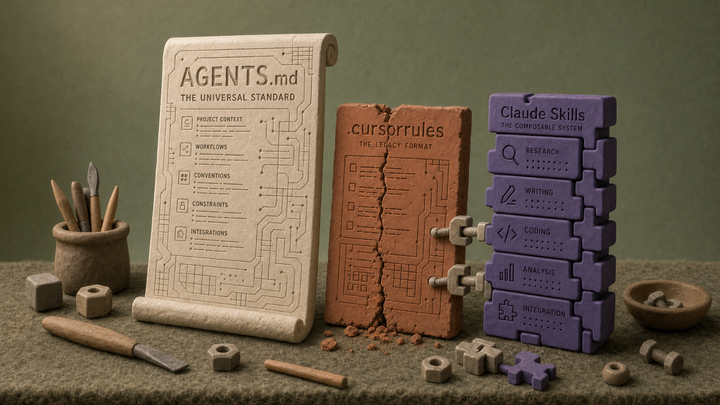
AGENTS.md vs CLAUDE.md vs Cursor Rules vs Claude Skills: Which to Use in 2026 AGENTS.md, .cursorrules, and Claude Code Skills each solve a different layer of AI agent configuration. This 2026 guide compares all three, with a decision framework, migration path, and real-world examples for engineering teams standardizing their stack.
Best Sourcegraph Cody Alternatives in 2026 for Engineering Teams With Cody now enterprise-only, engineering teams are evaluating new AI coding assistants. Compare the 8 best Cody alternatives in 2026 — pricing, IDE support, self-hosting, and agentic capabilities — plus the context layer that makes any of them work better across your team.